Results by title
16 books match the query 'Library materials'
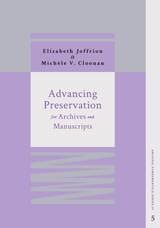
Advancing Preservation for Archives and Manuscripts
Elizabeth Joffrion
Society of American Archivists, 2020

Comprehensive Guide To Emergency And Disaster Prepar
Frances Wilkinson
Assoc of College & Research Libraries, 2010
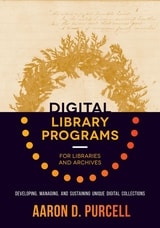
Digital Library Programs for Libraries and Archives
Developing, Managing, and Sustaining Unique Digital CollectionsAaron D. Purcell
American Library Association, 2016
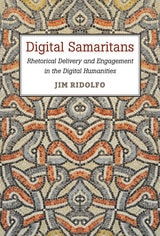
Digital Samaritans
Rhetorical Delivery and Engagement in the Digital HumanitiesJim Ridolfo
University of Michigan Press, 2015

Digitizing Your Collection
Public Library Success StoriesSusanne Caro
American Library Association, 2015
Disaster Response and Planning for Libraries
Miriam B. Kahn
American Library Association, 2012
Disaster Response and Planning for Libraries
American Library Association, 2003
Forging the Future of Special Collections
Arnold Hirshon
American Library Association, 2016
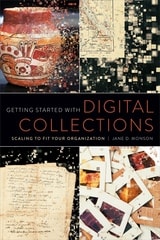
Getting Started with Digital Collections
Scaling to Fit Your OrganizationJane D. Monson
American Library Association, 2017
Google and the Myth of Universal Knowledge
A View from EuropeJean-Noël Jeanneney
University of Chicago Press, 2006
The recent announcement that Google will digitize the holdings of several major libraries sent shock waves through the book industry and academe. Google presented this digital repository as a first step towards a long-dreamed-of universal library, but skeptics were quick to raise a number of concerns about the potential for copyright infringement and unanticipated effects on the business of research and publishing.
Jean-Noël Jeanneney, president of France’s Bibliothèque Nationale, here takes aim at what he sees as a far more troubling aspect of Google’s Library Project: its potential to misrepresent—and even damage—the world’s cultural heritage. In this impassioned work, Jeanneney argues that Google’s unsystematic digitization of books from a few partner libraries and its reliance on works written mostly in English constitute acts of selection that can only extend the dominance of American culture abroad. This danger is made evident by a Google book search the author discusses here—one run on Hugo, Cervantes, Dante, and Goethe that resulted in just one non-English edition, and a German translation of Hugo at that. An archive that can so easily slight the masters of European literature—and whose development is driven by commercial interests—cannot provide the foundation for a universal library.
As a leading librarian, Jeanneney remains enthusiastic about the archival potential of the Web. But he argues that the short-term thinking characterized by Google’s digital repository must be countered by long-term planning on the part of cultural and governmental institutions worldwide—a serious effort to create a truly comprehensive library, one based on the politics of inclusion and multiculturalism.
Library as Safe Haven
Disaster Planning, Response, and Recovery; A How-To-Do-It Manual for LibrariansDeborah D. Halsted
American Library Association, 2014
Moving Materials
Valerie American Library Association
American Library Association, 2009
Preservation
Issues and PlanningPaul Banks
American Library Association, 2000
Preserving Our Heritage
Perspectives from Antiquity to the Digital AgeMichele Valerie Cloonan
American Library Association, 2015
Technology Disaster Response and Recovery Planning
A LITA GuideMary Mallery
American Library Association, 2015
The Disaster Planning Handbook for Libraries
Mary Grace Flaherty
American Library Association, 2021
Your library is a vital information hub and resource provider every single day, and that’s doubly true when calamity strikes. In fact, your library’s role as an “essential community function” during disasters is now encoded in U.S. law. Engaging as a partner in planning and preparedness will build much-needed community support should disaster strike, and even a basic plan will also save you time and stress later on. No matter where your library is in the disaster planning cycle, this handbook will make the process clearer and less daunting. You’ll get tools, activities, easy-to-adapt templates, and hands-on guidance on such topics as
- the six phases of disaster response;
- 15 first-hand accounts of library disaster planning or responses, helping you identify the library services most needed during a disaster;
- three essential factors that will shape the form of your disaster plan;
- preparing for hurricanes, tornadoes, fires, floods, and earthquakes;
- ideas for connecting with your community’s emergency response teams;
- federal government planning resources;
- pointers on working with state and local governments;
- a sample Memorandum of Understanding to outline mutual support for a speedier recovery;
- recommended courses and training, many of which are free;
- targeted advice for archives and special collections;
- sample building inspection checklists; and
- recommended games to help children and families prepare.