Results by title

6 books match the query 'Lichtenstein, Nelson'
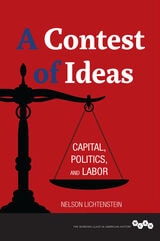
cover of A Contest of Ideas: Capital, Politics and Labor

A Contest of Ideas

Capital, Politics and Labor

Nelson Lictenstein

University of Illinois Press, 2013

For more than thirty years Nelson Lichtenstein has deployed his scholarship--on labor, politics, and social thought--to chart the history and prospects of a progressive America. A Contest of Ideas collects and updates many of Lichtenstein's most provocative and controversial essays and reviews.

These incisive writings link the fate of the labor movement to the transformations in the shape of world capitalism, to the rise of the civil rights movement, and to the activists and intellectuals who have played such important roles. Tracing broad patterns of political thought, Lichtenstein offers important perspectives on the relationship of labor and the state, the tensions that sometimes exist between a culture of rights and the idea of solidarity, and the rise of conservatism in politics, law, and intellectual life. The volume closes with portraits of five activist intellectuals whose work has been vital to the conflicts that engage the labor movement, public policy, and political culture.
[more]
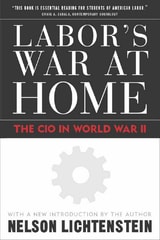
cover of Labor'S War At Home: The Cio In World War Ii

Labor'S War At Home

The Cio In World War Ii

Nelson Lichtenstein

Temple University Press, 2003
Labor's War at Home examines a critical period in American politics and labor history, beginning with the outbreak of war in Europe in 1939 through the wave of major industrial strikes that followed the war and accompanied the reconversion to a peacetime economy. Nelson Lichtenstein is concerned both with the internal organizations and social dynamics of the labor movement—especially the Congress of Industrial Organizations—and with the relationship between the CIO, as well as other bodies of organized labor, and the Roosevelt administration. He argues that tensions within the labor movement and within the ranks of American business profoundly affected government policy during the war and the nature of organized labor's political relations with Roosevelt and the Democratic Party. Moreover, the political arrangements worked out during the war established the foundations of social stability and labor politics that came to characterize the postwar world.
[more]
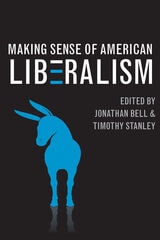
cover of Making Sense of American Liberalism

Making Sense of American Liberalism

Edited by Jonathan Bell and Timothy Stanley

University of Illinois Press, 2012
This collection of thoughtful and timely essays offers refreshing and intelligent new perspectives on postwar American liberalism. Sophisticated yet accessible, Making Sense of American Liberalism challenges popular myths about liberalism in the United States. The volume presents the Democratic Party and liberal reform efforts such as civil rights, feminism, labor, and environmentalism as a more united, more radical force than has been depicted in scholarship and the media emphasizing the decline and disunity of the left.
 
Distinguished contributors assess the problems liberals have confronted in the twentieth century, examine their strategies for reform, and chart the successes and potential for future liberal reform.
 
Contributors are Anthony J. Badger, Jonathan Bell, Lizabeth Cohen, Susan Hartmann, Ella Howard, Bruce Miroff, Nelson Lichtenstein, Doug Rossinow, Timothy Stanley, and Timothy Thurber.
[more]
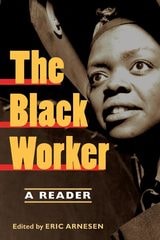
cover of The Black Worker: Race, Labor, and Civil Rights Since Emancipation

The Black Worker

Race, Labor, and Civil Rights Since Emancipation

Edited by Eric Arnesen

University of Illinois Press, 2006

Long before the modern civil rights movement of the 1950s and 1960s made a frontal assault on the reigning segregationist order, African American workers had to struggle against both their employers and fellow white workers. Because their efforts to secure their workplace rights pitted them against the broader structures of racial oppression, their activism constituted nothing less than a form of civil rights struggle.

Uniting the latest scholarship on race, labor, and civil rights, The Black Worker aims to establish the richness of the African American working-class experience, and the indisputable role of black workers in shaping the politics and history of labor and race in the United States.

To capture the complexity of African Americans’ experiences in the workplace, this reader examines workers engaged in a wide array of jobs, including sharecropping, coal mining, domestic service, longshoring, automobile manufacturing, tobacco processing, railroading, prostitution, lumbering, and municipal employment. The essays’ subjects include black migration, strikebreaking, black conservatism, gender, and the multiple forms of employment discrimination in the South and North. Other contributions deal explicitly with state policy and black workers during the transition from slavery to freedom, World Wars I and II, and the 1960s.

The variety of challenges made by these workers, both quiet and overt, served as clear reminders to the supporters of white supremacy that, despite their best efforts through violence, fraud, and the law, as long as they insisted on racial inequality, the “race question” would never be fully resolved.

Contributors: Eric Arnesen, Beth Tompkins Bates, Cynthia M. Blair, Tera W. Hunter, William Powell Jones, Brian Kelly, Robert Korstad, Nelson Lichtenstein, Joseph A. McCartin, Steven A. Reich, Leslie A. Schwalm, Nan Elizabeth Woodruff

[more]
cover of Walter Reuther: THE MOST DANGEROUS MAN IN DETROIT

Walter Reuther

THE MOST DANGEROUS MAN IN DETROIT

Nelson Lichtenstein

University of Illinois Press, 1995

Supported by The Walter and May Reuther Memorial Fund
Previously published by Basic Books as The Most Dangerous Man in Detroit: Walter Reuther and the Fate of American Labor
 
[more]
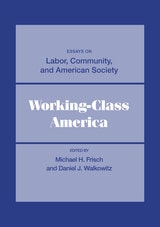
cover of Working-Class America: Essays on Labor, Community, and American Society

Working-Class America

Essays on Labor, Community, and American Society

Edited by Michael H. Frisch and Daniel J. Walkowitz

University of Illinois Press, 1983

At the time of its original publication, Working-Class America represented the new labor history par excellence. A roster of noteworthy scholars in the field contribute original essays written during a pivotal time in the nation's history and within the discipline. Moving beyond historical-sociological analyses, the authors take readers inside the lives of the real men and women behind the statistics. The result is a classic collection focused on the human dimensions of the field, one valuable not only as a resource for historiography but as a snapshot of workers and their concerns in the 1980s.
[more]