Results by title
9 books match the query 'Lies'
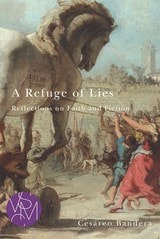
A Refuge of Lies
Reflections on Faith and FictionCesareo Bandera
Michigan State University Press, 2013
Erich Auerbach’s seminal Mimesis: The Representation of Reality in Western Literature was published more than sixty years ago and is deservedly considered a classic. The book brought into focus the fundamental difference that exists between the two basic approaches to the textual representation of reality in Western culture. These two “styles,” as Auerbach called them, were archetypically displayed in Homer’s poems and in the Old Testament, respectively. Auerbach’s differentiation is the starting point for Bandera’s insightful work, which expands and develops on this theory in several key ways. One of the more significant differences between the two styles transcends and grounds all the others. It concerns the truth of each of the two archetypal texts, or rather, the attitude exhibited in those texts with regard to the truth of what they narrate. Auerbach, Bandera notes, is amazed at the Bible’s “passionate” concern for the truth of what it says—a concern he found absent in Homer. Bandera finds that what the prophet Isaiah called “a refuge of lies” defines Homer’s work. He draws on his own research and René Girard’s theory of the sacred to develop an enhanced perspective of the relationship between these texts.
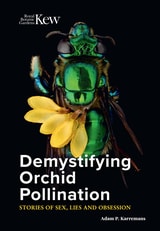
Demystifying Orchid Pollination
Stories of Sex, Lies and ObsessionAdam P. Karremans
Royal Botanic Gardens, Kew, 2023
Demystifying Orchid Pollination explores the fascinating history of orchids and the means by which they reproduce. Adam P. Karremans reveals orchids’ hidden secrets, highlights the key role of pollinators in securing the survival of these delicate plants, and provides past and present scientific knowledge that challenges common beliefs about orchid reproduction. Demystifying Orchid Pollination celebrates biodiversity while stressing the importance of further ecological study and advocating for increased conservation efforts and thorough research and development.
Errors, Lies, and Libel
Peter E. Kane. Foreword by Elmer Gertz
Southern Illinois University Press, 1992
Peter E. Kane takes a critical look at the development of the present law through a discussion of seventeen landmark libel cases.
One of the many points Kane clarifies is the important distinction between an error and a lie when judging whether someone is guilty of libel. For example, in the series of events that led to Goldwater vs. Ginzburg, Ralph Ginzburg, publisher of fact magazine, compiled and printed in fact a montage of quotes he had collected from psychiatrists about Barry Goldwater. It took five years of legal sparring for the courts to conclude that Ginzburg had deliberately published a malicious and irresponsible document and to rule in favor of Goldwater. Kane closes with a discussion of current thinking on possible libel reform.
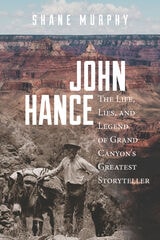
John Hance
The Life, Lies, and Legend of Grand Canyon's Greatest StorytellerShane Murphy
University of Utah Press, 2020
A legend in his own lifetime, John Hance (1837–1919) was synonymous with early Grand Canyon tourism. Between the late 1880s and early 1900s, to say “John Hance” was to say “Grand Canyon.” Hance was well known to travelers and visiting dignitaries alike, men such as William “Buffalo Bill” Cody and Theodore Roosevelt, the president who affectionately referred to him as “the greatest liar on earth.” It was said that Hance tried to jump the canyon on his horse Darby only to turn back when he was halfway over and realized he would never make it across.
The truth behind Hance’s life is remarkable even without embellishment. In this book, Shane Murphy chronicles Hance’s childhood in Tennessee and Missouri, his service in the Confederacy during the Civil War, his time in Union prisons as a POW, and his later adventures with the Hickok brothers crossing the plains. Settling in Arizona’s fruitful Verde Valley, Hance farmed and filled military contracts before taking up residence as Grand Canyon’s first permanent Euro-American settler, trail builder, guide, and renowned storyteller.
Hance left no correspondence, personal memoirs, or other writings. Only informal portraits from magazines and newspaper accounts remain. Murphy investigated assessors’ rolls, rare mercantile ledgers, and mining claims to create a full and compelling narrative of a man who was once an icon of the American West and should be remembered as the founding father of Grand Canyon tourism.
Lies to Live By
Lois Beardslee
Michigan State University Press, 2003
Lies To Live By brings together two selections of stories by Ojibwe storyteller Lois Beardslee. “Lies to Live By,” a series of interdependent tales, reflects the storyteller’s role in interpreting traditional stories for contemporary audiences, while preserving traditions based not in mysticism but in pragmatism. In “Calm Days,” three generations—the narrator, her grandfather, and her son—spend a week together on a remote island during the course of which they demonstrate the continuity of Ojibwe life. Together these stories weave the contemporary and the traditional to show how cultural diversity can be preserved even as cultural boundaries are transcended.
Lies, Passions, and Illusions
The Democratic Imagination in the Twentieth CenturyFrançois Furet
University of Chicago Press, 2014
This conversation would be, sadly, Furet’s last—he died while Ricoeur was completing his edits. Ricoeur did not want to publish his half without Furet’s approval, so what remains is Furet’s alone, an astonishingly cohesive meditation on the political passions of the twentieth century. With strokes at once broad and incisive, he examines the many different trajectories that nations of the West have followed over the past hundred years. It is a dialogue with history as it happened but also as a form of thought. It is a dialogue with his critics, with himself, and with those major thinkers—from Tocqueville to Hannah Arendt—whose ideas have shaped our understanding of the tragic dramas and upheavals of the modern era. It is a testament to the crucial role of the historian, a reflection on how history is made and lived, and how the imagination is a catalyst for political change. Whether new to Furet or deeply familiar with his work, readers will find thought-provoking assessments on every page, a deeply moving look back at one of the most tumultuous periods of history and how we might learn and look forward from it.
The Lies of the Land
Seeing Rural America for What It Is—and Isn’tSteven Conn
University of Chicago Press, 2023
It seems everyone has an opinion about rural America. Is it gripped in a tragic decline? Or is it on the cusp of a glorious revival? Is it the key to understanding America today? Steven Conn argues that we’re missing the real question: Is rural America even a thing? No, says Conn, who believes we see only what we want to see in the lands beyond the suburbs—fantasies about moral (or backward) communities, simpler (or repressive) living, and what it means to be authentically (or wrongheadedly) American. If we want to build a better future, Conn argues, we must accept that these visions don’t exist and never did.
In The Lies of the Land, Conn shows that rural America—so often characterized as in crisis or in danger of being left behind—has actually been at the center of modern American history, shaped by the same forces as everywhere else in the country: militarization, industrialization, corporatization, and suburbanization. Examining each of these forces in turn, Conn invites us to dispense with the lies and half-truths we’ve believed about rural America and to pursue better solutions to the very real challenges shared all across our nation.
The Reinvention of Obscenity
Sex, Lies, and Tabloids in Early Modern FranceJoan DeJean
University of Chicago Press, 2002
The Reinvention of Obscenity casts a fresh light on the mythical link between sexual impropriety and things French. Exploring the complicity between censorship, print culture, and obscenity, DeJean argues that mass market printing and the first modern censorial machinery came into being at the very moment that obscenity was being reinvented—that is, transformed from a minor literary phenomenon into a threat to society. DeJean's principal case in this study is the career of Moliére, who cannily exploited the new link between indecency and female genitalia to found his career as a print author; the enormous scandal which followed his play L'école des femmes made him the first modern writer to have his sex life dissected in the press.
Keenly alert to parallels with the currency of obscenity in contemporary America, The Reinvention of Obscenity will concern not only scholars of French history, but anyone interested in the intertwined histories of sex, publishing, and censorship.

Truth and Lies in Literature
Essays and ReviewsStephen Vizinczey
University of Chicago Press, 1988
"If a critic's job is to puncture pomposity, deflate over-hyped reputations and ferret out true value, then Vizinczey is master of the art."—Publishers Weekly
"Stephen Vizinczey comes on like a pistol-packing stranger here to root out corruption and remind us of our ideals. He carries the role off with inspired gusto. His boldness and pugnacity are bracing and can be very funny."—Ray Sawhill, Newsweek
"Every piece in the book is good, and many are so good that, after dipping into the middle, I stayed up half of the night, reading with growing amazement and admiration."—Bruce Bebb, Los Angeles Reader