Results by title
3 books match the query 'Limit'
At the Limit of the Obscene
German Realism and the Disgrace of MatterErica Weitzman
Northwestern University Press, 2021
As German-language literature turned in the mid-nineteenth century to the depiction of the profane, sensual world, a corresponding anxiety emerged about the terms of that depiction—with consequences not only for realist poetics but also for the conception of the material world itself. At the Limit of the Obscene examines the roots and repercussions of this anxiety in German realist and postrealist literature. Through analyses of works by Adalbert Stifter, Gustav Freytag, Theodor Fontane, Arno Holz, Gottfried Benn, and Franz Kafka, Erica Weitzman shows how German realism’s conflicted representations of the material world lead to an idea of the obscene as an excess of sensual appearance beyond human meaning: the obverse of the anthropocentric worldview that German realism both propagates and pushes to its crisis. At the Limit of the Obscene thus brings to light the troubled and troubling ontology underlying German realism, at the same time demonstrating how its works continue to shape our ideas about representability, alterity, and the relationship of human beings to the non-human well into the present day.
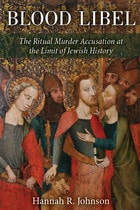
Blood Libel
The Ritual Murder Accusation at the Limit of Jewish HistoryHannah R. Johnson
University of Michigan Press, 2012
The ritual murder accusation is one of a series of myths that fall under the label blood libel, and describes the medieval legend that Jews require Christian blood for obscure religious purposes and are capable of committing murder to obtain it. This malicious myth continues to have an explosive afterlife in the public sphere, where Sarah Palin's 2011 gaffe is only the latest reminder of its power to excite controversy. Blood Libel is the first book-length study to analyze the recent historiography of the ritual murder accusation and to consider these debates in the context of intellectual and cultural history as well as methodology. Hannah R. Johnson articulates how ethics shapes methodological decisions in the study of the accusation and how questions about methodology, in turn, pose ethical problems of interpretation and understanding. Examining recent debates over the scholarship of historians such as Gavin Langmuir, Israel Yuval, and Ariel Toaff, Johnson argues that these discussions highlight an ongoing paradigm shift that seeks to reimagine questions of responsibility by deliberately refraining from a discourse of moral judgment and blame in favor of an emphasis on historical contingencies and hostile intergroup dynamics.
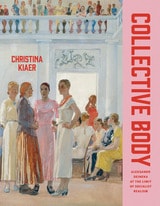
Collective Body
Aleksandr Deineka at the Limit of Socialist RealismChristina Kiaer
University of Chicago Press, 2024
Dislodging the avant-garde from its central position in the narrative of Soviet art, Collective Body presents painter Aleksandr Deineka’s haptic and corporeal version of Socialist Realist figuration as an alternate experimental aesthetic that, at its best, activates and organizes affective forces for collective ends. Christina Kiaer traces Deineka’s path from his avant-garde origins as the inventor of the proletarian body in illustrations for mass magazines after the revolution through his success as a state-sponsored painter of monumental, lyrical canvases during the Terror and beyond. In so doing, she demonstrates that Socialist Realism is best understood not as a totalitarian style but as a fiercely collective art system that organized art outside the market and formed part of the legacy of the revolutionary modernisms of the 1920s. Collective Body accounts for the way the art of the October Revolution continues to capture viewers’ imaginations by evoking the elation of collectivity, making viewers not just comprehend but truly feel socialism, and retaining the potential to inform our own art-into-life experiments within contemporary political art. Deineka figures in this study not as a singular master, in the spirit of a traditional monograph, but as a limit case of the system he inhabited and helped to create.