Results by title
14 books match the query 'Literary History'
A Literary History of Iowa
Clarence A. Andrews
University of Iowa Press, 1972
Accident
A Philosophical and Literary HistoryRoss Hamilton
University of Chicago Press, 2008
An accidental glance at a newspaper notice causes Rousseau to collapse under the force of a vision. A car accidentally hits Giacometti, and he experiences an epiphany. Darwin introduces accident to the basic process of life, and Freud looks to accident as the expression of unconscious desire. Accident, Ross Hamilton claims, is the force that makes us modern. Tracing the story of accident from Aristotle to Buster Keaton and beyond, Hamilton’s daring book revives the tradition of the grand history of ideas.
Accident tells an original history of Western thought from the perspective of Aristotle’s remarkably durable categories of accident and substance. Throughout antiquity and the Middle Ages, Aristotle’s distinction underwrote an insistence on order and subordination of the inessential. In a groundbreaking innovation, Hamilton argues that after the Reformation, the concept of accident began to change places with that of substance: accident became a life-transforming event and effectively a person’s essence. For moderns, it is the accidental, seemingly trivial moments of consciousness that, like Wordsworth’s “spots of time,” create constellations of meaning in our lives. Touching on a broad array of images and texts—Augustine, Dante, the frescoes of Raphael, Descartes, Jane Austen, the work of the surrealists, and twentieth-century cinema—Hamilton provides a new way to map the mutations of personal identity and subjectivity.
Boredom
The Literary History of a State of MindPatricia Meyer Spacks
University of Chicago Press, 1994

Cultivating Environmental Justice
A Literary History of U.S. Garden WritingRobert S. Emmett
University of Massachusetts Press, 2016
Drawing on ecocriticism, environmental history, landscape architecture, and recent work in environmental justice and food studies, Emmett explores how the language of environmental justice emerged in descriptions of gardening across a variety of literary forms. He reveals early egalitarian associations found in garden writing, despite a popular focus on elite sites such as suburban lawns and formal southern gardens. Cultivating Environmental Justice emphasizes the intergenerational work of gardeners and garden writers who, from the 1930s on, asserted increasingly radical socioeconomic and ecological claims to justice. Emmett considers a wide range of texts by authors including Bernard M'Mahon, Scott and Helen Nearing, Katharine S. White, Elizabeth Lawrence, Alice Walker, and Novella Carpenter.
Influence and Intertextuality in Literary History
John B. Clayton
University of Wisconsin Press, 1991
This important collection explores and clarifies two of the most contested ideas in literary theory today, influence and intertextuality. The study of influence tends to center on major authors and canonical works, identifying prior documents as “sources” or “contexts” for a given author. Intertextuality, on the other hand, is a concept unconcerned with authors as individuals; it treats all texts as part of a network of discourse that includes culture, history, and social practices as well as other literary works. In thirteen essays drawing on the entire spectrum of English and American literary history, this volume considers the relationship between these two terms—their rivalry, their kinship, their range of uses.
Debates about these two concepts have been crucial to the “new historicism” and the resurgence of interest in literary history. The essays in this volume employ a refreshing array of examples from that history—poetry of the Renaissance and the twentieth century, novels of the eighteenth through twentieth centuries, Old English texts, and postmodernist productions that have served as recurrent “intertexts” for contemporary theory. The contributors treat such currently vital questions as the role of the author, canon formation, gender, causality, and the social dimension of texts. They illuminate old assumptions and new ideas about agency that lie behind notions of influence, and they examine models of an anonymous textual field that lie behind notions of intertextuality.
The volume takes much of its character from its own intertextual origin as a group project of the English faculty at the University of Wisconsin–Madison. Though diverse in their academic interests, concerns, and experience, the contributors particpated in an ongoing intellectual exchange that is a model of how new scholarship can arise from dialogue.
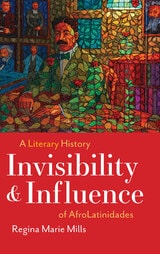
Invisibility and Influence
A Literary History of AfroLatinidadesRegina Marie Mills
University of Texas Press, 2024
2026 Honorable Mention, Latinx Studies Section, Social Sciences Category, Latin American Studies Association (LASA)
A rich literary study of AfroLatinx life writing, this book traces how AfroLatinxs have challenged their erasure in the United States and Latin America over the last century.
Invisibility and Influence demonstrates how a century of AfroLatinx writers in the United States shaped life writing, including memoir, collective autobiography, and other formats, through depictions of a wide range of “Afro-Latinidades.” Using a woman-of-color feminist approach, Regina Marie Mills examines the work of writers and creators often excluded from Latinx literary criticism. She explores the tensions writers experienced in being viewed by others as only either Latinx or Black, rather than as part of their own distinctive communities. Beginning with Arturo (Arthur) Schomburg, who contributed to wider conversations about autobiographical technique, Invisibility and Influence examines a breadth of writers, including Jesús Colón; members of the Young Lords; Piri Thomas; Lukumi santera and scholar Marta Moreno Vega; and Black Mexican American poet Ariana Brown. Mills traces how these writers confront the distorted visions of AfroLatinxs in the United States, Latin America, and the Caribbean, and how they created and expressed AfroLatinx spirituality, politics, and self-identity, often amidst violence. Mapping how AfroLatinx writers create their own literary history, Mills reveals how AfroLatinx life writing shapes and complicates discourses on race and colorism in the Western Hemisphere.
Dialogues in AfroLatinidad Podcast:https://www.youtube.com/watch?v=FIhF-pdeW3A
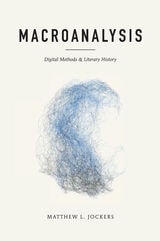
Macroanalysis
Digital Methods and Literary HistoryMatthew L. Jockers
University of Illinois Press, 2013

Pierre Bourdieu and Literary History, Volume 58
Marshall Brown
Duke University Press, 0
Essays included in this collection discuss the hesitant response of the American academy to Bourdieu; Bourdieu on Derrida on Kant; “pure poetry,” cultural capital, and the rejection of classicism; and the insight Bourdieu’s work lends to our understanding of the position of eighteenth-century women writers.
Contributors. Marilyn Butler, John Guillory, Elizabeth W. Harries, Jonathan Joesberg, Toril Moi, William Paulson, Trevor Ross
Standardization (Standardisation)
A Literary HistoryJonathan H. Grossman
University of Chicago Press, 2026
An innovative study of the history of standardization that draws on both technical documents and novels.
Jonathan H. Grossman’s elegant analysis of standardization approaches the topic by exploring how institutions create standards. Grossman tracks how published standards documents became the dominant means of homogenizing durable objects during the nineteenth century’s industrialization of manufacturing, including printing. Examining these documents as a genre, he reconstructs the nineteenth-century history of published standards documents and shows how they evolved to produce uniformity across manufactured objects.
Shifting focus from the standardized creation of objects to their use by subjects, Grossman then probes how people reimagined, through print, the ways in which their subjectivity combined with identical, interchangeable manufactured objects. To understand that relation, he looks to nineteenth-century novels by Charles Dickens, Mark Twain, and Elizabeth Gaskell, revealing how these books depicted the interchangeability of the subjects implied by this production of identical objects. The novels do not merely observe the interplay between subjects and standardized objects; they materialize it in the assemblage of readers holding their industrially manufactured, print copy.
The Dialectics of Our America
Genealogy, Cultural Critique, and Literary HistoryJosé David Saldívar
Duke University Press, 1991
Saldívar pursues this goal through an array of oppositional critical and creative practices. He analyzes a range of North American writers of color (Rolando Hinojosa, Gloria Anzaldúa, Arturo Islas, Ntozake Shange, and others) and Latin American authors (José Martí, Roberto Fernández Retamar, Gabriel García Márquez, and others), whose work forms a radical critique of the dominant culture, its politics, and its restrictive modes of expression. By doing so, Saldívar opens the traditional American canon to a dialog with other voices, not just the voices of national minorities, but those of regional cultures different from the prevalent anglocentric model.
The Dialectics of Our America, in its project to expand the “canon” and define a pan-American literary tradition, will make a critical difference in ongoing attempts to reconceptualize American literary history.
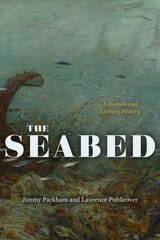
The Seabed
A Human and Literary HistoryJimmy Packham and Laurence Publicover
University of Chicago Press, 2026
Uncovers human histories, cultures, and politics on the ocean floor.
While often characterized as an alien realm, the seabed has long been fundamental to human life. As new technologies offer ever greater access to this environment, the bottom of the ocean is key to debates about our future—and yet we are poorly equipped to understand our relation to it.
The Seabed plumbs the ocean’s depths to reveal a rich and complex history of human activity at the seafloor, a history that extends from the classical world to the present. Jimmy Packham and Laurence Publicover highlight the literary significance of the seabed, examining works by writers including Aphra Behn, Anton Chekhov, Euripides, Herman Melville, M. NourbeSe Philip, William Shakespeare, Derek Walcott, and H. G. Wells, as well as lesser-known authors who have imagined this dark and mysterious realm. Putting these in dialogue with the science writing of Rachel Carson, Sylvia Earle, and others, and with visual art, politics, and historical case studies, they show how imaginative speculations concerning the ocean floor have influenced, and continue to inform, human activity on the seabed itself. Through chapters that explore sea burial and seafloor memorials, scientific exploration, deep-sea infrastructure, salvage from the seabed, and deep-sea extraction, the book reveals that the ocean floor’s cultural visibility has fluctuated over time. But longstanding visions of the seabed continue to shape our relationship with this place, a site for undersea cables and—in the near future—deep-sea mining.
The bottom of the ocean is closer than we think. Understanding our history there is crucial to assessing the present and imagining our future.

The Uses of Literary History
Marshall Brown, ed.
Duke University Press, 1995
Concerned with both the theory and practice of literary history, these provocative and sometimes combative pieces examine the writing of literary history, the nature of our interest in tradition, and the ways that literary works act in history. Among the numerous issues discussed are the uses of evidence, anachronism, the dialectic of texts and contexts, particularism and the resistance to reductive understanding, the construction of identities, memory, and the endurance of the past. New historicism, nationalism, and gender studies appear in relation to more traditional issues such as textual editing, taste, and literary pedagogy. Combining new and old perspectives, The Uses of Literary History provides a broad view of the field.
Contributors. Charles Altieri, Jonathan Arac, R. Howard Bloch, Richard Dellamora, Paul H. Fry, Geoffrey Hartman, Denis Hollier, Donna Landry, Lawrence Lipking, Jerome J. McGann, Walter Benn Michaels, Rukmini Bhaya Nair, Virgil Nemoianu, Annabel Patterson, David Perkins, Marjorie Perloff, Meredith Anne Skura, Doris Sommer, Peter Stallybrass, Susan Stewart
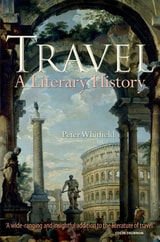
Travel
A Literary HistoryPeter Whitfield
Bodleian Library Publishing, 2011
Taking the form of fact-filled travelogues, stunt-writing spectaculars, or genre-blurring imaginative works, travel writing has never been more popular than it is today. But beyond the self-conscious literary artistry of today’s narratives lies a rich and well-documented history of travel writing, stretching back over several thousand years and incorporating the work of mariners and missionaries, diplomats and dilettantes alike.
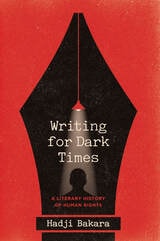
Writing for Dark Times
A Literary History of Human RightsHadji Bakara
University of Chicago Press, 2026
A history of human rights that places writers and their ideas at its center.
At Amnesty International’s headquarters in London hangs a large copy of Seamus Heaney’s “From the Republic of Conscience,” a poem that touches on neither imprisonment nor torture but instead suggests that acts of literary creation are themselves a form of human rights work, important for bringing new things into the world rather than removing evil from it. Why does a poem about the power of creation stand at the center of an organization known for publicizing atrocity? What can it tell us about human rights?
Hadji Bakara’s Writing for Dark Times tells the story of the writer’s distinct place in the history of human rights. It argues that the relationship between the creative work of writing and the pursuit of universal rights is an important but misunderstood dimension of both literary and human rights history over the past century. Following a diverse cast of writers from the First World War through the end of the Cold War, including Bertolt Brecht, Anna Seghers, Archibald MacLeish, Albert Camus, Czeslaw Milosz, Ngũgĩ wa Thiong’o, Seamus Heaney, Nadine Gordimer, and J.M. Coetzee, Bakara shows how their efforts to theorize and support human rights were bound up with changing ideas about the place of their own work in the world––the work of writing. And across the twentieth century, the book reveals, two central ideas about writing took shape around the politics of human rights. Writing creates something new and inspires the will for change.
For those who study human rights, Writing for Dark Times offers both an archive and a method for better understanding the influence of writers on the historical development of the concept. For those in literary studies, the book provides a new account of how human rights shaped the politics of twentieth-century literature. Few books have made as vivid a case for literature’s relevance to our most exalted ideals and institutions.