Results by title
26 books match the query 'Literatures'
All My Relatives
Community in Contemporary Ethnic American LiteraturesBonnie TuSmith
University of Michigan Press, 1994
All My Relatives provides a new way of reading popular works such as The Woman Warrior, The Joy Luck Club, The Color Purple and John Edgar Wideman's Sent for You Yesterday. TuSmith's study will appeal to general readers as well as students and scholars of American culture, ethnic studies, and American literature.
"An original contribution to the field. TuSmith's willingness to step over invisible boundaries and to draw parallels between the cultural contexts of several ethnic groups at once is refreshing and important." --Amy Ling, University of Wisconsin, Madison
"Ambitious and timely . . . a significant work that Americanists will want to read. TuSmith does an excellent job of clarifying the meaning and significance of the term "ethnicity" in relation to American literature."--Ramón Saldívar, Stanford University
". . . TuSmith establishes the importance of traditional (usually oral) modes of expression to ethnic texts that are both relational and accessible . . . . [S]hould become a standard point of reference in the emerging field of comparative American literature."--Choice
Bonnie TuSmith is Assistant Professor of English, Bowling Green State University.
Asia/Pacific as Space of Cultural Production
Rob Wilson and Arif Dirlik, eds.
Duke University Press, 1995
From New Zealand to Japan, Taiwan to Hawaii, this innovative volume presents essays, poems, and memoirs by prominent Asia/Pacific writers that resist appropriation by transnational capitalism through the articulation of autonomous local identities and counter-histories of place and community. In addition, cultural critics spanning several locations and disciplines deconstruct representations—particularly those on film and in novels—that perpetuate Asia/Pacific as a realm of EuroAmerican fantasy.
This collection, a much expanded edition of boundary 2, offers a new perception of the Asia/Pacific region by presenting the Pacific not as a paradise or vast emptiness, but as a place where living, struggling peoples have constructed contemporary identities out of a long history of hegemony and resistance. Asia/Pacific as Space of Cultural Production will prove stimulating to readers with an interest in the Asia/Pacific region, and to scholars in the fields of Asian, American, Pacific, postcolonial, and cultural studies.
Contributors. Joseph P. Balaz, Chris Bongie, William A. Callahan, Thomas Carmichael, Leo Ching, Chiu Yen Liang (Fred), Chungmoo Choi, Christopher L. Connery, Arif Dirlik, John Fielder, Miriam Fuchs, Epeli Hau`ofa, Lawson Fusao Inada, M. Consuelo León W., Katharyne Mitchell, Masao Miyoshi, Steve Olive, Theophil Saret Reuney, Peter Schwenger, Subramani, Terese Svoboda, Jeffrey Tobin, Haunani-Kay Trask, John Whittier Treat, Tsushima Yuko, Albert Wendt, Rob Wilson

Cultural Difference and the Literary Text
Pluralism and the Limits of Authenticity in North American LiteratureWinfried Siemerling
University of Iowa Press, 1997
This dynamic, open-minded collection of essays responds to the issues raised by Werner Sollors when he argues against the rigidity of cultural pluralism, against the ethnic group-by-group segregation of American literature. Instead he calls for an openly transethinic recognition of cross-cultural interplays and connections among all so-called groups and their canons. In enthusiastic response to such issues, the contributors explore a variety of approaches to pluralism, multiculturalism, group identity, and the problematics of authenticity in literary texts and criticism both historically and currently.
The scholars in this civil, persuasive volume are at home in an international world that crosses linguistic, cultural, and national boundaries. They thus transcend the customary restrictions of earlier, relatively isolationist scholarship to form new, nonpolemical links among cultural identities. This relationship between oral modes of communal identity and writing in tribal cultures joins an examination of Houston Baker's discursive strategies. A consideration of ethnic humor in the writings of Zora Neale Hurston and Jerre Mangione and a discussion of Jean Toomer's racial persona offer striking contextualizations. Two contributors study discursive constructions of mestizaje in Chicano/a texts, followed by essays on cultural difference in Faulkner's Light in August and Roth's Call It Sleep.Finally, Werner Sollers's essay extends the interactions among all these energetic, nonjudgmental dialogues.
Dividing the Isthmus
Central American Transnational Histories, Literatures, and CulturesBy Ana Patricia Rodríguez
University of Texas Press, 2009
In 1899, the United Fruit Company (UFCO) was officially incorporated in Boston, Massachusetts, beginning an era of economic, diplomatic, and military interventions in Central America. This event marked the inception of the struggle for economic, political, and cultural autonomy in Central America as well as an era of homegrown inequities, injustices, and impunities to which Central Americans have responded in creative and critical ways. This juncture also set the conditions for the creation of the Transisthmus—a material, cultural, and symbolic site of vast intersections of people, products, and narratives.
Taking 1899 as her point of departure, Ana Patricia Rodríguez offers a comprehensive, comparative, and meticulously researched book covering more than one hundred years, between 1899 and 2007, of modern cultural and literary production and modern empire-building in Central America. She examines the grand narratives of (anti)imperialism, revolution, subalternity, globalization, impunity, transnational migration, and diaspora, as well as other discursive, historical, and material configurations of the region beyond its geophysical and political confines.
Focusing in particular on how the material productions and symbolic tropes of cacao, coffee, indigo, bananas, canals, waste, and transmigrant labor have shaped the transisthmian cultural and literary imaginaries, Rodríguez develops new methodological approaches for studying cultural production in Central America and its diasporas.
Monumental in scope and relentlessly impassioned, this work offers new critical readings of Central American narratives and contributes to the growing field of Central American studies.
Do the Americas Have a Common Literature?
Gustavo Pérez Firmat, ed.
Duke University Press, 1990
The essays here place the literature of the Americas in a hemispheric context by drawing on approaches derived from various schools of contemporary critical thought—Marxism, feminism, culture studies, semiotics, reception aesthetics, and poststructuralism. As part of their search for a distinctly New World literary idiom, the contributors engage not only the major North American and Spanish American writers, but also such “marginal” or “minor” literatures as Chicano, African American, Brazilian, and Québecois. In identifying areas of agreement and confluence, this work lays the groundwork for finding historical, ideological, and cultural homogeneity in the imaginative writing of the Americas.
Contributors. Lois Parkinson Zamora, David T. Haberly, José David Saldívar, Antonio Benítez-Rojo, José Piedra, Doris Sommer, Enrico Mario Santí, Eduardo González, John Irwin, Wendy B. Faris, René Prieto, Jonathan Monroe, Gustavo Pérez Firmat
Freedom’s Ring
Literatures of Liberation from Civil Rights to the Second WaveJacqueline Foertsch
Rutgers University Press, 2021
In Search of First Contact
The Vikings of Vinland, the Peoples of the Dawnland, and the Anglo-American Anxiety of DiscoveryAnnette Kolodny
Duke University Press, 2012
Kolodny considers what the sagas reveal about the Native peoples encountered by the Norse in Vinland around the year A.D. 1000, and she recovers Native American stories of first contacts with Europeans, including one that has never before been shared outside of Native communities. These stories contradict the dominant narrative of "first contact" between Europeans and the New World. Kolodny rethinks the lingering power of a mythic American Viking heritage and the long-standing debate over whether Leif Eiriksson or Christopher Columbus should be credited as the first discoverer. With this paradigm-shattering work, Kolodny shows what literary criticism can bring to historical and social scientific endeavors.
Literatures of Liberation
Non-European Universalisms and Democratic ProgressMukti Lakhi Mangharam
The Ohio State University Press, 2017
In this way, she posits that these universalisms reconceptualize democratic ideals not as Western imports into precolonial societies but as regional phenomena tied to local relations of power and resistance. In charting these alternative democratic trajectories, Mangharam examines oft-overlooked regional and vernacular literary forms and provides a fresh approach to current theorizations of postcolonial and world literatures.
Mixing Race, Mixing Culture
Inter-American Literary DialoguesEdited by Monika Kaup and Debra Rosenthal
University of Texas Press, 2002
Over the last five centuries, the story of the Americas has been a story of the mixing of races and cultures. Not surprisingly, the issue of miscegenation, with its attendant fears and hopes, has been a pervasive theme in New World literature, as writers from Canada to Argentina confront the legacy of cultural hybridization and fusion.
This book takes up the challenge of transforming American literary and cultural studies into a comparative discipline by examining the dynamics of racial and cultural mixture and its opposite tendency, racial and cultural disjunction, in the literatures of the Americas. Editors Kaup and Rosenthal have brought together a distinguished set of scholars who compare the treatment of racial and cultural mixtures in literature from North America, the Caribbean, and Latin America. From various angles, they remap the Americas as a multicultural and multiracial hemisphere, with a common history of colonialism, slavery, racism, and racial and cultural hybridity.
New Spain, New Literatures
Luis Martín-Estudillo
Vanderbilt University Press, 2010
Queequeg's Coffin
Indigenous Literacies and Early American LiteratureBirgit Brander Rasmussen
Duke University Press, 2012
By recovering the literatures and textual practices that were indigenous to the Americas, Birgit Brander Rasmussen reimagines the colonial conflict as one organized by alternative but equally rich forms of literacy. From central Mexico to the northeastern shores of North America, in the Andes and across the American continents, indigenous peoples and European newcomers engaged each other in dialogues about ways of writing and recording knowledge. In Queequeg's Coffin, such exchanges become the foundation for a new kind of early American literary studies.
Reading the Literatures of Asian America
Shirley Geok-lin Lim
Temple University Press, 1992
Rediscovering The New World
Inter-American LiteratureEarl E. Fitz
University of Iowa Press, 1991
The concept of "American" literature is not the exclusive province of any one nation. Thanks to the historical circumstances that governed the European conquest and settlement of the Americas, we can and should approach the writings of English and French Canada, the United States, Spanish America, and Brazil as a cohesive group of American literature, worthy of study without constant reference to European texts. Now, Rediscovering the New World makes a timely addition to this expanding field on Inter-American scholarship that should help lead tothe formation of a new canon.
This adventurous and ambitious work begins with an examination of Pre-Columbian literature (and shows that his powerful tradition remains alive and well in the twentieth century), then confronts the narratives of discovery and conquest, the New World epic, identity as the Ur-theme of American literature, miscegenation as another integral theme, and regionalism as a shaping force. Other striking these and juxtapositions include a comparison of Henry James and Machado de Assis as the first two great New World novelists, modernism as both a distinct literary movement and an amorphous body of aesthetic principles, and the conflict between "civilization" and "barbarism."
More in the exploratory spirit of the French Canadian voyageur than in the spirit of the conquistador, Rediscovering the New World is the first scholarly work in English to integrate an international set of American literary cultures. It should inspire other explorers as the field of Inter-American literary relations continues to evolve.
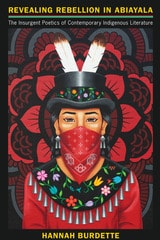
Revealing Rebellion in Abiayala
The Insurgent Poetics of Contemporary Indigenous LiteratureHannah Burdette
University of Arizona Press, 2019
Revealing Rebellion in Abiayala explores the intersections between Indigenous literature and social movements over the past thirty years through the lens of insurgent poetics. Author Hannah Burdette is interested in how Indigenous literature and social movements are intertwined and why these phenomena arise almost simultaneously in disparate contexts across the Americas.
Literature constitutes a key weapon in political struggles as it provides a means to render subjugated knowledge visible and to envision alternatives to modernity and coloniality. The surge in Indigenous literature and social movements is arguably one of the most significant occurrences of the twenty-first century, and yet it remains understudied. Revealing Rebellion in Abiayala bridges that gap by using the concept of Abiayala as a powerful starting point for rethinking inter-American studies through the lens of Indigenous sovereignty.
Reworlding America
Myth, History, and NarrativeJohn Muthyala
Ohio University Press, 2006
John Muthyala's Reworlding America moves beyond the U.S.-centered approach of traditional American literary criticism. In this groundbreaking book, Muthyala argues for a transgeographical perspective from which to study the literary and cultural histories of the Americas.
By emphasizing transnational migration, border crossing, and colonial modernity, Reworlding America exposes how national, ethnic, linguistic, religious, and cultural boundaries have been continually created and transgressed—with profound consequences for the peoples of the Americas.
Drawing from cultural studies, anthropology, literature, and history, Muthyala examines the literatures of the Americas in terms of their intimate relationship to questions of cultural survival, identity formation, and social power. He goes beyond nationalist, ethnocentric, and religious frameworks used to conceptualize American literary history and examines the connection between modernity and colonialism.
Reworlding America's significance extends into the realm of education, history, ethnography, and literary and cultural studies and contributes to the larger project of refashioning the role of English and American studies in a transborder, postnational global culture.
Sideways Developments
Queer and Trans Aesthetics of Global Hong KongKai Hang Cheang
University of Michigan Press, 2026
In this moment of multiple crises, Sideways Developments offers a timely hermeneutic and theory of solidarity and sustainability. The book tracks how sideways aesthetics have evolved from a feature of LGBTQ+ plots, performance, and nonlinear approaches to space-time to a form of togetherness that links postcolonial Hong Kong with struggles worldwide. Using what Cheang terms intersectional formalism as an analytical tool, the book provides a multilayered examination of the alternative pathways exemplified by queer and trans resilience and regeneration.
Supplement to the Handbook of Middle American Indians, Volume 3
LiteraturesVictoria R. Bricker, general editor<br>Munro S. Edmonson, volume editor
University of Texas Press, 1985
The sixteen-volume Handbook of Middle American Indians, completed in 1976, has been acclaimed the world over as the single most valuable resource ever produced for those involved in the study of Mesoamerica. When it was determined in 1978 that the Handbook should be updated periodically, Victoria Reifler Bricker, well-known cultural anthropologist, was elected to be general editor.
This third volume of the Supplement is devoted to the aboriginal literatures of Mesoamerica, a topic receiving little attention in the original Handbook. According to the general editor, "This volume does more than supplement and update the coverage of Middle American Indian literatures in the Handbook. It breaks new ground by defining the parameters of a new interdisciplinary field in Middle American Indian studies."
The aim of the present volume is to consider literature from five Middle American Indian languages: Nahuatl, Yucatecan Maya, Quiche, Tzotzil, and Chorti. The first three literatures are well documented for both the Classical and Modern variants of their languages and are obvious candidates for inclusion in this volume. The literatures of Tzotzil and Chorti, on the other hand, are oral, and heretofore little has been written of their genres and styles.
Taken together, these essays represent a substantial contribution to the Handbook series, with the volume editor's introduction placing in geographic perspective the five literatures chosen as representative of the Middle American literary tradition.
The Dialectics of Our America
Genealogy, Cultural Critique, and Literary HistoryJosé David Saldívar
Duke University Press, 1991
Saldívar pursues this goal through an array of oppositional critical and creative practices. He analyzes a range of North American writers of color (Rolando Hinojosa, Gloria Anzaldúa, Arturo Islas, Ntozake Shange, and others) and Latin American authors (José Martí, Roberto Fernández Retamar, Gabriel García Márquez, and others), whose work forms a radical critique of the dominant culture, its politics, and its restrictive modes of expression. By doing so, Saldívar opens the traditional American canon to a dialog with other voices, not just the voices of national minorities, but those of regional cultures different from the prevalent anglocentric model.
The Dialectics of Our America, in its project to expand the “canon” and define a pan-American literary tradition, will make a critical difference in ongoing attempts to reconceptualize American literary history.
The Dictator Novel
Writers and Politics in the Global SouthMagalí Armillas-Tiseyra
Northwestern University Press, 2019
The Dictator Novel positions novels about dictators as a vital genre in the literatures of the Global South. Primarily identified with Latin America, the dictator novel also has underacknowledged importance in the postcolonial literatures of francophone and anglophone Africa. Although scholars have noted similarities, this book is the first extensive comparative analysis of these traditions; it includes discussions of authors including Gabriel García Márquez, Ngũgĩ wa Thiong’o, Alejo Carpentier, Augusto Roa Bastos, Domingo Faustino Sarmiento, José Mármol, Esteban Echeverría, Ousmane Sembène , Chinua Achebe, Aminata Sow Fall, Henri Lopès, Sony Labou Tansi, and Ahmadou Kourouma. This juxtaposition illuminates the internal dynamics of the dictator novel as a literary genre. In so doing, Armillas-Tiseyra puts forward a comparative model relevant to scholars working across the Global South.
The Literatures of the U.S.-Mexican War
Narrative, Time, and IdentityBy Jaime Javier Rodríguez
University of Texas Press, 2010
The literary archive of the U.S.-Mexican War (1846–1848) opens to view the conflicts and relationships across one of the most contested borders in the Americas. Most studies of this literature focus on the war's nineteenth-century moment of national expansion. In The Literatures of the U.S.-Mexican War, Jaime Javier Rodríguez brings the discussion forward to our own moment by charting a new path into the legacies of a military conflict embedded in the cultural cores of both nations.
Rodríguez's groundbreaking study moves beyond the terms of Manifest Destiny to ask a fundamental question: How do the war's literary expressions shape contemporary tensions and exchanges among Anglo Americans, Mexicans, and Mexican Americans. By probing the war's traumas, anxieties, and consequences with a fresh attention to narrative, Rodríguez shows us the relevance of the U.S.-Mexican War to our own era of demographic and cultural change. Reading across dime novels, frontline battle accounts, Mexican American writings and a wide range of other popular discourse about the war, Rodríguez reveals how historical awareness itself lies at the center of contemporary cultural fears of a Mexican "invasion," and how the displacements caused by the war set key terms for the ways Mexican Americans in subsequent generations would come to understand their own identities. Further, this is also the first major comparative study that analyzes key Mexican war texts and their impact on Mexico's national identity.

The Object of the Atlantic
Concrete Aesthetics in Cuba, Brazil, and Spain, 1868–1968Rachel Price
Northwestern University Press, 2014
The Object of the Atlantic is a wide-ranging study of the transition from a concern with sovereignty to a concern with things in Iberian Atlantic literature and art produced between 1868 and 1968. Rachel Price uncovers the surprising ways that concrete aesthetics from Cuba, Brazil, and Spain drew not only on global forms of constructivism but also on a history of empire, slavery, and media technologies from the Atlantic world. Analyzing Jose Marti’s notebooks, Joaquim de Sousandrade’s poetry, Ramiro de Maeztu’s essays on things and on slavery, 1920s Cuban literature on economic restructuring, Ferreira Gullar’s theory of the “non-object,” and neoconcrete art, Price shows that the turn to objects—and from these to new media networks—was rooted in the very philosophies of history that helped form the Atlantic world itself.
The Senses of Democracy
Perception, Politics, and Culture in Latin AmericaBy Francine R. Masiello
University of Texas Press, 2018
In The Senses of Democracy, Francine R. Masiello traces a history of perceptions expressed in literature, the visual arts, politics, and history from the start of the nineteenth century to the present day. A wide transnational landscape frames the book along with an original and provocative thesis: when the discourse on democracy is altered—when nations fall into crisis or the increased weight of modernity tests minds and nerves—the representation of our sensing bodies plays a crucial role in explaining order and rebellion, cultural innovation, and social change.
Taking a wide arc of materials—periodicals, memoirs, political proclamations, and travel logs, along with art installations and fiction—and focusing on the technologies that supplement and enhance human perception, Masiello looks at the evolution of what she calls “sense work” in cultural texts, mainly from Latin America, that wend from the heights of romantic thought to the startling innovations of modernism in the early twentieth century and then to times of posthuman experience when cyber bodies hurtle through globalized space and human senses are reproduced by machines. Tracing the shifting debates on perceptions, The Senses of Democracy offers a new paradigm with which to speak of Latin American cultural history and launches a field for the comparative study of bodies, experience, pleasure, and pain over the continental divide. In the end, sense work helps us to understand how culture finds its location.
The Tropics Bite Back
Culinary Coups in Caribbean LiteratureValérie Loichot
University of Minnesota Press, 2013
The ubiquitous presence of food and hunger in Caribbean writing—from folktales, fiction, and poetry to political and historical treatises—signals the traumas that have marked the Caribbean from the Middle Passage to the present day. The Tropics Bite Back traces the evolution of the Caribbean response to the colonial gaze (or rather the colonial mouth) from the late nineteenth century to the twenty-first. Unlike previous scholars, Valérie Loichot does not read food simply as a cultural trope. Instead, she is interested in literary cannibalism, which she interprets in parallel with theories of relation and creolization.
For Loichot, “the culinary” is an abstract mode of resistance and cultural production. The Francophone and Anglophone authors whose works she interrogates—including Patrick Chamoiseau, Suzanne Césaire, Aimé Césaire, Maryse Condé, Edwidge Danticat, Édouard Glissant, Lafcadio Hearn, and Dany Laferrière—“bite back” at the controlling images of the cannibal, the starved and starving, the cunning cook, and the sexualized octoroon with the ultimate goal of constructing humanity through structural, literal, or allegorical acts of ingesting, cooking, and eating.
The Tropics Bite Back employs cross-disciplinary methods to rethink notions of race and literary influence by providing a fresh perspective on forms of consumption both metaphorical and material.
Transfigurations Of The Maghreb
Feminism, Decolonization, and LiteraturesWinfred Woodhull
University of Minnesota Press, 1993
Through readings of some of the best-known texts in Algerian literature in French, Woodhull both challenges the separation between French and Francophone literatures and cultures in the academy and explores the ways in which "femininity" has been represented in the texts of North African and French writers since the mid-1950s.
Up from Bondage
The Literatures of Russian and African American SoulDale E. Peterson
Duke University Press, 2000
Illuminating a remarkably widespread cross-pollination between the two cultural and intellectual traditions, Dale E. Peterson frames much of his argument around W. E. B. DuBois’s concept of “double-consciousness,” wherein members of an oppressed section of society view themselves simultaneously through their own self-awareness and through the internalized standards of the dominant culture. He shows how the writings of Dostoevsky, Hurston, Chesnutt, Turgenev, Ellison, Wright, Gorky, and Naylor—texts that enacted and described this sense of double awareness—were used both to perform and to contest the established genres of Western literacy. Woven through Peterson’s textual analyses is his consideration of cultural hybridism and its effects: The writers he examines find multiple ways to testify to and challenge the symptoms of postcolonial trauma. After discussing the strong and significant affinity expressed by contemporary African American cultural theorists for the dialogic thought of Russian linguist Mikhail Bakhtin, Peterson argues that a fuller appreciation of the historic connection between the two cultures will enrich the complicated meanings of being black or Russian in a world that has traditionally avoided acknowledging pluralistic standards of civilization and cultural excellence.
This investigation of comparable moments in the development of Russian and African American ethnic self-consciousness will be valuable to students and scholars of comparative literature, philosophy, cultural theory, ethnicity, linguistics, and postcolonialism, in addition to Slavic and African American studies.
Writing Europe
What is European about the Literatures of Europe? Essays from 33 European CountriesUrsula Keller
Central European University Press, 2004
What do we mean by Europe? Thirty-three renowned authors from 33 European countries attempt an answer-in serious, ironic, skeptical, or optimistic tones. Their essays, written for the symposium held at the Literaturhaus Hamburg in 2003, reflect the astonishing diversity of European cultures. Not only are the style and experience of the individual authors remarkable for their distinctiveness, but their perspectives and views also appear to have little in common-at first glance.
The editors have created a unique literary project, a milestone in the vitally necessary cultural discourse about Europe.