Results by title
4 books match the query 'Local Lives'

Deaf Identities in the Making
Local Lives, Transnational ConnectionsJan-Kåre Breivik
Gallaudet University Press, 2005
The ten stories in Deaf Identities in the Making reveal deaf people who would like a stronger link to the Deaf world. Each story sheds different light on the overriding, empowering master narrative that has become an integral feature of the deaf community. Like success stories from other minorities, the Deaf life story reinforces the collective empowerment process in a Deaf social milieu. Because of these revelations, Breivik’s findings easily reverberate globally in conjunction to the striking similarities of deaf lives around the world, particularly those connected with the experiences of being translocal signers who have struggled for identity in an overwhelmingly hearing context.
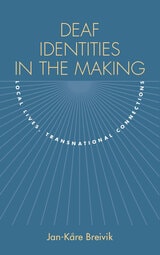
Deaf Identities in the Making
Local Lives, Transnational ConnectionsJan-Kåre Breivik
Gallaudet University Press, 0
In his revolutionary new book, Jan-Kåre Breivik profiles ten Norwegian Deaf people and their life stories within a translocal/transnational framework. Breivik notes that, unlike hearing people, who form their identities from familial roots and local senses of place, deaf individuals often find themselves distanced from their own families and akin to other deaf people in far locations. His study records emerging deaf identities, which he observes are always in the making, and if settled, only temporarily so. To capture the identification processes involved, he relies upon a narrative perspective to trace identity as temporarily produced through autobiographical accounts or capsule life stories. As a result, he has produced striking, in-depth accounts of how core questions of identity are approached from different deaf points of view.
The ten stories in Deaf Identities in the Making reveal deaf people who would like a stronger link to the Deaf world. Each story sheds different light on the overriding, empowering master narrative that has become an integral feature of the Deaf community. Like success stories from other minorities, the Deaf life story reinforces the collective empowerment process in a Deaf social milieu. Because of these revelations, Breivik’s findings easily reverberate globally in conjunction to the striking similarities of deaf lives around the world, particularly those connected with the experiences of being translocal signers who have struggled for identity in an overwhelmingly hearing context.
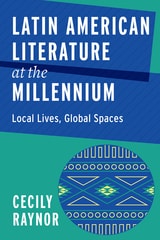
Latin American Literature at the Millennium
Local Lives, Global SpacesCecily Raynor
Bucknell University Press, 2021
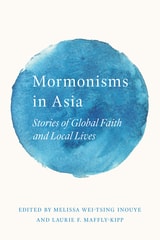
Mormonisms in Asia
Stories of Global Faith and Local LivesEdited by Melissa Wei-Tsing Inouye and Laurie F. Maffly-Kipp
University of Illinois Press, 2026
This volume focuses on Asia, a region that includes more than half the world's population, but where Restoration traditions specifically and Christianity broadly are minority faiths. It uses a combination of focused case studies and theoretical analysis to highlight broader trends and themes that those studies suggest about the meaning of a globalized faith in the twenty-first century. The first section of this book lays out ways of thinking about Mormonism’s global presence in terms of the nation-state, and the essays explore where and how Restoration traditions as institutional actors have made their way into new political and social contexts. The second section studies the tensions created by the encounters of LDS norms with preexisting cultural and political values in local settings. These essays burrow more deeply into political and religious realities and explore the variations in Mormon cultural assumptions about politics and society, as well as the relationship between local congregants and the Mormon administrative center. The final section presents fine-grained
studies that focus attention on one of the central features of LDS lived religion: the role of gender and the family in the religious community. In each case, divine dictates necessarily bump up against traditional societal norms that converts must navigate.
Contributors: John-Charles Duffy, Stacilee Ford, Taunalyn Ford, Conan Grames, David J. Howlett, Melissa Wei-Tsing Inouye, Keisha Lai, Laurie Maffly-Kipp, Matthew Martinich, Meagan Rainock, Shinji Takagi, Pierre Vendassi