Results by title
10 books match the query 'Loggers'

Chinese in the Woods
Logging and Lumbering in the American WestSue Fawn Chung
University of Illinois Press, 2015
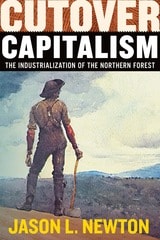
Cutover Capitalism
The Industrialization of the Northern ForestJason L. Newton
West Virginia University Press, 2024
2024 George Perkins Marsh Prize Runner-up
What happened to the loggers of America’s past when lumbermen moved west and south in the late nineteenth and early twentieth centuries? How did these communities continue to create value and meaning in these marginal lands? Cutover Capitalism: The Industrialization of the Northern Forest provides a new perspective on the process of industrialization in America through the study of rural workers in a cutover landscape.
Back when resources started running scarce, the environment of the forest and bodies of workers became the natural resources from which mills and landowners extracted. Bodies and cutover landscapes were mobilized in new ways to increase the scale and efficiency of production—a brutal process for workers, human and animal alike. In the Northern Forest, an industrial working class formed in relation to the unique ways that workers' bodies were used to produce value and in relation to the seasonal cycles of the forest environment.
Cutover Capitalism is an innovative historical study that combines methodological approaches from labor history, environmental history, and the new history of capitalism. The book tells a character-driven yet theoretically sophisticated story about what it was like to live through this process of industrialization.
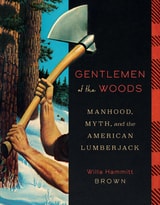
Gentlemen of the Woods
Manhood, Myth, and the American LumberjackWilla Hammitt Brown
University of Minnesota Press, 2025
Lumberjacks: the men, the myth, and the making of an American legend
The folk hero Paul Bunyan, burly, bearded, wielding his big ax, stands astride the story of the upper Midwest—a manly symbol of the labor that cleared the vast north woods for the march of industrialization while somehow also maintaining an aura of pristine nature. This idea, celebrated in popular culture with songs and folktales, receives a long overdue and thoroughly revealing correction in Gentlemen of the Woods, a cultural history of the life and lore of the real lumberjack and his true place in American history.
Now recalled as heroes of wilderness and masculinity, lumberjacks in their own time were despised as amoral transients. Willa Hammitt Brown shows that nineteenth-century jacks defined their communities of itinerant workers by metrics of manhood that were abhorrent to the residents of the nearby Northwoods boomtowns, valuing risk-taking and skill rather than restraint and control. Reviewing songs, stories, and firsthand accounts from loggers, Brown brings to life the activities and experiences of the lumberjacks as they moved from camp to camp. She contrasts this view with the popular image cultivated by retreating lumber companies that had to sell off utterly barren land. This mythologized image glorified the lumberjack and evoked a kindly, flannel-wearing, naturalist hero.
Along with its portrait of lumberjack life and its analysis of the creation of lumberjack myth, Gentlemen of the Woods offers new insight into the intersections of race and social class in the logging enterprise, considering the actual and perceived roles of outsider lumberjacks and Native inhabitants of the northern forests. Anchored in the dual forces of capitalism and colonization, this lively and compulsively readable account offers a new way to understand a myth and history that has long captured our collective imagination.

Haywire
Discord in Maine's Logging Woods and the Unraveling of an IndustryAndrew Egan
University of Massachusetts Press, 2022
Logging in the northern forest has been romanticized, with images of log drives, plaid shirts, and bunkhouses in wide circulation. Increasingly dismissed as a quaint, rural pastime, logging remains one of the most dangerous jobs in the United States, with loggers occupying a precarious position amid unstable markets, expanding global competition, and growing labor discord. Examining a time of transition and decline in Maine’s forest economy, Andrew Egan traces pathways for understanding the challenges that have faced Maine’s logging community and, by extension, the state’s forestry sector, from the postwar period through today.
Seeking greater profits, logging companies turned their crews loose at midcentury, creating a workforce of independent contractors who were forced to purchase expensive equipment and compete for contracts with the mills. Drawing on his own experience with the region’s forest products industry, interviews with Maine loggers, media coverage, and court documents, Egan follows the troubled recent history of the industry and its battle for survival.
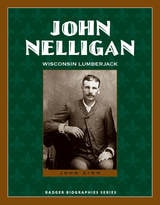
John Nelligan
Wisconsin LumberjackJohn Zimm
Wisconsin Historical Society Press, 2015
Born in 1852, Nelligan rose through the lumberjack ranks, starting out as a humble laborer and working his way up to foreman. He worked and lived in Maine, Pennsylvania, and even Canada before coming to Wisconsin in 1871. Learn what surviving and sawing wood for a living was like many years ago—from the story of one Wisconsin man who lived it!
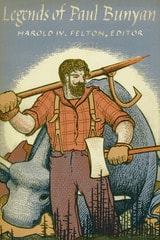
Legends of Paul Bunyan
Harold W. Felton
University of Minnesota Press, 2008
The collected lore of Minnesota's favorite lumberjack hero
Paul Bunyan is a true American folk character, created in logging camp bunkhouses by men who spun exaggerated stories that combined hard work and fantasy.
While the origins of Paul Bunyan and his sidekick Babe the Blue Ox are hazy, many storytellers have over the years contributed their own takes to produce an existing body of work--a true American legend--that matches the size of the lumberjack himself. Collected in colorful and engaging sections such as "Paul the Man," "Paul and the Animal Kingdom," and "The Wonderful Big Blue Ox, Babe," Legends of Paul Bunyan features more than thirty authors celebrating the largest lumberman, including stories by such Bunyan luminaries as James Stevens and W. B. Laughead, as well as such literary icons as Robert Frost and Carl Sandburg.
Pinery Boys
Songs and Songcatching in the Lumberjack EraEdited by Franz Rickaby with Gretchen Dykstra and James P. Leary
University of Wisconsin Press, 2017
Pinery Boys now incorporates, commemorates, contextualizes, and complements Rickaby's early work. It includes an introduction and annotations throughout by eminent folklore scholar James P. Leary and an engaging, impressively researched biography by Rickaby's granddaughter Gretchen Dykstra. Central to this edition are Rickaby's own introduction and the original fifty-one songs that he published—including "Jack Haggerty's Flat River Girl," "The Little Brown Bulls," "Ole from Norway," "The Red Iron Ore," and "Morrissey and the Russian Sailor"—plus fourteen additional songs selected to represent the varied collecting Rickaby did beyond the lumber camps.
Supplemented by historical photographs, Pinery Boys fully reveals Franz Rickaby as a visionary artist and scholar and provides glimpses into the past lives of woods poets and singers.
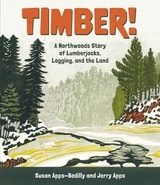
Timber!
A Northwoods Story of Lumberjacks, Logging, and the LandSusan Apps-Bodilly
Wisconsin Historical Society Press, 2024
How did the logging boom begin? What was it like to work in the woods? What happened to the land after the trees were cut down? The latest book for young readers from father-daughter duo Jerry Apps and Susan Apps-Bodilly explores the origin story of Wisconsin’s logging boom, the devastation it caused to the land, and the extraordinary efforts to restore the cutover land and log sustainably.
Timber! helps young readers examine a complex and pivotal chapter in our state and nation’s history, covering a wide range of topics, including:
• how Native people used, shared, and relied on natural resources for thousands of years
• the forced removal of Native people from forested lands
• how the lumber industry made possible the westward expansion of the United States
• what it was like to work in a logging camp, on a log drive, and inside a sawmill
• the roles on a logging team, from sawyer to cook
• the destructive legacy of early logging practices and early efforts to restore the land
• the emergence of sustainable forestry practices
This comprehensive yet easy-to-read history includes letters, postcards, and other primary sources paired with discussion questions designed to engage young readers’ creativity and critical-thinking skills. Timber! also features more than 100 images, a glossary, suggested activities, and an extensive list of related resources, including books, websites, teaching materials, museums, and outdoor places to visit. Timber! will inspire readers of all ages to explore, protect, and learn about trees and forests in their own communities.

When the White Pine Was King
A History of Lumberjacks, Log Drives, and Sawdust Cities in WisconsinJerry Apps
Wisconsin Historical Society Press, 2020
For more than half a century, logging, lumber production, and affiliated enterprises in Wisconsin’s Northwoods provided jobs for tens of thousands of Wisconsinites and wealth for many individuals. The industry cut through the lives of nearly every Wisconsin citizen, from an immigrant lumberjack or camp cook in the Chippewa Valley to a Suamico sawmill operator, an Oshkosh factory worker to a Milwaukee banker.
When the White Pine Was King tells the stories of the heyday of logging: of lumberjacks and camp cooks, of river drives and deadly log jams, of sawmills and lumber towns and the echo of the ax ringing through the Northwoods as yet another white pine crashed to the ground. He explores the aftermath of the logging era, including efforts to farm the cutover (most of them doomed to fail), successful reforestation work, and the legacy of the lumber and wood products industries, which continue to fuel the state’s economy.
Enhanced with dozens of historic photos, When the White Pine Was King transports readers to the lumber boom era and reveals how the lessons learned in the vast northern forestlands continue to shape the region today.

rough house
a memoirTina Ontiveros
Oregon State University Press, 2020
Tina Ontiveros was born into timber on both sides of the family. Her mother spent summers driving logging trucks for her family’s operation, and her father was the son of an itinerant logger, raised in a variety of lumber towns, as Tina herself would be.
A story of growing up in turmoil, rough house recounts a childhood divided between a charming, mercurial, abusive father in the forests of the Pacific Northwest and a mother struggling with small-town poverty. It is also a story of generational trauma, especially for the women—a story of violent men and societal restrictions, of children not always chosen and frequently raised alone.
Ontiveros’s father, Loyd, looms large. Reflecting on his death and long absence from her life, she writes, “I had this ridiculous hope that I would get to enjoy a functional relationship with my father, on my own terms, now that I was an adult.” In searingly honest, straightforward prose, rough house is her attempt to carve out this relationship, to understand her father and her family from an adult perspective.
While some elements of Ontiveros’s story are universal, others are indelibly grounded in the logging camps of the Pacific Northwest at the end of the twentieth century, as the lumber industry shifted and contracted. Tracing her childhood through the working-class towns and forests of Washington and Oregon, Ontiveros explores themes of love and loss, parents and children, and her own journey to a different kind of adulthood.