Results by title

7 books match the query 'Long'
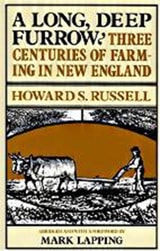
cover of A Long, Deep Furrow: Three Centuries of Farming in New England

A Long, Deep Furrow

Three Centuries of Farming in New England

Howard S. Russell

Brandeis University Press, 1982
A selection of the History Book Club.
[more]
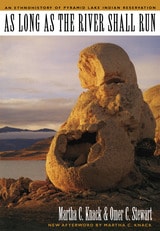
cover of As Long As The River Shall Run: An Ethnohistory Of Pyramid Lake Indian Reservation

As Long As The River Shall Run

An Ethnohistory Of Pyramid Lake Indian Reservation

Martha C. Knack

University of Nevada Press, 1999

The history of the Northern Paiutes of Pyramid Lake in northwestern Nevada is one fraught with the conflicts and tensions of the modern West—relentless encroachment by non-Indians into Indian lands; disputes over scarce water; endangerment of a rare and valuable species of fish—all played out on a stage that stretches from the centers of national politics in Washington, DC, to a remote desert reservation where an ancient people struggles to preserve the traditional center of its spiritual and economic life. Martha Knack’s and Omer Stewart’s brilliant interdisciplinary study of the Pyramid Lake Reservation, first published in 1984, is considered a major landmark in American Indian history—a lucid and insightful examination of the Paiutes, their reservation, and the ongoing controversy over control of their land and the life-giving Truckee River waters that feed Pyramid Lake. The complex interethnic relations described in this book offer readers a case study of the dominant issues in Indian affairs and the themes of the legislation and court decisions that shape the fates of native peoples.
[more]
cover of As Long as We're Here

As Long as We're Here

Joel Brouwer

Four Way Books, 2026

As Long as We’re Here is an off-key anthem, a funhouse mirror held up to our dumpster fire era. Chronically online, distracted and distracting, with too many browser tabs open at once, attentive to everything and focused on nothing, Brouwer delights in the late capitalist absurdities of sleeping apps and internet dance crazes, and riffs on the argot of the group chat and the team meeting. These slippery poems both suffer from and revel in their ADD. Their shifts are as fleet as our news feeds, their serpentine sentences leap from barroom jests to high modernist splendor and back. But the book is not all fun and games. Dreamy tales of edgelords and loyalty oaths often arrive at places of surprising pathos and beauty. Mortality gnaws at the narrators of these poems, and political unrest lurks in the background. Still, a sense of solidarity—that we of the title, a recurring pronoun throughout—keeps despair at bay. Indeed, As Long as We’re Here is a book of intimacy, of the coterie. Friends and lovers people its lyrics, which often feel like late-night hang sessions with eccentric, wise-cracking pals. Full of wry wisdom and lush music, As Long as We’re Here knows what to do with a diminished thing: make it sing.

[more]
cover of As Long as the Rivers Run: Hydroelectric Development and Native Communities

As Long as the Rivers Run

Hydroelectric Development and Native Communities

James B. Waldram

University of Manitoba Press, 1993
In past treaties, the Aboriginal people of Canada surrendered title to their lands in return for guarantees that their traditional ways of life would be protected. Since the 1950s, governments have reneged on these commitments in order to acquire more land and water for hydroelectric development. James B. Waldram examines this controversial topic through an analysis of the politics of hydroelectric dam construction in the Canadian Northwest, focusing on three Aboriginal communities in Manitoba and Saskatchewan. He argues that little has changed in our treatment of Aboriginal people in the past hundred years, when their resources are still appropriated by the government “for the common good.” Using archival materials, personal interviews and largely inaccessible documents and letters, Waldram highlights the clear parallel between the treatment of Aboriginal people in the negotiations and agreements that accompany hydro development with the treaty and scrip processes of the past century.
[more]
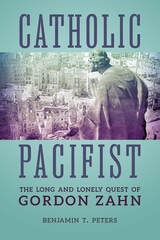
cover of Catholic Pacifist: The Long and Lonely Quest of Gordon Zahn

Catholic Pacifist

The Long and Lonely Quest of Gordon Zahn

Benjamin Peters

Catholic University of America Press, 2026
A study of the life and work of Gordon Zahn (1918-2007), one of the most significant and formative figures in the history of the US Catholic peace movement. During World War II, Zahn was one of only a handful of US Catholic conscientious objectors, an experience that first put him in contact with Dorothy Day and the Catholic Worker. Following the war, Zahn completed a PhD in sociology at The Catholic University of America where Paul Hanly Furfey’s “supernatural sociology” had a profound effect on him. After joining the faculty at Loyola University, Chicago, Zahn won a Fulbright year in Germany (1956-57) where he discovered the story of Franz Jägerstätter, the Austrian Catholic farmer, husband, and father who was beheaded by the Nazis in 1943 for refusing to participate in Hitler’s military. It was Zahn’s 1964 book In Solitary Witness that introduced Jägerstätter to an international audience and led to his beatification by Pope Benedict XVI in 2007. This work, along with Zahn’s several other books, secured his place as a leading intellectual in the Catholic peace movement. His work influenced the discussions of war and peace at the Second Vatican Council and he was enlisted as an expert witness during the drafting of the US Catholic Bishops’ pastoral letter on nuclear weapons, The Challenge of Peace (1983). Zahn made one of the most intellectually developed cases in the US for "Catholic pacifism"—two terms that both Catholics and pacifists had long regarded as deeply incompatible. Forging a Catholic pacifist position led him to be far more perceptive and critical of US political and military institutions than most of fellow US Catholics. Ultimately, Zahn saw the Catholic Church as the only institution capable of resisting, and support those who resist, modern warfare and the modern war-making state. His traditional view of the Church grounded his claim that Catholics can be pacifist and his further assertion that the Church should serve as a “source of dissent” for Catholics and others, especially during times of war. While marginalized within the broader US Catholic intellectual community, Zahn found common cause with other Catholic luminaries who are now seen to be ahead of their time, including Dorothy Day, Thomas Merton, and Daniel Berrigan. Gordon Zahn’s story serves as a template for telling the broader story of the US Catholic peace movement and the development of Catholic attitudes on war and conscientious objection that took place within the twentieth century.
[more]
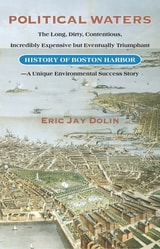
cover of Political Waters: The Long, Dirty, Contentious, Incredibly Expensive but Eventually Triumphant History of Boston Harbor-A Unique Environmental Success Story

Political Waters

The Long, Dirty, Contentious, Incredibly Expensive but Eventually Triumphant History of Boston Harbor-A Unique Environmental Success Story

Eric Jay Dolin

University of Massachusetts Press, 2004

Boston Harbor served as a colonial gateway to the world, witnessed the Boston Tea Party, and helped the community transform itself from an outpost of a few hardy settlers into a bustling metropolis and self-proclaimed hub of the universe. Yet for hundreds of years Boston Harbor was also a cesspool. Long before Bostonians dumped tea into the harbor to protest English taxes, they dumped sewage there. 

As the Boston area grew and prospered, its sewage problems worsened, as did the harbor's health, to the point where in the 1980s it was considered the most polluted harbor in the country and ridiculed as the “harbor of shame.” Then, in one of the most impressive environmental comebacks in American history, Boston Harbor was dramatically cleaned up. All it took was two lawsuits, two courts, dozens of lawyers, the creation of a powerful sewage authority, thousands of workers, millions of labor hours, and billions of dollars. 

Sewage management is rarely as compelling and exciting as higher profile environmental issues such as global climate change, preserving endangered species, or protecting tropical rainforests. But it can be, as Eric Jay Dolin shows in this engaging narrative account. Boston's struggle to deal with its sewage is an epic story of failure and success, replete with colorful characters, political, bureaucratic, and legal twists and turns, engineering feats, and massive amounts of money. In the end, success hinged on the often overlooked yet monumentally important act of responsibly disposing of the waste people produce every day.
[more]
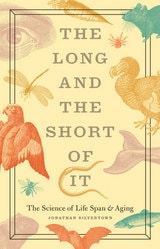
cover of The Long and the Short of It: The Science of Life Span and Aging

The Long and the Short of It

The Science of Life Span and Aging

Jonathan Silvertown

University of Chicago Press, 2013

Everything that lives will die. That’s the fundamental fact of life. But not everyone dies at the same age: people vary wildly in their patterns of aging and their life spans—and that variation is nothing compared to what’s found in other animal and plant species. A giant fungus found in Michigan has been alive since the Ice Age, while a dragonfly lives but four months, a mayfly half an hour. What accounts for these variations—and what can we learn from them that might help us understand, or better manage, our own aging?

With The Long and the Short of It, biologist and writer Jonathan Silvertown offers readers a witty and fascinating tour through the scientific study of longevity and aging. Dividing his daunting subject by theme—death, life span, aging, heredity, evolution, and more—Silvertown draws on the latest scientific developments to paint a picture of what we know about how life span, senescence, and death vary within and across species. At every turn, he addresses fascinating questions that have far-reaching implications: What causes aging, and what determines the length of an individual life? What changes have caused the average human life span to increase so dramatically—fifteen minutes per hour—in the past two centuries? If evolution favors those who leave the most descendants, why haven’t we evolved to be immortal? The answers to these puzzles and more emerge from close examination of the whole natural history of life span and aging, from fruit flies, nematodes, redwoods, and much more.
 The Long and the Short of It pairs a perpetually fascinating topic with a wholly engaging writer, and the result is a supremely accessible book that will reward curious readers of all ages.
[more]