Results by title
2 books match the query 'Long Cold War'
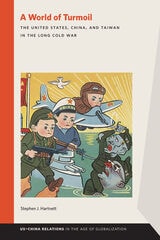
A World of Turmoil
The United States, China, and Taiwan in the Long Cold Warstephen hartnett
Michigan State University Press, 2021
The United States, the People’s Republic of China, and Taiwan have danced on the knife’s edge of war for more than seventy years. A work of sweeping historical vision, A World of Turmoil offers case studies of five critical moments: the end of World War II and the start of the Long Cold War; the almost-nuclear war over the Quemoy Islands in 1954–1955; the détente, deceptions, and denials surrounding the 1972 Shanghai Communiqué; the Taiwan Strait Crisis of 1995–1996; and the rise of postcolonial nationalism in contemporary Taiwan. Diagnosing the communication dispositions that structured these events reveals that leaders in all three nations have fallen back on crippling stereotypes and self-serving denials in their diplomacy. The first communication-based study of its kind, this book merges history, rhetorical criticism, and advocacy in a tour de force of international scholarship. By mapping the history of miscommunication between the United States, China, and Taiwan, this provocative study shows where and how our entwined relationships have gone wrong, clearing the way for renewed dialogue, enhanced trust, and new understandings.
[more]
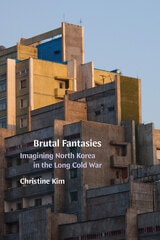
Brutal Fantasies
Imagining North Korea in the Long Cold WarChristine Kim
Duke University Press, 2025
In Brutal Fantasies, Christine Kim examines how Western cultural representations of North Korea depend on fantasies of the inhuman. Drawing on films, fiction, and defectors’ life writings from the last two decades, Kim analyzes how these representations construct North Korea as a site of brutality and inhumanity. She recasts these stories through Asian American and global Asian frameworks that move beyond common Cold War binaries to critique how US imperialism persists in global understandings of North Korea. Kim shows how human rights discourses simultaneously instrumentalize and dehumanize North Korea while demonstrating that North Korea is a site of contradiction that complicates Western interpretive constraints. She also explores the Korean diaspora’s complex relationship with North Korea and highlights the vulnerability and marginalization of diasporic subjects. In so doing, Kim pulls back the veil on prevailing cultural myths enshrouding North Korea, offering alternative ways of understanding its role in global and regional imaginaries.
[more]