Results by title

11 books match the query 'Long Shadow'
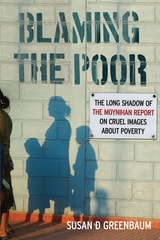
cover of Blaming the Poor: The Long Shadow of the Moynihan Report on Cruel Images about Poverty

Blaming the Poor

The Long Shadow of the Moynihan Report on Cruel Images about Poverty

Greenbaum, Susan D

Rutgers University Press, 2015
In 1965, the late Senator Daniel Patrick Moynihan—then a high-ranking official in the Department of Labor—sparked a firestorm when he released his report “The Negro Family,” which came to be regarded by both supporters and detractors as an indictment of African American culture. Blaming the Poor examines the regrettably durable impact of the Moynihan Report for race relations and social policy in America, challenging the humiliating image the report cast on poor black families and its misleading explanation of the causes of poverty.
 
A leading authority on poverty and racism in the United States, Susan D. Greenbaum dismantles Moynihan’s main thesis—that the so called matriarchal structure of the African American family “feminized” black men, making them inadequate workers and absent fathers, and resulting in what he called a tangle of pathology that led to a host of ills, from teen pregnancy to adult crime. Drawing on extensive scholarship, Greenbaum highlights the flaws in Moynihan’s analysis. She reveals how his questionable ideas have been used to redirect blame for substandard schools, low wages, and the scarcity of jobs away from the societal forces that cause these problems, while simultaneously reinforcing stereotypes about African Americans. Greenbaum also critiques current policy issues that are directly affected by the tangle of pathology mindset—the demonization and destruction of public housing; the criminalization of black youth; and the continued humiliation of the poor by entrepreneurs who become rich consulting to teachers, non-profits, and social service personnel.  
 
A half century later, Moynihan’s thesis remains for many a convenient justification for punitive measures and stingy indifference to the poor. Blaming the Poor debunks this infamous thesis, proposing instead more productive and humane policies to address the enormous problems facing us today.
 
[more]
cover of Little House, Long Shadow: Laura Ingalls Wilder's Impact on American Culture

Little House, Long Shadow

Laura Ingalls Wilder's Impact on American Culture

Anita Clair Fellman

University of Missouri Press, 2008

Beyond their status as classic children’s stories, Laura Ingalls Wilder’s Little House books play a significant role in American culture that most people cannot begin to appreciate. Millions of children have sampled the books in school; played out the roles of Laura and Mary; or visited Wilder homesites with their parents, who may be fans themselves. Yet, as Anita Clair Fellman shows, there is even more to this magical series with its clear emotional appeal: a covert political message that made many readers comfortable with the resurgence of conservatism in the Reagan years and beyond.

In Little House, Long Shadow, a leading Wilder scholar offers a fresh interpretation of the Little House books that examines how this beloved body of children’s literature found its way into many facets of our culture and consciousness—even influencing the responsiveness of Americans to particular political views. Because both Wilder and her daughter, Rose Wilder Lane, opposed the New Deal programs being implemented during the period in which they wrote, their books reflect their use of family history as an argument against the state’s protection of individuals from economic uncertainty. Their writing emphasized the isolation of the Ingalls family and the family’s resilience in the face of crises and consistently equated self-sufficiency with family acceptance, security, and warmth.

Fellman argues that the popularity of these books—abetted by Lane’s overtly libertarian views—helped lay the groundwork for a negative response to big government and a positive view of political individualism, contributing to the acceptance of contemporary conservatism while perpetuating a mythic West. Beyond tracing the emergence of this influence in the relationship between Wilder and her daughter, Fellman explores the continuing presence of the books—and their message—in modern cultural institutions from classrooms to tourism, newspaper editorials to Internet message boards.

Little House, Long Shadow shows how ostensibly apolitical artifacts of popular culture can help explain shifts in political assumptions. It is a pioneering look at the dissemination of books in our culture that expands the discussion of recent political transformations—and suggests that sources other than political rhetoric have contributed to Americans’ renewed appreciation of individualist ideals.
[more]
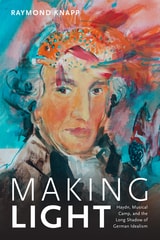
cover of Making Light: Haydn, Musical Camp, and the Long Shadow of German Idealism

Making Light

Haydn, Musical Camp, and the Long Shadow of German Idealism

Raymond Knapp

Duke University Press, 2018
In Making Light Raymond Knapp traces the musical legacy of German Idealism as it led to the declining prestige of composers such as Haydn while influencing the development of American popular music in the nineteenth century. Knapp identifies in Haydn and in early popular American musical cultures such as minstrelsy and operetta a strain of high camp—a mode of engagement that relishes both the superficial and serious aspects of an aesthetic experience—that runs antithetical to German Idealism's musical paradigms. By considering the disservice done to Haydn by German Idealism alongside the emergence of musical camp in American popular music, Knapp outlines a common ground: a humanistically based aesthetic of shared pleasure that points to ways in which camp receptive modes might rejuvenate the original appeal of Haydn's music that has mostly eluded audiences. In so doing, Knapp remaps the historiographical modes and systems of critical evaluation that dominate musicology while troubling the divide between serious and popular music.
[more]
cover of Politicized Society (2nd ed.): The Long Shadow of Taiwan's One-party Legacy

Politicized Society (2nd ed.)

The Long Shadow of Taiwan's One-party Legacy

Mikael Mattlin

National University of Singapore Press, 2011
Taiwan's gradual democratization has been celebrated as one of the most successful cases of political transformation, due to an initially smooth political transition from one-party authoritarianism to multi-party politics. Yet, this transition is incomplete and, especially since 2000 when the first non-Kuomintang president was elected, Taiwan has seen an intense and persistent politicization of its society. Institutional flaws are not enough to explain the shortcomings of Taiwan's democratic politics or those in other transitional democracies, the author argues. Rather, when an old dominant party like the Kuomintang continues to thrive even after the end of one-party rule, the process of political liberalization and transition contains within itself the seeds of structural politicization. This is, then, a study with empirical value - warning that extreme politicization is the main internal threat to the sustainability of Taiwan's democratic politics - but its analysis also applies to other transitional democracies around the world.
[more]
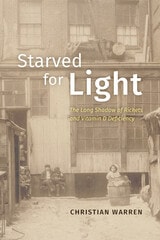
cover of Starved for Light: The Long Shadow of Rickets and Vitamin D Deficiency

Starved for Light

The Long Shadow of Rickets and Vitamin D Deficiency

Christian Warren

University of Chicago Press, 2024

A wide-ranging history of rickets tracks the disease’s emergence, evolution, and eventual treatment—and exposes the backstory behind contemporary worries about vitamin D deficiency.
 
Rickets, a childhood disorder that causes soft and misshapen bones, transformed from an ancient but infrequent threat to a common scourge during the Industrial Revolution. Factories, mills, and urban growth transformed the landscape. Malnutrition and insufficient exposure to sunlight led to severe cases of rickets across Europe and the United States, affecting children in a variety of settings: dim British cities and American slave labor camps, moneyed households and impoverished ones. By the late 1800s, it was one of the most common pediatric diseases, seemingly an intractable consequence of modern life.
 
Starved for Light offers the first comprehensive history of this disorder. Tracing the efforts to understand, prevent, and treat rickets—first with the traditional remedy of cod liver oil, then with the application of a breakthrough corrective, industrially produced vitamin D supplements—Christian Warren places the disease at the center of a riveting medical history, one alert to the ways society shapes our views on illness. Warren shows how physicians and public health advocates in the United States turned their attention to rickets among urban immigrants, both African Americans and southern Europeans; some concluded that the disease was linked to race, while others blamed poverty, sunless buildings and cities, or cultural preferences in diet and clothing. Spotlighting rickets’ role in a series of medical developments, Warren leads readers through the encroachment on midwifery by male obstetricians, the development of pediatric orthopedic devices and surgeries, early twentieth-century research into vitamin D, appalling clinical experiments on young children testing its potential, and the eventual commercialization of all manner of vitamin D supplements. As vitamin D consumption rose in the mid-twentieth century, rickets—previously a major concern for doctors, parents, and public health institutions—faded in its severity and frequency, and as a topic of discussion. But despite the availability of drugstore supplements and fortified milk, small numbers of cases still appear today, and concerns and controversies about vitamin D deficiency in general continue to grow.
 
Sweeping and engaging, Starved for Light illuminates the social conditions underpinning our cures and our choices, helping us to see history’s echoes in contemporary prescriptions.

[more]
cover of Starved for Light: The Long Shadow of Rickets and Vitamin D Deficiency

Starved for Light

The Long Shadow of Rickets and Vitamin D Deficiency

Christian Warren

University of Chicago Press, 2024

This is an auto-narrated audiobook version of this book.

A wide-ranging history of rickets tracks the disease’s emergence, evolution, and eventual treatment—and exposes the backstory behind contemporary worries about vitamin D deficiency.

 
Rickets, a childhood disorder that causes soft and misshapen bones, transformed from an ancient but infrequent threat to a common scourge during the Industrial Revolution. Factories, mills, and urban growth transformed the landscape. Malnutrition and insufficient exposure to sunlight led to severe cases of rickets across Europe and the United States, affecting children in a variety of settings: dim British cities and American slave labor camps, moneyed households and impoverished ones. By the late 1800s, it was one of the most common pediatric diseases, seemingly an intractable consequence of modern life.
 
Starved for Light offers the first comprehensive history of this disorder. Tracing the efforts to understand, prevent, and treat rickets—first with the traditional remedy of cod liver oil, then with the application of a breakthrough corrective, industrially produced vitamin D supplements—Christian Warren places the disease at the center of a riveting medical history, one alert to the ways society shapes our views on illness. Warren shows how physicians and public health advocates in the United States turned their attention to rickets among urban immigrants, both African Americans and southern Europeans; some concluded that the disease was linked to race, while others blamed poverty, sunless buildings and cities, or cultural preferences in diet and clothing. Spotlighting rickets’ role in a series of medical developments, Warren leads readers through the encroachment on midwifery by male obstetricians, the development of pediatric orthopedic devices and surgeries, early twentieth-century research into vitamin D, appalling clinical experiments on young children testing its potential, and the eventual commercialization of all manner of vitamin D supplements. As vitamin D consumption rose in the mid-twentieth century, rickets—previously a major concern for doctors, parents, and public health institutions—faded in its severity and frequency, and as a topic of discussion. But despite the availability of drugstore supplements and fortified milk, small numbers of cases still appear today, and concerns and controversies about vitamin D deficiency in general continue to grow.
 
Sweeping and engaging, Starved for Light illuminates the social conditions underpinning our cures and our choices, helping us to see history’s echoes in contemporary prescriptions.
[more]
cover of Starved for Light: The Long Shadow of Rickets and Vitamin D Deficiency

Starved for Light

The Long Shadow of Rickets and Vitamin D Deficiency

Christian Warren

University of Chicago Press, 2024

This is an auto-narrated audiobook version of this book.

A wide-ranging history of rickets tracks the disease’s emergence, evolution, and eventual treatment—and exposes the backstory behind contemporary worries about vitamin D deficiency.

 
Rickets, a childhood disorder that causes soft and misshapen bones, transformed from an ancient but infrequent threat to a common scourge during the Industrial Revolution. Factories, mills, and urban growth transformed the landscape. Malnutrition and insufficient exposure to sunlight led to severe cases of rickets across Europe and the United States, affecting children in a variety of settings: dim British cities and American slave labor camps, moneyed households and impoverished ones. By the late 1800s, it was one of the most common pediatric diseases, seemingly an intractable consequence of modern life.
 
Starved for Light offers the first comprehensive history of this disorder. Tracing the efforts to understand, prevent, and treat rickets—first with the traditional remedy of cod liver oil, then with the application of a breakthrough corrective, industrially produced vitamin D supplements—Christian Warren places the disease at the center of a riveting medical history, one alert to the ways society shapes our views on illness. Warren shows how physicians and public health advocates in the United States turned their attention to rickets among urban immigrants, both African Americans and southern Europeans; some concluded that the disease was linked to race, while others blamed poverty, sunless buildings and cities, or cultural preferences in diet and clothing. Spotlighting rickets’ role in a series of medical developments, Warren leads readers through the encroachment on midwifery by male obstetricians, the development of pediatric orthopedic devices and surgeries, early twentieth-century research into vitamin D, appalling clinical experiments on young children testing its potential, and the eventual commercialization of all manner of vitamin D supplements. As vitamin D consumption rose in the mid-twentieth century, rickets—previously a major concern for doctors, parents, and public health institutions—faded in its severity and frequency, and as a topic of discussion. But despite the availability of drugstore supplements and fortified milk, small numbers of cases still appear today, and concerns and controversies about vitamin D deficiency in general continue to grow.
 
Sweeping and engaging, Starved for Light illuminates the social conditions underpinning our cures and our choices, helping us to see history’s echoes in contemporary prescriptions.
[more]
cover of The Little Man with the Long Shadow

The Little Man with the Long Shadow

George S. Mills

University of Iowa Press, 1988

 Frederick M. Hubbell, railroad financier and builder, real estate investor, public utilities magnate, leading lawyer, and founder of Iowa’s first life insurance company, the Equitable, was at one time the wealthiest Iowan in the state’s history. Based on his diaries from 1855 to 1927, The Little Man with the Long Shadow tells the story of this industrious and imaginative entrepreneur.
[more]
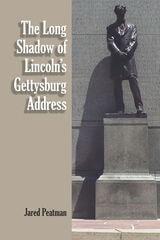
cover of The Long Shadow of Lincoln's Gettysburg Address

The Long Shadow of Lincoln's Gettysburg Address

Jared Peatman

Southern Illinois University Press, 2013
When Abraham Lincoln addressed the crowd at the new national cemetery in Gettysburg, Pennsylvania, on November 19, 1863, he intended his speech to be his most eloquent statement on the inextricable link between equality and democracy. However, unwilling to commit to equality at that time, the nation stood ill-prepared to accept the full message of Lincoln’s Gettysburg Address. In the ensuing century, groups wishing to advance a particular position hijacked Lincoln’s words for their own ends, highlighting the specific parts of the speech that echoed their stance while ignoring the rest. Only as the nation slowly moved toward equality did those invoking Lincoln’s speech come closer to recovering his true purpose. In this incisive work, Jared Peatman seeks to understand Lincoln’s intentions at Gettysburg and how his words were received, invoked, and interpreted over time, providing a timely and insightful analysis of one of America’s most legendary orations.
 
After reviewing the events leading up to November 19, 1863, Peatman examines immediate responses to the ceremony in New York, Gettysburg itself, Confederate Richmond, and London, showing how parochial concerns and political affiliations shaped initial coverage of the day and led to the censoring of Lincoln’s words in some locales.  He then traces how, over time, proponents of certain ideals invoked the particular parts of the address that suited their message, from reunification early in the twentieth century to American democracy and patriotism during the world wars and, finally, to Lincoln’s full intended message of equality during the Civil War centennial commemorations and the civil rights movement of the 1960s. Peatman also explores foreign invocations of the Gettysburg Address and its influence on both the Chinese constitution of 1912 and the current French constitution. An epilogue highlights recent and even current applications of the Gettysburg Address and hints at ways the speech might be used in the future.
 
By tracing the evolution of Lincoln’s brief words at a cemetery dedication into a revered document essential to American national identity, this revealing work provides fresh insight into the enduring legacy of Abraham Lincoln and his Gettysburg Address on American history and culture.
[more]
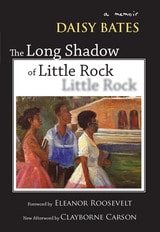
cover of The Long Shadow of Little Rock: A Memoir

The Long Shadow of Little Rock

A Memoir

Daisy Bates

University of Arkansas Press, 2007
At an event honoring Daisy Bates as 1990’s Distinguished Citizen then-governor Bill Clinton called her "the most distinguished Arkansas citizen of all time." Her classic account of the 1957 Little Rock School Crisis, The Long Shadow of Little Rock, couldn't be found on most bookstore shelves in 1962 and was banned throughout the South. In 1988, after the University of Arkansas Press reprinted it, it won an American Book Award. On September 3, 1957, Gov. Orval Faubus called out the National Guard to surround all-white Central High School and prevent the entry of nine black students, challenging the Supreme Court's 1954 order to integrate all public schools. On September 25, Daisy Bates, an official of the NAACP in Arkansas, led the nine children into the school with the help of federal troops sent by President Eisenhower–the first time in eighty-one years that a president had dispatched troops to the South to protect the constitutional rights of black Americans. This new edition of Bates's own story about these historic events is being issued to coincide with the fiftieth anniversary of the Little Rock School crisis in 2007.
[more]
cover of The Long Shadow: Family Background, Disadvantaged Urban Youth, and the Transition to Adulthood

The Long Shadow

Family Background, Disadvantaged Urban Youth, and the Transition to Adulthood

Karl Alexander

Russell Sage Foundation, 2014

A volume in the American Sociological Association's Rose Series in Sociology West Baltimore stands out in the popular imagination as the quintessential “inner city”—gritty, run-down, and marred by drugs and gang violence. Indeed, with the collapse of manufacturing jobs in the 1970s, the area experienced a rapid onset of poverty and high unemployment, with few public resources available to alleviate economic distress. But in stark contrast to the image of a perpetual “urban underclass” depicted in television by shows like The Wire, sociologists Karl Alexander, Doris Entwisle, and Linda Olson present a more nuanced portrait of Baltimore’s inner city residents that employs important new research on the significance of early-life opportunities available to low-income populations. The Long Shadow focuses on children who grew up in west Baltimore neighborhoods and others like them throughout the city, tracing how their early lives in the inner city have affected their long-term well-being. Although research for this book was conducted in Baltimore, that city’s struggles with deindustrialization, white flight, and concentrated poverty were characteristic of most East Coast and Midwest manufacturing cities. The experience of Baltimore’s children who came of age during this era is mirrored in the experiences of urban children across the nation. For 25 years, the authors of The Long Shadow tracked the life progress of a group of almost 800 predominantly low-income Baltimore school children through the Beginning School Study Youth Panel (BSSYP). The study monitored the children’s transitions to young adulthood with special attention to how opportunities available to them as early as first grade shaped their socioeconomic status as adults. The authors’ fine-grained analysis confirms that the children who lived in more cohesive neighborhoods, had stronger families, and attended better schools tended to maintain a higher economic status later in life. As young adults, they held higher-income jobs and had achieved more personal milestones (such as marriage) than their lower-status counterparts. Differences in race and gender further stratified life opportunities for the Baltimore children. As one of the first studies to closely examine the outcomes of inner-city whites in addition to African Americans, data from the BSSYP shows that by adulthood, white men of lower status family background, despite attaining less education on average, were more likely to be employed than any other group in part due to family connections and long-standing racial biases in Baltimore’s industrial economy. Gender imbalances were also evident: the women, who were more likely to be working in low-wage service and clerical jobs, earned less than men. African American women were doubly disadvantaged insofar as they were less likely to be in a stable relationship than white women, and therefore less likely to benefit from a second income. Combining original interviews with Baltimore families, teachers, and other community members with the empirical data gathered from the authors’ groundbreaking research, The Long Shadow unravels the complex connections between socioeconomic origins and socioeconomic destinations to reveal a startling and much-needed examination of who succeeds and why.
[more]