Results by title
5 books match the query 'Long Twentieth Century'
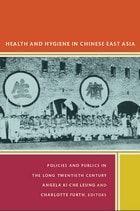
Health and Hygiene in Chinese East Asia
Policies and Publics in the Long Twentieth CenturyAngela Ki Che Leung and Charlotte Furth, eds.
Duke University Press, 2010
Contributors. Warwick Anderson, Charlotte Furth, Marta E. Hanson, Sean Hsiang-lin Lei, Angela Ki Che Leung, Shang-Jen Li, Yushang Li, Yi-Ping Lin, Shiyung Liu, Ruth Rogaski, Yen-Fen Tseng, Chia-ling Wu, Xinzhong Yu
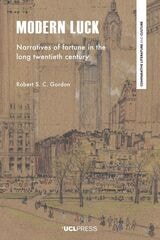
Modern Luck
Narratives of Fortune in the Long Twentieth CenturyRobert S. C. Gordon
University College London, 2023
Beliefs, superstitions, and tales about luck are present across all human cultures. Humans are perennially fascinated by luck and by its association with happiness and danger, uncertainty and aspiration. Yet it remains an elusive, ungraspable idea, one that slips and slides over time: all cultures reimagine what luck is and how to tame it at different stages in their history, and our own era is no exception to the rule.
Modern Luck sets out to explore the enigma of luck’s presence in modernity, examining the hybrid forms it has taken on in the modern imagination, and in particular in the field of modern stories. Analyzing a rich and unusually eclectic range of narratives taken from literature, film, music, television, and theatre, from Dostoevsky to Philip K. Dick, Pinocchio to Cimino, Curtiz to Kieslowski, it lays out first the usages and meanings of the language of luck, and then the key figures, patterns, and motifs that govern the stories told about it, from the late nineteenth century to the present day.
Poems of the American Empire
The Lyric Form in the Long Twentieth CenturyJen Hedler Phillis
University of Iowa Press, 2019
Poems of the American Empire argues that careful attention to a particular strain of twentieth-century lyric poetry yields a counter-history of American global power. The period that Phillis covers—from Ezra Pound’s A Draft of XXX Cantos in 1930 to Cathy Park Hong’s Engine Empire in 2012—roughly matches what some consider the ascent and decline of the American empire. The diverse poems that appear in this book are united by their use of epic forms in the lyric poem, a combination that violates a fundamental framework of both genres’ relationship to time.
This book makes a groundbreaking intervention by insisting that lyric time is key to understanding the genre. These poems demonstrate the lyric form’s ability to represent the totality of history, making American imperial power visible in its fullness. Neither strictly an empty celebration of American exceptionalism nor a catalog of atrocities, Poems of the American Empire allows us to see both.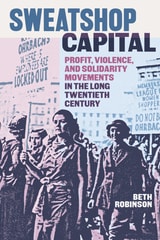
Sweatshop Capital
Profit, Violence, and Solidarity Movements in the Long Twentieth CenturyBeth Robinson
Duke University Press, 2025
Women, Work, and Activism
Chapters of an Inclusive History of Labor in the Long Twentieth CenturyEloisa Betti
Central European University Press, 2022
The thirteen critical and well-documented chapters of Women, Work and Activism examine women’s labor struggle from late nineteenth-century Portuguese mutual societies to Yugoslav peasant women’s work in the 1930s, and from the Catalan labor movement under the Franco dictatorship to workplace democracy in the United States. The authors portray women's labor activism in a wide variety of contexts. This includes spontaneous resistance to masculinist trade unionism, the feminist engagement of women workers, the activism of communist wives of workers, and female long-distance migration, among others. The chapters address the gendered involvement of working people in multiple and often precarious and unstable labor relations and in unpaid labor, as well as the role of the state and other institutions in shaping the history of women’s labor.
The book is an innovative contribution to both the new labor history and feminist history. It fully integrates the conceptual advances made by gender historians in the study of labor activism, driving home critiques of Eurocentric historiographies of labor to Europe while simultaneously contributing to an inclusive history of women’s labor-related activism wherever to be found. Examining women’s activism in male-dominated movements and institutions, and in women’s networks and organizations, the authors make a case for a new direction in gender history.