Results by title
2 books match the query 'Long War'
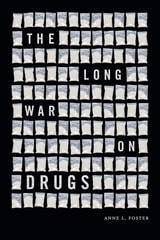
The Long War on Drugs
Anne L. Foster
Duke University Press, 2023
Since the early twentieth century, the United States has led a global prohibition effort against certain drugs in which production restriction and criminalization are emphasized over prevention and treatment as means to reduce problematic usage. This “war on drugs” is widely seen to have failed, and periodically decriminalization and legalization movements arise. Debates continue over whether the problems of addiction and crime associated with illicit use of drugs stem from their illegal status or the nature of the drugs themselves. In The Long War on Drugs Anne L. Foster explores the origin of the punitive approach to drugs and its continued appeal despite its obvious flaws. She provides a comprehensive overview, focusing not only on a political history of policy developments but also on changes in medical practices and understanding of drugs. Foster also outlines the social and cultural changes prompting different attitudes about drugs; the racial, environmental, and social justice implications of particular drug policies; and the international consequences of US drug policy.
[more]
The Long War
The Intellectual People’s Front and Anti-Stalinism, 1930–1940Judy Kutulas
Duke University Press, 1994
In the early 1930s, the American Communist Party attracted support from a wide range of liberal and radical intellectuals, partly in response to domestic politics, and also in opposition to the growing power of fascism abroad. The Long War, a social history of these intellectuals and their political institutions, tells the story of the rift that developed among the groups loosely organized under the umbrella of the Party—representing communist supporters of the People’s Front and those who would become anti-Stalinists—and the evolution of that rift into a generational divide that would culminate in the liberal anti-communism of the post-World War II era.
Judy Kutulas takes us into the debates and outright fights between and within the ranks of organizations such as the League of American Writers, the John Reed Clubs, the Committee for Cultural Freedom, the American Civil Liberties Union, and the National Committee for the Defense of Political Prisoners. Showing how extremist views about the nature and value of communism triumphed over more moderate ones, she traces the transfer of the left’s leadership from one generation to the next. She describes how supporters of the People’s Front were discredited by the time of the Nazi-Soviet Pact and how this opened the way for a new generation of leaders better known as the New York intellectuals. In this shift, Kutulas identifies the beginnings of the liberal anti-communism that would follow World War II.
A book for students and scholars of the intersection of politics and culture, The Long War offers a new, informed perspective on the intellectual maneuvers of the American left of the 1930s and leads to a reinterpretation of the time and its complex legacy.
[more]