Results by title
13 books match the query 'Longing'
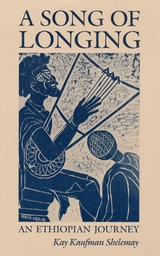
A Song of Longing
AN ETHIOPIAN JOURNEYKay Kaufman Shelemay
University of Illinois Press, 1992
-- Library Journal
"Highly recommended to generalists in music as well as to specialists interested in Ethiopia. . . . Also makes an excellent case study text for university-level courses examining fieldwork issues and conditions."
-- Notes
"Highly recommended for both undergraduate and graduate collections in ethnomusicology, anthropology, African, and Judaic studies."
-- Choice
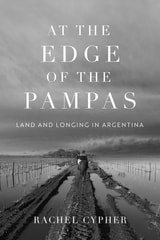
At the Edge of the Pampas
Land and Longing in ArgentinaRachel Cypher
University of Arizona Press, 2027
Industrial agriculture has transformed vast stretches of the Earth, but few places reveal its contradictions more clearly than the Pampas of Argentina.
In At the Edge of the Pampas, anthropologist Rachel Cypher traces the explosive rise of genetically modified soybeans across one of the world’s great agricultural heartlands. Drawing on immersive long-term fieldwork, the book moves from soybean fields and cattle feedlots to dryland forests to show that industrial agriculture takes many forms. Soy—one of the world’s most standardized commodities—must first pass through local ecologies, informal economies, inherited obligations, and intimate relations of trust before it can circulate as a global asset.
Urgent and deeply original, At the Edge of the Pampas offers a major rethinking of how value is gathered within industrial capitalism and how unruly social and ecological life persists inside even the most engineered landscapes.
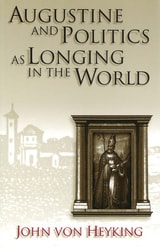
Augustine and Politics as Longing in the World
John von Heyking
University of Missouri Press, 2001
Saint Augustine's political thought has usually been interpreted by modern readers as suggesting that politics is based on sin. In Augustine and Politics as Longing in the World, John von Heyking shows that Augustine actually considered political life a substantive good that fulfills a human longing for a kind of wholeness.
Rather than showing Augustine as supporting the Christian church's domination of politics, von Heyking argues that he held a subtler view of the relationship between religion and politics, one that preserves the independence of political life. And while many see his politics as based on a natural-law ethic or on one in which authority is conferred by direct revelation, von Heyking shows how Augustine held to an understanding of political ethics that emphasizes practical wisdom and judgment in a mode that resembles Aristotle rather than Machiavelli.
Augustine and Politics as Longing in the World demonstrates some of the deficiencies in the way Augustine's political thought has been interpreted. It also explains why a rereading of his thought illuminates the current debates between "secularists" and proponents of "orthodoxy" and shows why these debates are miscast. By examining Augustine's political thought, von Heyking provides a way of resolving this controversy and shows how we can move beyond conflicting claims and thus moderate yet elevate political life.
Behind Augustine's apparent antipolitical rhetoric lies his substantial agreement with his Roman philosophical interlocutors on virtue and politics. This allegedly antipolitical rhetoric is meant to tame the lust for domination of Roman patriots by showing that lust can never be satisfied by political goods. By opposing extreme "worldliness" with extreme "otherworldliness," Augustine appears to reject politics as a natural good. On the contrary, he affirmed politics as a natural good.
Augustine and Politics as Longing in the World shows how Augustine's belief that politics was a way for humans to fulfill their longings for a kind of wholeness discloses a deeper affirmation of a more meaningful, pluralistic, and robust political life than his interpreters have previously appreciated.
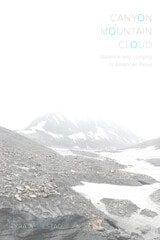
Canyon, Mountain, Cloud
Absence and Longing in American ParksTyra A. Olstad
Oregon State University Press, 2021
Part memoir and part scholarly analysis of the psychological and societal dimensions of place-creation, Canyon, Mountain, Cloud details the author’s experiences working and living in Black Canyon of the Gunnison National Park, Denali National Park and Preserve, Adirondack State Park, and arctic Alaska. Along the way, Olstad explores canyons, climbs mountains, watches clouds, rafts rivers, searches for fossils, and protects rare and fragile vegetation. She learns and shares local natural and cultural histories, questions perceptions of “wilderness,” deepens her appreciation for wildness, and reshapes her understanding of self and self-in-place.
Anyone who has ever felt appreciation for wild places and who wants to think more deeply about individual and societal relationships with American parks and protected areas will find humor, fear, provocation, wonder, awe, and, above all, inspiration in these pages.
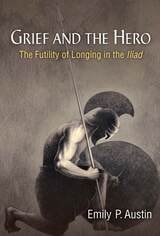
Grief and the Hero
The Futility of Longing in the IliadEmily P. Austin
University of Michigan Press, 2021
Grief and the Hero examines Achilles’ experience of the futility of grief in the context of the Iliad’s study of anger. No action can undo his friend Patroklos’ death, but the experience of death drives him to behave as though he can achieve something restorative. Rather than assuming that grief gives rise to anger, as most scholars have done, Grief and the Hero pays close attention to the poem’s representation of the origin of these emotions. In the Iliad, only Achilles’ grief for Patroklos is joined with the word pothê, “longing”; no other grief in the poem is described with this term. The Iliad depicts Achilles’ grief as the rupture of shared life—an insight that generates a new way of reading the epic. Achilles’ anguish drives him to extremes, oscillating between self-isolation and seeking communal expressions of grief; between weeping abundantly and relentlessly pursuing battle; between varied threats of mutilation, deeds of vengeance, and other vows. Yet his yearning for life shared with Patroklos is the common denominator. Here lies the profound insight of the Iliad. All of Achilles’ grief-driven deeds arise from his longing for life with Patroklos, and thus all of these deeds are, in a deep sense, futile. He yearns for something unattainable—undoing the reality of death. Grief and the Hero will appeal not only to scholars and students of Homer but to all humanists. Loss, longing, and even revenge touch many human lives, and the insights of the Iliad have broad resonance.
Imagined States
Nationalism, Utopia, and Longing in Oral Culturesedited by Luisa Del Giudice & Gerald Porter
Utah State University Press, 2003
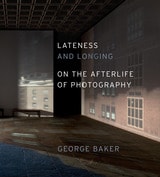
Lateness and Longing
On the Afterlife of PhotographyGeorge Baker
University of Chicago Press, 2023
Beginning in the 1990s, a series of major artists imagined the expansion of photography, intensifying its ideas and effects while abandoning many of its former medium constraints. Simultaneous with this development in contemporary art, however, photography was moving toward total digitalization.
Lateness and Longing presents the first account of a generation of artists—focused on the work of Zoe Leonard, Tacita Dean, Sharon Lockhart, and Moyra Davey—who have collectively transformed the practice of photography, using analogue technologies in a dissident way and radicalizing signifiers of older models of feminist art. All these artists have resisted the transition to the digital in their work. Instead—in what amounts to a series of feminist polemics—they return to earlier, incomplete, or unrealized moments in photography’s history, gravitating toward the analogue basis of photographic mediums. Their work announces that photography has become—not obsolete—but “late,” opened up by the potentially critical forces of anachronism.
Through a strategy of return—of refusing to let go—the work of these artists proposes an afterlife and survival of the photographic in contemporary art, a formal lateness wherein photography finds its way forward through resistance to the contemporary itself.
Longing
Poems of a LifeMerle Feld
Central Conference of American Rabbis, 2023
On Longing
Narratives of the Miniature, the Gigantic, the Souvenir, the CollectionSusan Stewart
Duke University Press, 1993
Renunciation and Longing
The Life of a Twentieth-Century Himalayan Buddhist SaintAnnabella Pitkin
University of Chicago Press, 2022
In the early twentieth century, Khunu Lama journeyed across Tibet and India, meeting Buddhist masters while sometimes living, so his students say, on cold porridge and water. Yet this elusive wandering renunciant became a revered teacher of the Fourteenth Dalai Lama. At Khunu Lama’s death in 1977, he was mourned by Himalayan nuns, Tibetan lamas, and American meditators alike. The many surviving stories about him reveal significant dimensions of Tibetan Buddhism, shedding new light on questions of religious affect and memory that reimagines cultural continuity beyond the binary of traditional and modern.
In Renunciation and Longing, Annabella Pitkin explores devotion, renunciation, and the teacher-student lineage relationship as resources for understanding Tibetan Buddhist approaches to modernity. By examining narrative accounts of the life of a remarkable twentieth-century Himalayan Buddhist and focusing on his remembered identity as a renunciant bodhisattva, Pitkin illuminates Tibetan and Himalayan practices of memory, affective connection, and mourning. Refuting long-standing caricatures of Tibetan Buddhist communities as unable to be modern because of their religious commitments, Pitkin shows instead how twentieth- and twenty-first-century Tibetan and Himalayan Buddhist narrators have used themes of renunciation, devotion, and lineage as touchstones for negotiating loss and vitalizing continuity.
Tales Out of School
Gender, Longing, and the Teacher in Fiction and FilmJo Keroes
Southern Illinois University Press, 1999
Jo Keroes's scope is wide: she examines the teacher as represented in fiction and film in works ranging from the twelfth-century letters of Abelard and Heloise to contemporary films such as Dangerous Minds and Educating Rita. And from the twelfth through the twentieth century, Keroes shows, the teaching encounter is essentially erotic.
Tracing the roots of eros from cultural as well as psychological perspectives, Keroes defines erotic in terms broader than the merely sexual. She analyzes ways in which teachers serve as convenient figures on whom to map conflicts about gender, power, and desire. To show how portrayals of men and women differ, she examines pairs of texts, using a film or a novel with a woman protagonist (Up the Down Staircase, for example) as counterpoint to one featuring a male teacher (Blackboard Jungle) or The Prime of Miss Jean Brodie balanced against Dead Poets Society.
The portrayals of teachers, like all images a culture presents of itself, reveal much about our private and social selves. Keroes points out authentic accounts of authoritative women teachers who are admired and respected by colleagues and students alike. Real teachers differ from the stereotypes we see in fiction and film, however. Male teachers are often portrayed as heroes in film and fallibly human in fiction, whereas women in either genre are likely to be monstrous or muddled and are virtually never women of color. Among other things, Keroes demonstrates, the tension between reality and representation reveals society's ambivalence about power in the hands of women.
The Making of Romantic Love
Longing and Sexuality in Europe, South Asia, and Japan, 900-1200 CEWilliam M. Reddy
University of Chicago Press, 2012
Wandering Spirits
Loneliness and Longing in GreenlandJanne Flora
University of Chicago Press, 2019
In this innovative study, Flora focuses on Inuit communities in Greenland and addresses a central puzzle: their alarmingly high suicide rate. She explores the deep connections between loneliness and modernity in the Arctic, tracing the history of Greenland and analyzing the social dynamics that shaped it. Flora’s thorough, sensitive engagement with the families that make up these communities uncovers the complex interplay between loneliness and a host of economic and environmental practices, including the widespread local tradition of hunting. Wandering Spirits offers a vivid portrait of a largely overlooked world, in all its fragility and nuance, while engaging with core anthropological concerns of kinship and the structure of social relations.