Results by title
3 books match the query 'Loom'
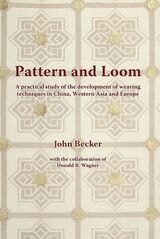
Pattern and Loom
A Practical Study of the Development of Weaving Techniques in China, Western Asia and EuropeJohn Becker
National University of Singapore Press, 2014
When John Becker's Pattern and Loom was posthumously published in 1987, the work was hailed as an important work that revealed much new knowledge on the development of weaving techniques across the centuries from China through to Europe. The key to the book's almost forensic investigation of its subject was the author himself, a Danish damask weaver with a lifetime's practical experience in his craft and an intimate knowledge of weaving techniques that allowed him to decipher, experiment and interpret original techniques from small remnants of surviving material. Long out of print, the work has been tidied and reset by Becker's collaborator on the original work, the sinologist Don Wagner.
[more]
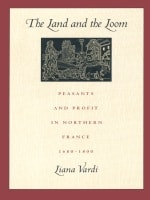
The Land and the Loom
Peasants and Profit in Northern France, 1680–1800Liana Vardi
Duke University Press, 1993
In the modern imagination the peasant survives as a creature of the land, suspicious of the outside world and resistant to change, either the repository of pristine innocence and virtue or the manifestation of everything nasty, brutish, and at best dull. The Land and the Loom replaces this picture with a richly textured, deeply researched portrait of the peasant's life and world in northern France in the early modern period.
Drawing on evidence culled from parish registers, notarial records, and judicial archives, Liana Vardi outlines the development of the linen weaving trade in Montigny and details the local peasants' participation. The peasants that emerge from her study are not the figures of tradition, driven solely by symbolic attachment to the land and unreasonably devoted to village solidarities. Instead they reveal remarkable flexibility and diversity, not only improving farming methods and raising yields during the eighteenth century, but also using land to finance investments in industry and to develop local business, far-flung commercial networks and complex credit mechanisms. The eighteenth-century French countryside appears as a region and time of capitalist experimentation, cut short by pre-Revolutionary and Revolutionary crises.
Meticulously documented, broadly interpretive, and beautifully written, this fascinating book will permenantly alter conventional perceptions of peasant life and rural industry and, ultimately, the way ordinary people are seen in seemingly distant times and places.
[more]
Woven on the Loom of Time
Stories by Enrique Anderson-ImbertSelected and translated by Carleton Vail and Pamela Edwards-Mondragón
University of Texas Press, 1990
Argentinian scholar and writer Enrique Anderson-Imbert is familiar to many North American students for his La Literatura de América Latina I and II, which are widely used in college Spanish courses. But Anderson-Imbert is also a noted creative writer, whose use of "magical realism" helped pave the way for such writers as Borges, Cortázar, Sábato, and Ocampo. In this anthology, Carleton Vail and Pamela Edwards-Mondragón have chosen stories from the period 1965 to 1985 to introduce English-speaking readers to the creative work of Enrique Anderson-Imbert. Representative stories from the collections The Cheshire Cat, The Swindler Retires, Madness Plays at Chess, Klein's Bottle, Two Women and One Julián, and The Size of the Witches illustrate Anderson-Imbert's unique style and world view. Many are "short short" stories, which Anderson-Imbert calls casos (instances). The range of subjects and points of view varies widely, challenging such "realities" as time and space, right and wrong, science and religion. In a prologue, Anderson-Imbert tells an imaginary reader, "Each one of my stories is a closed entity, brief because it has caught a single spasm of life in a single leap of fantasy. Only a reading of all my stories will reveal my world-view." The reader asks, "And are you sure that it is worth the trouble?" Anderson-Imbert replies, "No." The unexpected, ironic ending is one of the great pleasures of reading Enrique Anderson-Imbert.
[more]