Results by title
4 books match the query 'Losers'

Losers
Colin Pope
University of Wisconsin Press, 2026
Class consciousness and contradictions percolate throughout Colin Pope’s third collection. Highly personal, these poems acknowledge the damage wrought on underprivileged populations while celebrating a working-class background. Dishwasher, delivery guy, ne’er-do-well, paper boy—the characters who populate this volume are caught within societally imposed definitions; infused with dignity, humanity, and compassion, Losers thumbs its nose at other folks’ labels. A celebration of postindustrial, rural America, this book is a paean to anyone thought undesirable and highlights the advantages (and disadvantages) imposed by geography, beauty, status, wealth, and opportunity.
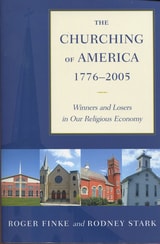
The Churching of America, 1776-2005
Winners and Losers in Our Religious EconomyFinke, Roger
Rutgers University Press, 2005
But, as Finke and Stark show, not all denominations benefited. They explain how and why the early nineteenth-century churches began their descent, while two newcomer sects, the Baptists and the Methodists, gained ground. They also analyze why the Methodists then began a long, downward slide, why the Baptists continued to succeed, how the Catholic Church met the competition of ardent Protestant missionaries, and why the Catholic commitment has declined since Vatican II. The authors also explain why ecumenical movements always fail
In short, Americans are not abandoning religion; they have been moving away from established denominations. A "church-sect process" is always under way, Finke and Stark argue, as successful churches lose their organizational vigor and are replaced by less worldly groups.
Some observers assert that the rise in churching rates indicates increased participation, not increased belief. Finke and Stark challenge this as well. They find that those groups that have gained the greatest numbers have demanded that their followers accept traditional doctrines and otherworldliness. They argue that religious organizations can thrive only when they comfort souls and demand sacrifice. When theology becomes too logical, or too secular, it loses people.
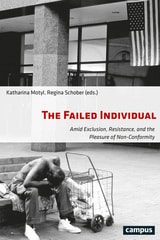
The Failed Individual
Amid Exclusion, Resistance, and the Pleasure of Non-ConformityEdited by Katharina Motyl and Regina Schober
Campus Verlag, 2017

Winners and Losers
Social and Political Polarities in AmericaIrving Louis Horowitz
Duke University Press, 1984