Results by title
8 books match the query 'Losing'
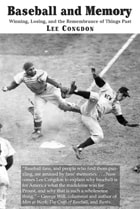
Baseball and Memory
Winning, Losing, and the Remembrance of Things PastLee Congdon
St. Augustine's Press, 2011
Keeping Faith, Losing Faith
Religious Belief and Political Economy, Volume 40Bradley W. Bateman and H. Spencer Banzhaf, eds.
Duke University Press, 0
Two of the essays examine the antagonism between Christianity and utilitarianism in postrevolutionary French economics and the rising influence of the materialism of the market vis-à-vis the declining authority of the Roman Catholic Church in eighteenth-century Europe. Other topics explored include the work of the great American neoclassicist Frank Knight, the combination of utility analysis and Christian principles among the “clerical economists” in America, and the effect of a crisis of personal faith on the theories of the English philosopher and economist Henry Sidgwick.
Legacies of Losing in American Politics
Jeffrey K. Tulis and Nicole Mellow
University of Chicago Press, 2017
With Legacies of Losing in American Politics, Jeffrey K. Tulis and Nicole Mellow rethink three pivotal moments in American political history: the founding, when anti-Federalists failed to stop the ratification of the Constitution; the aftermath of the Civil War, when President Andrew Johnson’s plan for restoring the South to the Union was defeated; and the 1964 presidential campaign, when Barry Goldwater’s challenge to the New Deal order was soundly defeated by Lyndon B. Johnson. In each of these cases, the very mechanisms that caused the initial failures facilitated their eventual success. After the dust of the immediate political defeat settled, these seemingly discredited ideas and programs disrupted political convention by prevailing, often subverting, and occasionally enhancing constitutional fidelity. Tulis and Mellow present a nuanced story of winning and losing and offer a new understanding of American political development as the interweaving of opposing ideas.

Losing a Bit of Eden
Recent StoriesLevi S. Peterson
Signature Books, 2021
Losing the Good Portion
Why Men Are Alienated from ChristianityLeon J. Podles
St. Augustine's Press, 2017
Losing the Good Portion: Why Men Are Alienated from Christianity explores the causes and consequences of the almost millennium-old disparity between the participation of lay men and lay women in the churches of Western Christianity. Podles considers both the anecdotal and statistical evidence for the lack of men: sermons, church rolls, censuses, and sociological analyses.
Podles sees the intellectual roots of lack of men in the Aristotelian understanding of male and female as active and passive, an understanding which has formed all discussion of masculinity and femininity, from Aquinas through Schleiermacher, Barth, and Hans Urs von Balthasar, all of whom saw femininity as more compatible with Christianity than masculinity. Men, according to anthropologists and psychologists, go through a difficult process to attain masculinity and therefore distance themselves from threats to that masculine identity, including Christianity.
Men suspected the clergy was effeminate and sexually irregular. Historians of violence have examined the decline in violence in Europe and the civilizing role of the clergy, a role which further alienated men and led to violent anticlericalism
Podles examines the presentation of Jesus’ masculinity in Scripture and images of Jesus’ masculinity in art, the role of thumos in spirituality, and the various movements that have helped keep men connected to the churches. He makes suggestions for possible outreach to men.
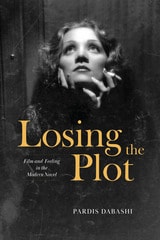
Losing the Plot
Film and Feeling in the Modern NovelPardis Dabashi
University of Chicago Press, 2023
The modernist novel sought to escape what Virginia Woolf called the “tyranny” of plot. Yet even as twentieth-century writers pushed against the constraints of plot-driven Victorian novels, plot kept its hold on them through the influence of another medium: the cinema. Focusing on the novels of Nella Larsen, Djuna Barnes, and William Faulkner—writers known for their affinities and connections to classical Hollywood—Pardis Dabashi links the moviegoing practices of these writers to the tensions between the formal properties of their novels and the characters in them. Even when they did not feature outright happy endings, classical Hollywood films often provided satisfying formal resolutions and promoted normative social and political values. Watching these films, modernist authors were reminded of what they were leaving behind—both formally and in the name of aesthetic experimentalism—by losing the plot.
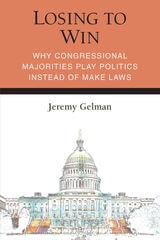
Losing to Win
Why Congressional Majorities Play Politics Instead of Make LawsJeremy Gelman
University of Michigan Press, 2020
Losing to Win answers these questions through a novel theory of agenda-setting. Unlike other research that studies bills that become law, Jeremy Gelman begins from the opposite perspective. He studies why majority parties knowingly take up dead-on-arrival (DOA) bills, the ideas everyone knows are going to lose. In doing so, he argues that congressional parties’ decisions to play politics instead of compromising, and the topics on which they choose to bicker, are strategic and predictable. Gelman finds that legislative dysfunction arises from a mutually beneficial relationship between a majority party in Congress, which is trying to win unified government, and its allied interest groups, which are trying to enact their policies. He also challenges the conventional wisdom that DOA legislation is political theater. By tracking bills over time, Gelman shows that some former dead-on-arrival ideas eventually become law. In this way, ideas viewed as too extreme or partisan today can produce long-lasting future policy changes.
Through his analysis, Gelman provides an original explanation for why both parties pursue the partisan bickering that voters find so frustrating. He moves beyond conventional arguments that our discordant politics are merely the result of political polarization. Instead, he closely examines the specific circumstances that give rise to legislative dysfunction. The result is a fresh, straightforward perspective on the question we have all asked at some point, “Why can’t Democrats and Republicans stop fighting and just get something done?”
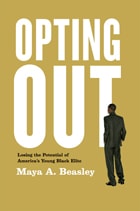
Opting Out
Losing the Potential of America's Young Black EliteMaya A. Beasley
University of Chicago Press, 2011