Results by title
262 books match the query 'Love' and 14 start with a

A Catechism for Family Life
Sarah Bartel
Catholic University of America Press, 2018
To address this need, we gathered pertinent questions facing men, women, and pastoral workers in marriage and family life. We then found passages relevant to these questions by researching Church documents on marriage and family from the past one hundred years. These include papal encyclicals, apostolic exhortations, and addresses, Vatican II documents, and the Catechism of the Catholic Church.
Mainstream media coverage of Church events and Church teaching leads many to misunderstand Catholic positions on marriage and family life. While the Catholic Church has developed a rich, detailed, and positive teaching on marriage, family, and sexuality, many Catholics do not have access to this teaching, buried as it is in lengthy Church documents which many find intimidating. Finding the relevant teaching to address specific questions is not always a simple task, either. This book’s main contribution is to present Church teaching relevant to marriage and family in one volume clearly organized by topic and question.
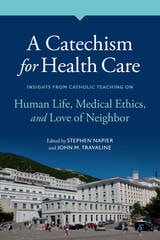
A Catechism for Health Care
Insights from Catholic Teaching on Human Life, Medical Ethics, and Love of NeighborStephen Napier
Catholic University of America Press, 2024
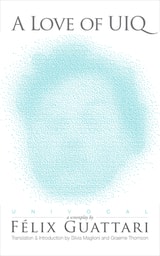
A Love of UIQ
Félix Guattari
University of Minnesota Press, 2016
Throughout a large part of the 1980s, Félix Guattari, known for his collaborations with Gilles Deleuze and his experimental and groundbreaking practices in psychotherapy, decides to shift his experimental work into a different medium of artistic and creative thought practice: the world of science fiction. Part self-analysis, part cinematic expression of his theoretical work, Guattari’s screenplay merges his theoretical concepts with his passion for comic books, free radio movements, and film. So begins Guattari’s journey to write a screenplay wherein a group of squatters makes contact with a superior intelligence coming from the infinitely small Universe of the Infra-quark (UIQ). Guattari worked feverishly on his film, attempting to secure a budget, traveling to Hollywood, and enlisting the help of American screenwriter Robert Kramer. But the film would never see the light of day. Through the important archival work of artists, Silvia Maglioni and Graeme Thomson, Guattari’s script is now published here, for the first time in English.
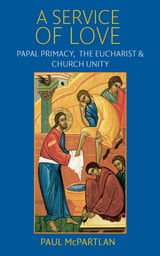
A Service of Love
Paul McPartlan
Catholic University of America Press, 2013
A Service of Love
Paul McPartlan
Catholic University of America Press, 2016

A Spy in the House of Love
Anaïs Nin
Ohio University Press, 2014
Although Anaïs Nin found in her diaries a profound mode of self-creation and confession, she could not reveal this intimate record of her experiences during her lifetime. Instead, she turned to literary fiction, transforming her private writings into artfully crafted novels that explore female desire, identity, and emotional complexity.
A Spy in the House of Love is a classic of psychological and women’s fiction, centered on Sabina, a woman torn between her longing for artistic freedom, romantic adventure, and sensual fulfillment, and the social expectations that constrain her. Moving through a bohemian, Parisian-inspired world, Sabina navigates multiple relationships in her search for passion, meaning, and self-understanding.
Written at a time when Nin’s own life was shaped by conflicting loyalties and intense relationships, the novel offers a deeply introspective exploration of love, infidelity, erotic longing, and self-discovery. As Sabina confronts her inner divisions, she asks a timeless question: can one indulge the fantasies and restless pursuit of desire without facing profound emotional consequences?
A landmark of modernist literature and feminist writing, A Spy in the House of Love remains a powerful, evocative portrait of a woman’s inner life—ideal for readers of classic literary fiction, experimental narrative, and character-driven novels about relationships and desire.
Agape Love
Tradition In Eight World ReligionsSir John Templeton
Templeton Press, 1999
The tradition of agape, or unconditional love, is not exclusive to any religion. It is a primary underlying principle found in religions worldwide. The concept of altruistic love challenges the spiritual person to "love your enemies" or to "love without thought of return." It is a love that flows out to others through compassion, kindness, tenderness, and charitable giving.
Buddhists have a path of compassion, where caring for others becomes the motivating force behind existence. Hindus have a branch of yoga, the heart-centered path, that leads to enlightenment through an overwhelming love for God that takes the form of loving all humanity. Eastern religions, such as Taoism and Confucianism, see transcendent love as essential to true wisdom.
Love is a universal theme of love found in all religious traditions, Buddhist, Christian, Islam, or others. As we realize that all religions have this spiritual principle of love at their core, we can develop a sense of shared humanity. The religious tradition of agape love examined in this book will inspire those who are learning to grow in compassion and love for all people.
Amor Belli
Love and Strife in Lucan's Bellum CivileGiulio Celotto
University of Michigan Press, 2022
Compelled by the emperor Nero to commit suicide at age 25 after writing uncomplimentary poems, Latin poet Lucan nevertheless left behind a significant body of work, including the Bellum Civile (Civil War). Sometimes also called the Pharsalia, this epic describes the war between Julius Caesar and Pompey.Author Giulio Celotto provides an interpretation of this civil war based on the examination of an aspect completely neglected by previous scholarship: Lucan’s literary adaptation of the cosmological dialectic of Love and Strife.
According to a reading that has found favor over the last three decades, the poem is an unconventional epic that does not conform to Aristotelian norms: Lucan composes a poem characterized by fragmentation and disorder, lacking a conventional teleology, and whose narrative flow is constantly delayed. Celotto’s study challenges this interpretation by illustrating how Lucan invokes imagery of cosmic dissolution, but without altogether obliterating epic norms. The poem transforms them from within, condemning the establishment of the Principate and the Julio-Claudian dynasty.

Amor Eterno
Eleven Lessons in LovePatricia Preciado Martin
University of Arizona Press, 2000
An Ecology of Knowledges
Fear, Love, and Technoscience in Guatemalan Forest ConservationMicha Rahder
Duke University Press, 2020

An Intimate History of Nazism
Love, Marriage, and Sexuality in the Third ReichElissa Mailänder
University of Wisconsin Press, 2027
Published to great acclaim in French and now available for the first time in English, this groundbreaking book explores how the Nazi regime used sexuality to promote political loyalty, conformity, and cohesion among “ordinary” Germans. Beginning before the collapse of the Weimar Republic and continuing through the postwar American occupation of Germany, Elissa Mailänder’s study highlights the complex and conflicted ways that sexual “liberation,” repression, and violence were used and experienced in the everyday lives of citizens of the Reich. Her analysis draws on a vast array of sources, from legal dossiers to private photographs and letters, as well as public archives, magazines, and movies. Mailänder’s findings are often uncomfortable; she demonstrates, for example, that a significant number of women who were not persecuted by the regime saw shifts in gender and sexual norms as positive developments—ones that some felt were lost under the American occupation, with its own routines of military sexual exploitation. What emerges is a portrait of a regime that was less interested in repressing sexuality than in reinventing it according to a racist, elitist, and homophobic agenda.
Andreas Capellanus, Scholasticism, and the Courtly Tradition
Don A. Monson
Catholic University of America Press, 2005
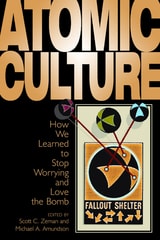
Atomic Culture
How We Learned to Stop Worrying and Love the BombMichael A. Amundson
University Press of Colorado, 2004
Despite the growing interest in atomic culture and history, the body of relevant scholarship is relatively sparse. Atomic Culture opens new doors into the field by providing a substantive, engaging, and historically based consideration of the topic that will appeal to students and scholars of the Atomic Age as well as general readers.
Contributors include Michael A. Amundson, Mick Broderick, Peter Goin, John Hunner, Ferenc M. Szasz, A. Costandina Titus, Peter C. van Wyck, and Scott C. Zeman.
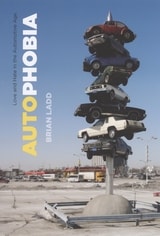
Autophobia
Love and Hate in the Automotive AgeBrian Ladd
University of Chicago Press, 2008