Results by title

5 books match the query 'Love-letters'
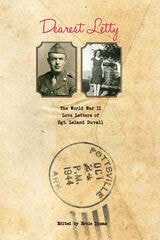
cover of Dearest Letty: The World War II Love Letters of Sgt. Leland Duvall

Dearest Letty

The World War II Love Letters of Sgt. Leland Duvall

Leland Duvall

University of Arkansas Press, 2011
Leland Duvall was a now-and-again farm worker with a grade-school education when he received his World War II draft notice at his father's farm near Moreland, Arkansas, in March of 1942. He departed for training in California, where he began to write to Letty Jones, a Pottsville girl he'd had a crush on for several years. From the first correspondence through the end of the war, Leland sent Letty a torrent of letters, hundreds of careful and undeniably heartfelt missives-utterly tender but never sentimental, reliably charming and gently humorous-written daily from desert sands, pup tents, hospital beds, armored cars, and bombed-out buildings. That Duvall's writing is a tour de force of wit, elegance, and erudition is all the more poignant because he was a man who was almost entirely self-taught. The letters, discovered by Duvall's daughter four years after his death in 2010, are here enriched by his longtime friend and colleague Ernie Dumas, who provides facts about where Duvall was and the perils he endured while penning his epistles, information that was often missing in dispatches that were necessarily censored and always guided by Duvall's effort not to bore or worry his "dearest Letty." Duvall's lively intelligence and obvious joy in writing come through on every page, joining with vividness the patina of the time and the bright shine of a timeless love affair.
[more]
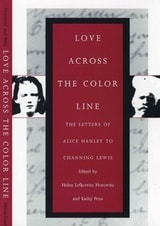
cover of Love Across the Color Line

Love Across the Color Line

Helen Lefkowitz Horowitz

University of Massachusetts Press, 1996
This book examines a remarkable collection of twenty-seven letters written by a white working-class woman to her African American lover in 1907 and 1908. Stuffed inside a black lace stocking, the letters were hidden under the floorboards of a house in Northampton, Massachusetts, until their recent discovery. Reflecting the passions and anxieties of the moment, the letters were written by Alice Hanley, the daughter of Irish Catholic immigrants, to Channing Lewis, a cook in Springfield. Since the thoughts and feelings of women like Hanley have usually been filtered through middle-class reformers, her words provide a rare window into a realm of American social life seldom explored by historians. The letters are accompanied by essays that skillfully probe their larger meanings. Helen Lefkowitz Horowitz introduces the letters, placing them in the context of their time, while journalist Phoebe Rolin Mitchell recounts the story of their discovery. Kathy Peiss explores Hanley's life, her negotiation of illicit love, and her desire for respectability, re-creating a dense and textured world of home, church, and town. Historian Louis Wilson unearths the trail left by Lewis and members of his extended family in Springfield. Reviewing the experiences of African Americans in that city, Wilson clarifies the economic, social, and political position of a black, middle-aged breadwinner during the difficult years of the early twentieth century.
[more]
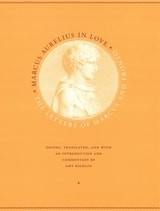
cover of Marcus Aurelius in Love

Marcus Aurelius in Love

Marcus Aurelius and Marcus Cornelius Fronto

University of Chicago Press, 2007

In 1815 a manuscript containing one of the long-lost treasures of antiquity was discovered—the letters of Marcus Cornelius Fronto, reputed to have been one of the greatest Roman orators. But this find disappointed many nineteenth-century readers, who had hoped for the letters to convey all of the political drama of Cicero’s. That the collection included passionate love letters between Fronto and the future emperor Marcus Aurelius was politely ignored—or concealed. And for almost two hundred years these letters have lain hidden in plain sight.

Marcus Aurelius in Love rescues these letters from obscurity and returns them to the public eye. The story of Marcus and Fronto began in 139 CE, when Fronto was selected to instruct Marcus in rhetoric. Marcus was eighteen then and by all appearances the pupil and teacher fell in love. Spanning the years in which the relationship flowered and died, these are the only love letters to survive from antiquity—homoerotic or otherwise. With a translation that reproduces the effusive, slangy style of the young prince and the rhetorical flourishes of his master, the letters between Marcus and Fronto will rightfully be reconsidered as key documents in the study of the history of sexuality and classics.
[more]
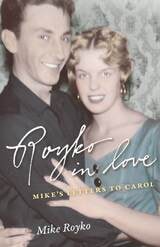
cover of Royko in Love: Mike's Letters to Carol

Royko in Love

Mike's Letters to Carol

Mike Royko

University of Chicago Press, 2010

Street-smart, wickedly funny, piercingly perceptive, and eloquent enough to win a Pulitzer Prize, Mike Royko continues to have legions of devoted fans who still wonder “what Royko would have said” about some outrageous piece of news. One thing he hardly ever wrote or talked about, though, was his private life, especially the time he shared with his first wife, Carol. She was the love of his life, and her premature death at the age of forty-four shook him to his soul. Mike’s unforgettable public tribute to Carol was a heart-wrenching column written on what would have been her forty-fifth birthday, “November Farewell.” His most famous and requested piece, it was the end of an untold story.

Royko in Love offers that story’s moving and utterly beguiling beginning in letters that “Mick” Royko, then a young airman, wrote to his childhood sweetheart, Carol Duckman. He had been in love with her since they were kids on Chicago’s northwest side, but she was a beauty and he was, well, anything but. Before leaving for Korea, he was crushed to hear she was getting married, but after returning to Blaine Air Force Base in Washington, he learned she was getting a divorce. Mick soon began to woo Carol in a stream of letters that are as fervent as they are funny. Collected here for the first time, Royko’s letters to Carol are a mixture of sweet seduction, sarcastic observations on military life, a Chicago kid’s wry view of rural folk, the pain of self-doubt, and the fear of losing what is finally so close, but literally so far. His only weapons against Carol’s many suitors were his pen, his ardor, and his brilliance. And they won her heart.
[more]
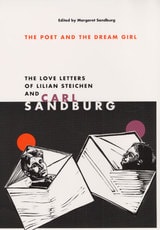
cover of The Poet and Dream Girl: The Love Letters of Lilian Steichen and Carl Sandburg

The Poet and Dream Girl

The Love Letters of Lilian Steichen and Carl Sandburg

Edited by Margaret Sandburg

University of Illinois Press, 1987

"These letters reveal the thoughts of two fine, strong minds drawn to each other first by their interest in socialism, then by their love of poetry and a similarity of ethics and ideals. My mother recognized this in his early prose and poetry. They learned so much about each other from these letters, yet it seems extraordinary that there was so little personal contact."-- From the introduction by Margaret Sandburg
 
[more]