Results by title
6 books match the query 'Lumbermen'

Chinese in the Woods
Logging and Lumbering in the American WestSue Fawn Chung
University of Illinois Press, 2015
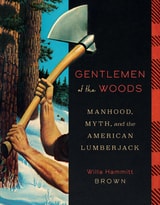
Gentlemen of the Woods
Manhood, Myth, and the American LumberjackWilla Hammitt Brown
University of Minnesota Press, 2025
Lumberjacks: the men, the myth, and the making of an American legend
The folk hero Paul Bunyan, burly, bearded, wielding his big ax, stands astride the story of the upper Midwest—a manly symbol of the labor that cleared the vast north woods for the march of industrialization while somehow also maintaining an aura of pristine nature. This idea, celebrated in popular culture with songs and folktales, receives a long overdue and thoroughly revealing correction in Gentlemen of the Woods, a cultural history of the life and lore of the real lumberjack and his true place in American history.
Now recalled as heroes of wilderness and masculinity, lumberjacks in their own time were despised as amoral transients. Willa Hammitt Brown shows that nineteenth-century jacks defined their communities of itinerant workers by metrics of manhood that were abhorrent to the residents of the nearby Northwoods boomtowns, valuing risk-taking and skill rather than restraint and control. Reviewing songs, stories, and firsthand accounts from loggers, Brown brings to life the activities and experiences of the lumberjacks as they moved from camp to camp. She contrasts this view with the popular image cultivated by retreating lumber companies that had to sell off utterly barren land. This mythologized image glorified the lumberjack and evoked a kindly, flannel-wearing, naturalist hero.
Along with its portrait of lumberjack life and its analysis of the creation of lumberjack myth, Gentlemen of the Woods offers new insight into the intersections of race and social class in the logging enterprise, considering the actual and perceived roles of outsider lumberjacks and Native inhabitants of the northern forests. Anchored in the dual forces of capitalism and colonization, this lively and compulsively readable account offers a new way to understand a myth and history that has long captured our collective imagination.

Pinery Boys
Songs and Songcatching in the Lumberjack EraEdited by Franz Rickaby with Gretchen Dykstra and James P. Leary
University of Wisconsin Press, 2017
Pinery Boys now incorporates, commemorates, contextualizes, and complements Rickaby's early work. It includes an introduction and annotations throughout by eminent folklore scholar James P. Leary and an engaging, impressively researched biography by Rickaby's granddaughter Gretchen Dykstra. Central to this edition are Rickaby's own introduction and the original fifty-one songs that he published—including "Jack Haggerty's Flat River Girl," "The Little Brown Bulls," "Ole from Norway," "The Red Iron Ore," and "Morrissey and the Russian Sailor"—plus fourteen additional songs selected to represent the varied collecting Rickaby did beyond the lumber camps.
Supplemented by historical photographs, Pinery Boys fully reveals Franz Rickaby as a visionary artist and scholar and provides glimpses into the past lives of woods poets and singers.

Rainforest Capitalism
Power and Masculinity in a Congolese Timber ConcessionThomas Hendriks
Duke University Press, 2022
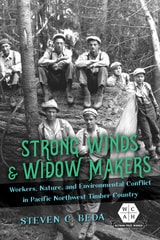
Strong Winds and Widow Makers
Workers, Nature, and Environmental Conflict in Pacific Northwest Timber CountrySteven C. Beda
University of Illinois Press, 2023
Often cast as villains in the Northwest's environmental battles, timber workers in fact have a connection to the forest that goes far beyond jobs and economic issues. Steven C. Beda explores the complex true story of how and why timber-working communities have concerned themselves with the health and future of the woods surrounding them. Life experiences like hunting, fishing, foraging, and hiking imbued timber country with meanings and values that nurtured a deep sense of place in workers, their families, and their communities. This sense of place in turn shaped ideas about protection that sometimes clashed with the views of environmentalists--or the desires of employers. Beda's sympathetic, in-depth look at the human beings whose lives are embedded in the woods helps us understand that timber communities fought not just to protect their livelihood, but because they saw the forest as a vital part of themselves.
The Lumberman's Frontier
Three Centuries of Land Use, Society, and Change in America's ForestsThomas R. Cox
Oregon State University Press, 2010