Results by title
2 books match the query 'Lynch, Deidre Shauna'

Loving Literature
A Cultural HistoryDeidre Shauna Lynch
University of Chicago Press, 2014
One of the most common—and wounding—misconceptions about literary scholars today is that they simply don’t love books. While those actually working in literary studies can easily refute this claim, such a response risks obscuring a more fundamental question: why should they?
That question led Deidre Shauna Lynch into the historical and cultural investigation of Loving Literature. How did it come to be that professional literary scholars are expected not just to study, but to love literature, and to inculcate that love in generations of students? What Lynch discovers is that books, and the attachments we form to them, have played a vital role in the formation of private life—that the love of literature, in other words, is deeply embedded in the history of literature. Yet at the same time, our love is neither self-evident nor ahistorical: our views of books as objects of affection have clear roots in eighteenth- and nineteenth-century publishing, reading habits, and domestic history.
While never denying the very real feelings that warm our relationship to books, Loving Literature nonetheless serves as a riposte to those who use the phrase “the love of literature” as if its meaning were transparent. Lynch writes, “It is as if those on the side of love of literature had forgotten what literary texts themselves say about love’s edginess and complexities.” With this masterly volume, Lynch restores those edges and allows us to revel in those complexities.
[more]
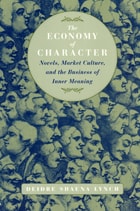
The Economy of Character
Novels, Market Culture, and the Business of Inner MeaningDeidre Shauna Lynch
University of Chicago Press, 1998
At the start of the eighteenth century, talk of literary "characters" referred as much to letters and typefaces as it did to persons in books. Yet by the nineteenth century, characters had become the equals of their readers, friends with whom readers might spend time and empathize.
Although the story of this shift is usually told in terms of the "rise of the individual," Deidre Shauna Lynch proposes an ingenious alternative interpretation. Elaborating a "pragmatics of character," Lynch shows how readers used transactions with characters to accommodate themselves to newly commercialized social relations. Searching for the inner meanings of characters allowed readers both to plumb their own inwardness and to distinguish themselves from others. In a culture of mass consumption, argues Lynch, possessing a belief in the inexpressible interior life of a character rendered one's property truly private.
Ranging from Defoe and Smollett to Burney and Austen, Lynch's account will interest students of the novel, literary historians, and anyone concerned with the inner workings of consumer culture and the history of emotions.
[more]