Results by title
5 books match the query 'Macedonia'
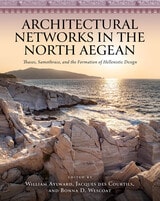
Architectural Networks in the North Aegean
Thasos, Samothrace, and the Formation of Hellenistic DesignEdited by William Aylward, Jacques des Courtils, and Bonna D. Wescoat
University of Wisconsin Press, 2025
During the Hellenistic period, the North Aegean Sea was a dynamic and diverse area, linked by robust trading networks and sometimes precarious political allegiances. The islands of Thasos, Samothrace, and Lesbos in particular played crucial roles in their position between Anatolia, Macedonia, Thrace, and Greece. Migration, trade, and politics—not to mention the specifics of sites and climate—shaped the development of architecture. The region pioneered many innovations that subsequently spread across the Mediterranean.
Employing the idea of networks to effectively describe the interconnectedness of design, materials, technology, religion, and politics, the contributors to this volume establish the need to understand this important region holistically and on its own terms. Taking a close look at major buildings and monuments—while considering technique, design, and decoration as elements of a vigorous web—this volume offers important insights about the area’s significance in the history of Hellenistic architecture, including lasting innovations in architectural illusion, Ionic entablature, and groundbreaking uses of marble and plaster. From the North Aegean, such principles and tactics were transmitted to the rest of the Hellenistic world, influencing Roman architecture and, from there, Western architectural history.
Employing the idea of networks to effectively describe the interconnectedness of design, materials, technology, religion, and politics, the contributors to this volume establish the need to understand this important region holistically and on its own terms. Taking a close look at major buildings and monuments—while considering technique, design, and decoration as elements of a vigorous web—this volume offers important insights about the area’s significance in the history of Hellenistic architecture, including lasting innovations in architectural illusion, Ionic entablature, and groundbreaking uses of marble and plaster. From the North Aegean, such principles and tactics were transmitted to the rest of the Hellenistic world, influencing Roman architecture and, from there, Western architectural history.
[more]
Beyond Mosque, Church, and State
Alternative Narratives of the Nation in the BalkansYana Hashamova
Central European University Press, 2016
Journalists and policy-makers in the West have often assumed that the religious and ethno-national heterogeneity of the Balkans is the underlying reason for the numerous problems the area has faced throughout the twentieth century. The multiple and turbulent political transitions in the area, the dynamics of the interaction between Christianity and Islam, the contradictory and constantly shifting nationality policies, and the fluctuating identities of the diverse populations continue to be seen as major challenges to the stability of the region. By exploring the development of intricate religious, linguistic, and national dynamics in a variety of case studies throughout the Balkans, this volume demonstrates the existence of alternatives and challenges to nationalism in the area. The authors analyze a variety of national, non-national, and anti-national(ist) encounters in four areas—Bosnia, Bulgaria, Macedonia, and Albania—traditionally seen as “hot-beds” of nationalist agitation and tension resulting from their populations' religious or ethno-national diversity. In their entirety, the contributions in this volume chart a more complex picture of the national dynamics. The authors recognize the existence of national tensions both in historical perspective and in contemporary times, but also suggest the possibility of different paths to the nation that did not involve violence but allowed for national accommodation and reconciliation.
[more]

Fields of Wheat, Hills of Blood
Passages to Nationhood in Greek Macedonia, 1870-1990Anastasia N. Karakasidou
University of Chicago Press, 1997
Deftly combining archival sources with evocative life histories, Anastasia Karakasidou brings welcome clarity to the contentious debate over ethnic identities and nationalist ideologies in Greek Macedonia. Her vivid and detailed account demonstrates that contrary to official rhetoric, the current people of Greek Macedonia ultimately derive from profoundly diverse ethnic and cultural backgrounds. Throughout the last century, a succession of regional and world conflicts, economic migrations, and shifting state formations has engendered an intricate pattern of population movements and refugee resettlements across the region. Unraveling the complex social, political, and economic processes through which these disparate peoples have become culturally amalgamated within an overarchingly Greek national identity, this book provides an important corrective to the Macedonian picture and an insightful analysis of the often volatile conjunction of ethnicities and nationalisms in the twentieth century.
"Combining the thoughtful use of theory with a vivid historical ethnography, this is an important, courageous, and pioneering work which opens up the whole issue of nation-building in northern Greece."—Mark Mazower, University of Sussex
"Combining the thoughtful use of theory with a vivid historical ethnography, this is an important, courageous, and pioneering work which opens up the whole issue of nation-building in northern Greece."—Mark Mazower, University of Sussex
[more]

Macedonia
The Politics of Identity and DifferenceJane K. Cowan
Pluto Press, 2000
[more]
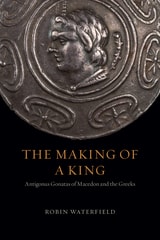
The Making of a King
Antigonus Gonatas of Macedon and the GreeksRobin Waterfield
University of Chicago Press, 2021
In the third century BCE, the ancient kingdom of Macedon held dominion over mainland Greece, but it was rapidly descending into chaos. After Alexander the Great’s death, several of his successors contended for the Macedonian throne, and amid the tumult the Celts launched a massive invasion, ravaging and plundering Macedon and northern Greece for years. The Celts finally met their defeat at the hands of Antigonus Gonatas, son of one of Alexander’s successors. An exceptional statesman and artful strategist, Antigonus protected Macedon and its Greek territories against aggressors coming from every direction. After almost fifty years of chaos brought on by Alexander’s death, Antigonus stabilized Macedon and Greece and laid the foundation for a long but troubled reign.
In this book, distinguished historian Robin Waterfield draws on his deep understanding of Greek history to bring us into the world of this complicated, splintered empire. He shows how, while Antigonus was confirming his Macedonian rule through constitutional changes, the Greeks were making moves toward independence. Two great confederacies of Greek cities emerged, forming powerful blocs that had the potential to resist the power of Macedon. The Making of a King charts Antigonus’s conflicts with the Greeks and with his perennial enemy, Ptolemy of Egypt. But Antigonus’s diplomatic and military successes were not enough to secure peace, and in his final years he saw his control of Greece whittled away by rebellion and the growing power of the Greek confederacies. Macedon’s lack of firm control over Greece ultimately made it possible for Rome to take its place as the arbiter of the Greeks’ future.
The Making of a King is Waterfield’s third volume about the Greeks in the era after Alexander the Great. Completing the story begun in his previous two books, Dividing the Spoils and Taken at the Flood, it brings Antigonus and his turbulent era to life. With The Making of a King—the first book in more than a century to tell in full the story of Antigonus Gonatas’s reign—this fascinating figure finally receives his due.
[more]