Results by title
5 books match the query 'Main Street'
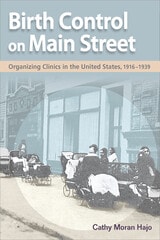
Birth Control on Main Street
Organizing Clinics in the United States, 1916-1939Cathy Moran Hajo
University of Illinois Press, 2010
Unearthing individual stories and statistical records from previously overlooked birth control clinics, Cathy Moran Hajo looks past the rhetoric of the birth control movement to show the relationships, politics, and issues that defined the movement in neighborhoods and cities across the United States. Whereas previous histories have emphasized national trends and glossed over the majority of clinics, Birth Control on Main Street contextualizes individual case studies to add powerful new layers to the existing narratives on abortion, racism, eugenics, and sterilization.
Hajo draws on an original database of more than 600 clinics run by birth control leagues, hospitals, settlement houses, and public health groups to isolate the birth control clinic from the larger narrative of the moment. By revealing how clinics tested, treated, and educated women regarding contraceptives, she shows how clinic operation differed according to the needs and concerns of the districts it served.
Moving thematically through the politicized issues of the birth control movement, Hajo infuses her analysis of the practical and medical issues of the clinics with unique stories of activists who negotiated with community groups to obey local laws and navigated the swirling debates about how birth control centers should be controlled, who should receive care, and how patients should be treated.
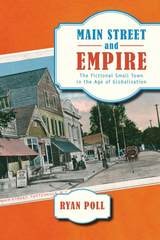
Main Street and Empire
The Fictional Small Town in the Age of GlobalizationPoll, Ryan
Rutgers University Press, 2012
In Main Street and Empire, Ryan Poll addresses this need, arguing that the small town, as evoked by the image of “Main Street,” is not a relic of the past but rather a metaphorical screen upon which America’s “everyday” stories and subjects are projected on both a national and global scale.
Bringing together a broad selection of texts—from Thornton Wilder’s Our Town, Grace Metalious’s Peyton Place, and Peter Weir’s The Truman Show to the speeches of William McKinley, Ronald Reagan, Sarah Palin, and Barack Obama—Poll examines how the small town is used to imagine and reproduce the nation throughout the twentieth- and into the twenty-first century. He contends that the dominant small town, despite its innocent, nostalgic appearance, is central to the development of the U.S. empire and global capitalism.
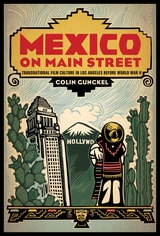
Mexico on Main Street
Transnational Film Culture in Los Angeles before World War IIGunckel, Colin
Rutgers University Press, 2015
The Press and Main Street
El Pais--Journalism in Democratic SpainJuan Luis Cebrian, Translated by Brian Nienhaus
University of Michigan Press, 1990
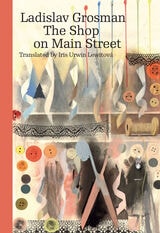
The Shop on Main Street
Ladislav Grosman
Karolinum Press, 2019