Results by title
3 books match the query 'Making Home'

Making Home in Havana
Pietropaolo, Vincenzo
Rutgers University Press, 2002
Havana is a city that rarely fails to captivate. But much of the unique beauty and culture of this historic city is rapidly disappearing. As Cuban society finds itself at a crossroads, Havana is more than ever a city on the edge, for although frozen in time as a consequence of Fidel Castro’s revolution, it has certainly not been well preserved. Time, climate, and neglect have eroded a rare architectural legacy, making the need to document this heritage even more pressing than ever before.
Making Home in Havana is an elegant book of photographs and testimonies, recording, questioning, and evoking the meaning of place — in particular, the meaning of home. The combination of fine photography and the words of residents of former palaces, humble apartments, and other dwellings offer us an irresistible portrait of Havana that might otherwise be lost forever.Vincenzo Pietropaolo and Cecelia Lawless have made numerous visits to Havana in order to fully understand and convey the essence of what home means to the inhabitants of the dwellings of the El Vedado and Centro Habana neighborhoods. Together, they—and we—explore how a building becomes a home through its human history as well as its architectural features. With some renovation already underway in colonial Havana, they concentrate on largely unexplored and unrecognized sections that continue to fall into ruin. The intimacy of their connection with the buildings and people offers us a rare combination of documentary realism and high art. Buildings and people speak their histories to us in classic humanistic style. Residents of Havana tell their stories of lifelong efforts to turn decay into beauty, while the photographer’s evocative pictures enable us to feel exactly what they are talking about — a creation of time and space called home.
[more]
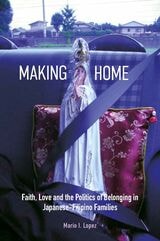
Making Home
Faith, Love and the Politics of Belonging in Japanese-Filipino FamiliesMario Ivan Lopez
National University of Singapore Press, 2026
An anthropological account of how religion helps sustain bonds within transnational families.
How do faith, family, and migration intersect in the intimate lives of transnational couples? This ethnography examines Japanese-Filipino marriages in contemporary Japan to reveal how gendered Catholic practices, cultural negotiation, and the politics of belonging shape everyday life. Set in Northern Kyushu, Making Home explores the often tense dynamics of these relationships—how love, faith, and social expectations are navigated across multiple domains. Through long-term fieldwork, it shows how Filipino migrants and their Japanese partners create “contact zones” where faith becomes both a resource for connection and a site of struggle.
Religion, far from being a private matter, becomes a powerful tool for migrants to sustain family ties, negotiate identities, and transform the intimate spaces they live in. Centering religious practices within migration studies, this book offers fresh insights into the evolving landscape of transnational families in Japan.
[more]
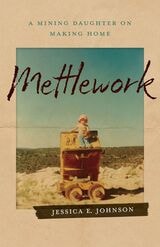
Mettlework
A Mining Daughter on Making HomeJessica E. Johnson
Acre Books, 2024
A memoir of Johnson’s unusual upbringing during the 1970s and ’80s, interwoven with the story of her transition to parenthood in post-recession Portland, Oregon.
In the weeks after her first child is born, Jessica E. Johnson receives an email from her mother that contains artifacts of the author’s early childhood: scans of Polaroids and letters her mother wrote in mountain west mining camps and ghost towns—places without running water, companions, or help. Awash in love and restlessness, Johnson begins to see how the bedrock images of her isolated upbringing have stayed with her, even when she believed she was removing herself from their logic.
As she copes with the swirling pressures of parenting, teaching at an urban community college, and a partnership shaped by chronic illness, Johnson starts digging through her mother’s keepsakes and the histories of the places her family passed through, uncovering the linked misogyny and disconnection that characterized her childhood world—a world with uncomfortable echoes in the present and even in the act of writing itself. The resulting journey encompasses Johnson’s early memories, the story of the earth told in the language of geology, bits of vivid correspondence, a mothering manual from the early twentieth century, and the daily challenges of personal and collective care in a lonesome-crowded Pacific wonderland. Mettlework traces intergenerational failures of homemaking, traveling toward presence and relationship amid the remains of extractive industry and unsustainable notions of family.
[more]