Results by title
279 books match the query 'Management' and 8 start with a
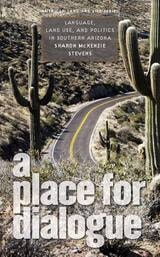
A Place for Dialogue
Language, Land Use, and Politics in Southern ArizonaSharon McKenzie Stevens
University of Iowa Press, 2007
In A Place for Dialogue, Sharon McKenzie Stevens views the contradictions and collaborations involved in the management of public land in southern Arizona—and by extension the entire arid West—through the lens of political rhetoric. Revealing the socioecological relationships among cattlemen and environmentalists as well as developers and recreationists, she analyzes the ways that language shapes landscape by shaping decisions about land use.
Stevens focuses on the collaborative Sonoran Desert Conservation Plan initiated by Pima County, Arizona, the ubiquitous use of scientific argument to defend contradictory practices, and the construction and negotiation of rancher/environmentalist identities to illuminate both literally and metaphorically the dynamics of land use politics. Drawing specifically upon extensive interviews with a diverse array of agents on all sides of the debate—ranchers, environmentalists, scientists, land managers, government officials—on historical narratives, and on her own conflicting experiences as someone who grew up with those who work the western lands, she demonstrates that it is possible to use differences to solve, rather than to aggravate, the entrenched problems that bridge land and language.
By integrating her richly textured case study of a fragile region with rhetorical approaches to narrative, science-based argument, and collective identities, Stevens makes a significant contribution to the fields of rhetoric, land management, and cultural studies.
A Thirsty Land
The Fight for Water in TexasBy Seamus McGraw
University of Texas Press, 2018
As a changing climate threatens the whole country with deeper droughts and more furious floods that put ever more people and property at risk, Texas has become a bellwether state for water debates. Will there be enough water for everyone? Is there the will to take the steps necessary to defend ourselves against the sea? Is it in the nature of Americans to adapt to nature in flux?
The most comprehensive—and comprehensible—book on contemporary water issues, A Thirsty Land delves deep into the challenges faced not just by Texas but by the nation as a whole, as we struggle to find a way to balance the changing forces of nature with our own ever-expanding needs. Part history, part science, part adventure story, and part travelogue, this book puts a human face on the struggle to master that most precious and capricious of resources, water. Seamus McGraw goes to the taproots, talking to farmers, ranchers, businesspeople, and citizen activists, as well as to politicians and government employees. Their stories provide chilling evidence that Texas—and indeed the nation—is not ready for the next devastating drought, the next catastrophic flood. Ultimately, however, A Thirsty Land delivers hope. This deep dive into one of the most vexing challenges facing Texas and the nation offers glimpses of the way forward in the untapped opportunities that water also presents.
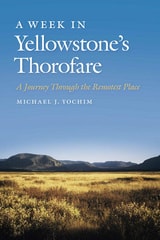
A Week in Yellowstone's Thorofare
A Journey Through the Remotest PlaceMichael J. Yochim
Oregon State University Press, 2016
Drawing upon the first-person accounts of rangers who have patrolled the area, archival documents, and Michael Yochim’s personal experiences over almost three decades, A Week in Yellowstone’s Thorofare distinguishes between the notions of wildness and wilderness. Through historic vignettes, descriptions of natural resources, and the author’s own experiences, it argues that wildness is the most precious, and easily lost, attribute of wilderness.
The Thorofare is remote not only from roads, but also largely unexplored in the vast body of wilderness literature. A Week in Yellowstone’s Thorofare aims to fill that void. Recognizing both the value and the fragility of wildness, the rangers who manage the area have struggled through many eras to preserve it. This book chronicles many of the struggles through which it has remained protected for visitors today.
Yochim offers poignant insight into the passions that motivate those who manage, defend, and journey through the Thorofare. His story demonstrates the importance of wild places for touching and understanding a fundamental part of the human experience. Part history, memoir, travelogue, natural history, and reflection, the book will appeal to readers interested in preservation, the wilderness movement, the history of National Parks, or the natural treasures of Yellowstone.

Academic Archives
Managing the Next Generation of College and University Archives, Records, and Special CollectionsAaron D. Purcell
American Library Association, 2012
Advocacy and Awareness for Archivists
Kathleen D. Roe
Society of American Archivists, 2019

America's Healthcare Transformation
Strategies and InnovationsPhillips, Robert A.
Rutgers University Press, 2016

Art Management
Entrepreneurial StyleGiep Hagoort
Eburon Academic Publishers, 2003
Autocrats Can't Always Get What They Want
State Institutions and Autonomy under AuthoritarianismNathan J. Brown, Steven D. Schaaf, Samer Anabtawi, and Julian G. Waller
University of Michigan Press, 2024
In Autocrats Can’t Always Get What They Want, the authors find that when state bodies form strong institutional patterns and forge links with key allies both inside the state and outside of it, they can define interests and missions that are different from those at the top of the regime. By focusing on three such structures (parliaments, constitutional courts, and official religious institutions), the book shows that the degree of autonomy realized by a particular part of the state rests on how thoroughly it is institutionalized and how strong its links are with constituencies. Instead of viewing authoritarian governance as something that reduces politics to rulers’ whims and opposition movements, the authors show how it operates—and how much what we call “authoritarianism” varies.