Results by title
7 books match the query 'Manhattan (New York, N.Y.)'
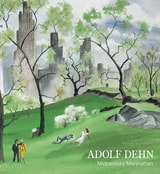
Adolf Dehn
Midcentury ManhattanAdolf Dehn
The Artist Book Foundation, 2017
Adolf Dehn (1895–1968), American painter in multimedia and acclaimed master lithographer, left his Minnesota hometown after formal training at the Minneapolis Art Institute to study at the Art Students League in New York. He toured Europe in the early 1920s, quickly acclimating to the continental lifestyle and adeptly depicting its nuances and idiosyncrasies with prolific lithographs and sketches. His critical and satirical renderings of the political movements, social conventions, and governmental policies in post-World War I Europe during "Le Crazy Years" gave the Midwestern artist ample material for his growing body of work.
Sailing back to the United States in 1929, Dehn survived the Great Depression with commercial artwork and contributions to popular magazines such as The New Yorker, Vogue, and Vanity Fair. His clever drawings that reflected the Jazz Age's culture and fashionable society made him a favorite of Frank Crowninshield, Vanity Fair's renowned editor.
During this time, while Dehn captured the heyday of Manhattan's burlesque theaters, lively Harlem nightclubs, impressive skyline, and busy harbor, he was continuously drawn to Central Park—his predilection for the city's magnificent green space was a sustaining source of inspiration and subject matter. Adolf Dehn: Midcentury Manhattan candidly examines the life and work of this exceptional, adventurous, and intrepid artist as he moved skillfully and capably between lithography, ink-wash drawings, gouache, casein painting, and watercolors. Combining numerous vintage photographs with newly discovered, Manhattan-inspired prints and drawings from the collections of, among others, the Whitney Museum of American Art, MoMA, and The Metropolitan Mesuem of Art, Adolf Dehn: Midcentury Manhattan traces how Dehn's art reflected the spirit, pulse, and uniquely American tonalities of The City of Dreams.
Creating the Hudson River Park
Environmental and Community Activism, Politics, and GreedTom Fox
Rutgers University Press, 2024
The 4-mile-long, 550-acre Hudson River Park is nearing completion and is the largest park built in Manhattan since Central Park opened more than 150 years ago. It has transformed a derelict waterfront, protected the Hudson River estuary, preserved commercial maritime activities, created new recreational opportunities for millions of New Yorkers, enhanced tourism, stimulated redevelopment in adjacent neighborhoods, and set a precedent for waterfront redevelopment. The Park attracts seventeen million visitors annually. Creating the Hudson River Park is a first-person story of how this park came to be. Working together over three decades, community groups, civic and environmental organizations, labor, the real estate and business community, government agencies, and elected officials won a historic victory for environmental preservation, the use and enjoyment of the Hudson River, and urban redevelopment. However, the park is also the embodiment of a troubling trend toward the commercialization of America’s public parks.
After the defeat of the $2.4 billion Westway plan to fill 234 acres of the Hudson in 1985, the stage was set for the revitalization of Manhattan’s West Side waterfront. Between 1986 and 1998 the process focused on the basics like designing an appropriate roadway, removing noncompliant municipal and commercial activities from the waterfront, implementing temporary improvements, developing the Park’s first revenue-producing commercial area at Chelsea Piers, completing the public planning and environmental review processes, and negotiating the 1998 Hudson River Park Act that officially created the Park. From 1999 to 2009 planning and construction were funded with public money and focused on creating active and passive recreation opportunities on the Tribeca, Greenwich Village, Chelsea, and Hell’s Kitchen waterfronts.
However, initial recommendations to secure long term financial support for the Park from the increase in adjacent real estate values that resulted from the Park’s creation were ignored. City and state politicians had other priorities and public funding for the Park dwindled. The recent phase of the project, from 2010 to 2021, focused on “development” both in and adjacent to the Park. Changes in leadership, and new challenges provide an opportunity to return to a transparent public planning process and complete the redevelopment of the waterfront for the remainder of the 21st-century. Fox’s first-person perspective helps to document the history of the Hudson River Park, recognizes those who made it happen and those who made it difficult, and provides lessons that may help private citizens and public servants expand and protect the public parks and natural systems that are so critical to urban well-being.
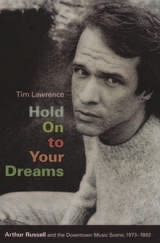
Hold On to Your Dreams
Arthur Russell and the Downtown Music Scene, 1973-1992Tim Lawrence
Duke University Press, 2009
Tim Lawrence traces Russell's odyssey from his hometown of Oskaloosa, Iowa, to countercultural San Francisco, and eventually to New York, where he lived from 1973 until his death from AIDS-related complications in 1992. Resisting definition while dreaming of commercial success, Russell wrote and performed new wave and disco as well as quirky rock, twisted folk, voice-cello dub, and hip-hop-inflected pop. “He was way ahead of other people in understanding that the walls between concert music and popular music and avant-garde music were illusory,” comments the composer Philip Glass. "He lived in a world in which those walls weren't there." Lawrence follows Russell across musical genres and through such vital downtown music spaces as the Kitchen, the Loft, the Gallery, the Paradise Garage, and the Experimental Intermedia Foundation. Along the way, he captures Russell's openness to sound, his commitment to collaboration, and his uncompromising idealism.
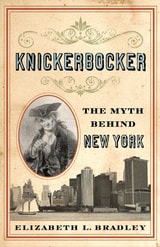
Knickerbocker
The Myth behind New YorkBradley, Elizabeth L
Rutgers University Press, 2009
Includes a gallery of images that brings Diedrich Knickerbocker, his myth, time, and place to life Knickerbocker engagingly traces the creation, evolution, and prevalence of Irving's imaginary historian in New York literature and history, art and advertising, from the early nineteenth century to the present day. Who would imagine this satiric character, at once a snob and a champion of the people, would endure for two hundred years? In Elizabeth L. Bradley's words, "Whether you call it 'blood,' style, attitude, or moxie, the little Dutchman could deliver." And, from this engaging work, it is clear that he does.
Bradley's stunning volume offers a surprising and delightful glimpse behind the scenes of New York history, and invites readers into the world of Knickerbocker, the antihero who surprised everyone by becoming the standard-bearer for the city's exceptional sense of self, or what we now call a New York "attitude."
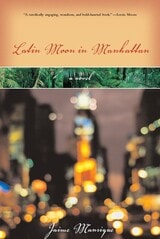
Latin Moon in Manhattan
A NovelJaime Manrique
University of Wisconsin Press, 2003
Exuberant and colorful, Latin Moon in Manhattan paints a vivid portrait of New York City as the land of El Dorado for today’s Latino immigrants. From Little Colombia in Queens to the street life of Times Square, this brilliant novel is crowded with an extraordinary cast of characters: Hot Sauce, a midget hooker; Simon Bolivar, a parrot who croons Julio Iglesias songs; the Urrutias, a family rich from cocaine smuggling; Santiago Martinez, a loner and would-be poet whose ancient cat, Mr. O’Donnell, is slowly dying of an enlarged heart. Exploding with a profusion of plots and subplots involving drug smuggling, romance, and the literary politics of Queens, Latin Moon in Manhattan is a rich and utterly charming work.
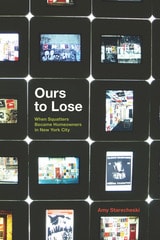
Ours to Lose
When Squatters Became Homeowners in New York CityAmy Starecheski
University of Chicago Press, 2016
Those decades of strife, however, also gave the Lower East Side something unusual: a radical movement that blended urban homesteading and European-style squatting in a way never before seen in the United States. Ours to Lose tells the oral history of that movement through a close look at a diverse group of Lower East Side squatters who occupied abandoned city-owned buildings in the 1980s, fought to keep them for decades, and eventually began a long, complicated process to turn their illegal occupancy into legal cooperative ownership. Amy Starecheski here not only tells a little-known New York story, she also shows how property shapes our sense of ourselves as social beings and explores the ethics of homeownership and debt in post-recession America.
The higher jazz
Edmund Wilson
University of Iowa Press, 1998