Results by title
2 books match the query 'Maqām'
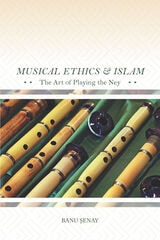
Musical Ethics and Islam
The Art of Playing the NeyBanu Senay
University of Illinois Press, 2020
Banu Şenay documents the years-long training required to become a neyzen—a player of the ney. The process holds a transformative power that invites students to create a new way of living that involves alternative relationships with the self and others, changing perceptions of the city, and a dedication to craftsmanship. Şenay visits reed harvesters and travels from studios to workshops to explore the practical processes of teaching and learning. She also becomes an apprentice ney-player herself, exploring the desire for spirituality that encourages apprentices and masters alike to pursue ney music and its scaffolding of Islamic ethics and belief.
Palestinian Arab Music
A Maqam Tradition in PracticeDalia Cohen and Ruth Katz
University of Chicago Press, 2005
Working initially with their own 1957 invention, the Cohen-Katz Melograph, and later with computers, Dalia Cohen and Ruth Katz recorded and digitized several hundred Palestinian music performances. The authors analyzed the musical tradition in light of its main variables. These include musical parameters, modal frameworks, the form and structure of the music, its poetic texts, and aspects of the social functions of the tradition. As a result of their study, the vexed aspect of intonation in practice is revealed to exist in a special relationship with the scale systems or maqamat, which are in turn of great importance to organizing the music and determining its modal systems.