Results by title
8 books match the query 'Mariology'
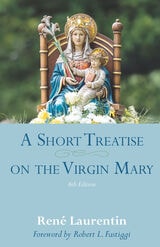
A Short Treatise on the Virgin Mary
Rene Laurentin
Catholic University of America Press, 2022
As a peritus at Vatican II and by the end of his life arguably the world’s leading Mariologist, René Laurentin has earned the privilege of republication of a work of considerable value for any theologian who aims for comprehensiveness of Catholic theological perspective, historically and systematically. Laurentin’s orthodox, yet highly original treatment displays his command of all of the relevant biblical, patristic, medieval and modern texts up to and including the entire proceedings of the Second Vatican Council, as well as the whole range of related historical and theological scholarship. His proposal to pursue Mariological speculation along two tracks – first, “from above,” following the course of doctrinal development from biblical revelation to the VCII era, and second, “from below,” considering Mary’s own life (walking in her footsteps, as it were), from before the Annunciation to the Parousia – provides a clear, accessible structure for the work, yielding rich theological and spiritual fruit. Not only are all the major Marian doctrines and their developments handled with the greatest sensitivity, from the Virgin birth to the modern promulgations of Immaculate Conception and Assumption, but Laurentin’s approach in his second part opens the way to a human-psychological treatment of motherhood, still solidly bolstered by traditional Christian anthropology. Regarding Mary’s status as Mother of God, Laurentin’s discussion of the Theotokos exhibits his deep ecumenical commitments, as much as his specific attention to Mary’s soteriological role as a sticking point for Protestantism. One of the most striking qualities of the work is Laurentin’s deft integration of his evident scholastic formation into an overarching vision thoroughly at ease with the phenomenological (“personalist”) and existential currents in which he also inevitably swam throughout his education and professional scholarly occupation. As a result, the work can be read and appreciated instinctively, as it were, as much by the eclectic contemporary theologian, influenced by the likes of Heidegger, et al, as by the Thomist.
[more]
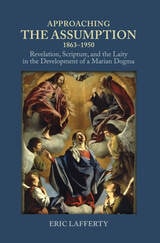
Approaching the Assumption, 1863-1950
Revelation, Scripture, and the Laity in the Development of a Marian DogmaEric Lafferty
Catholic University of America Press, 2026
The Assumption of Mary refers to the ancient Christian belief that the Mother of God was taken up into Heaven, body and soul, at the end of her earthly life. For centuries, Catholics and other Christians celebrated the Assumption as a liturgical feast and meditated on the miraculous event in the Rosary. Nevertheless, its relationship to Revelation remained undefined. This changed in 1950 when Pope Pius XII declared the Assumption of Mary a dogma of the Catholic Church. In this rare exercise of papal authority, Pius XII infallibly and irrevocably taught that the Assumption was a truth revealed by God. This book explores how the definition of this Marian dogma came to fruition.
After a brief history of the prior three Marian dogmas — Mother of God, Ever-Virgin, and the Immaculate Conception — this book narrates the major moments in the effort to obtain a dogmatic definition of the Assumption. The beginning of this “Assumptionist movement” can be dated to 1863 when Queen Isabel II of Spain petitioned the pope to declare the Assumption a dogma. Subsequently, petitionary efforts and scholarly inquiry increased and spread throughout the world. In addition to the narrative of this movement, this book gives special consideration to three vital aspects: debate over the Assumption’s definability as a dogma, if and how Scripture reveals the Assumption, and the contribution of the laity on a matter of doctrine.
Collectively, the Assumptionist movement emerges as a critical event in the nineteenth- and twentieth-century Catholic Church. Culminating in a dogmatic definition shortly before the opening of Vatican II, it also serves as a key point of inquiry for continuity and development of doctrine. A final chapter argues that the operative beliefs pertaining to Revelation, Scripture, and the laity during the Assumptionist movement stand in continuity with the teachings of Vatican II.
[more]
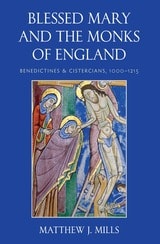
Blessed Mary and the Monks of England, 1000-1215
Matthew J. Mills
Catholic University of America Press, 2024
In the study of historical Mariology, the monastic communities of England before and after the Norman conquest receive too little attention. Classic surveys, such as Hilda Graef’s, Mary: A History of Doctrine and Devotion (2 vols, orig. 1963, 1965), highlight key figures and developments; and a fine book by Mary Clayton, The Cult of the Virgin Mary in Anglo-Saxon England (1990), takes scholarship as far as the early-eleventh century. The present volume, building upon such works, delves more deeply into the prayerful, intellectual and artistic contemplation of Mary during the age of monasticism, roughly the two hundred years prior to the advent of the mendicant orders in the thirteenth century. In the history of England, this was a time of high drama: conquest, power struggle, martyrdom; for English monasticism, it was marked by suppression, reform and renewal, patronage, and new currents of prayer and thought. Against this backdrop, Matthew Mills uncovers many vibrant contributions to Marian doctrine and devotion by theologians and communities living according to the sixth-century Rule of St Benedict: the Benedictines and their successors, the Cistercians, who arrived in England in 1128. In a thematic unfolding of Mary’s life and identity, from conception to assumption and intercession, a picture emerges of a Mariology shaped by the constant of monastic liturgy, anchored in deep biblical and patristic wisdom, cherished and transmitted by the Englishman, St Bede (d. 735), and animated by profound love. Towering figures, St Anselm (d. 1109) and St Ælred (d. 1167), are placed within a wider landscape, alongside lesser-known but still significant individuals, including the Cistercian abbot, John of Forde (d. 1214), royal confessor and pioneer of Marian exegesis of the Song of Songs. England’s monastic Mariology was colored by Greek as well as Latin influences and touched by key experiences of the contemporary church at large: apocalyptic disappointment, eleventh-century reform (sometimes called, ‘Gregorian’), sacramentalism, intense yearning for salvation. This book also sheds light upon the significance of Mary for medieval monks’ understanding of their own profession; their mother and their lady, she was, in addition, their icon and exemplar of life in St Benedict’s ‘school for the Lord’s service’ (Rule, Prol. 45).
[more]
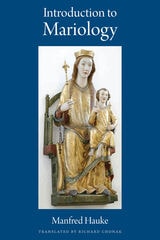
Introducation to Mariology
Manfred Hauke
Catholic University of America Press, 2020
In Introduction to Mariology, Fr. Manfred Hauke provides a synthesis of Mariology and the biblical fundaments and development of Marian doctrine. While it works as a comprehensive introduction suitable for courses on the subject, it is in reality a panoramic view on the entire Marian doctrine, and as such will be essential for the theological formation of seminarians, priests, theologians, and all kinds of educated Catholics. With an unparalleled bibliographic citation of Marian literature across a dozen languages, it is also a perfect gateway to further research on the subject.
It begins with Biblical doctrine, which is important especially for the dialogue with Protestant denominations: Catholic Mariology can be traced in its “embryonic” state already in Holy Scripture. From there Hauke presents a historical overview of the whole development of Marian doctrine, before developing further historical details in the subsequent chapters dedicated to systematic issues. The first systematic step approaches the figure of Mary through her role in the mystery of the Covenant between God and redeemed humanity; her being “Mother of God” and companion of the Redeemer is the “fundamental principle.” Then the four established Marian dogmas are presented: divine maternity, virginity, Immaculate Conception (in a chapter on Mary’s holiness more broadly), and bodily Assumption. A close look is given to maternal mediation which includes a part dedicated to the “Mater Unitatis”. A stand alone chapter is dedicated to Marian apparitions; authentic apparitions are presented as a part of prophetic charisma. The last chapter presents the basics on Marian devotion which culminates in the consecration to Mary (as a response to her maternal mediation).
Already available in Spanish, Italian, Portugese, and Korean, this landmark work is published here for the first time in English.
[more]
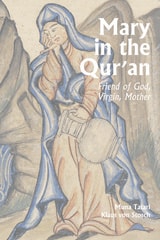
Mary in the Qur'an
Friend of God, Virgin, MotherMuna Tatari and Klaus von Stosch
Gingko, 2025
A sensitive consideration of Mary, mother of Jesus, in the Qur’an.
An entire chapter (surah) is dedicated to her, and she is the only woman mentioned by name in the Qur’an—indeed, her name appears more frequently than that of either Muhammad or Jesus. From the earliest times to the present day, Mary, the mother of Jesus, continues to be held in high regard by Christians and Muslims alike, yet she has also been the cause of much tension between these two religions.
In this groundbreaking study, Muna Tatari and Klaus von Stosch painstakingly reconstruct the picture of Mary that is presented in the Qur’an and show how veneration of the Blessed Virgin Mary in the Roman Catholic Church intersects and interacts with the testimony of the Qur’an. This sensitive and scholarly treatise offers a significant contribution to contemporary interfaith dialogue.
[more]
Mary, Mother of God's Word Made Flesh
Dylan Schrader
Catholic University of America Press, 2025
Mary, Mother of God’s Word Made Flesh overviews Catholic teaching on Mary, with a special focus on the “four Marian dogmas” and other major doctrines, such as Mary’s cooperation in the work of salvation and the distribution of graces. The book takes the relationship of Mary to Jesus as its starting point, while also drawing on insights from ecclesio typical and Christotypical approaches to Mariology.
This book emphasizes that Marian doctrine must be grounded in the revealed Word of God. Thus, it does not rely on private revelations but instead draws on scriptural, magisterial, patristic, and liturgical sources. At the same time, Mary, Mother of God’s Word Made Flesh is systematic and not merely historical. It strives to show how Catholic teachings on Mary fit together and explores precisely what they mean.
In this task, Mary, Mother of God’s Word Made Flesh draws in a special way on St. Thomas Aquinas and the Thomistic school, while also incorporating insights from other approaches. Thus, it also engages with some speculative questions that have not received as much attention in other recent works of Mariology but that remain important for the correct understanding and elaboration of magisterial teachings. For example, it deals with the issue of the debitum peccati (“debt of sin”), which touches on how to connect the Immaculate Conception with the notion of redemption, and the question of precisely how Mary is involved in the conferral of graces.
The most important parts of this book are the chapters on the dogmas of the divine maternity, the immaculate conception, the perpetual virginity of Mary, and her assumption into heaven. There are also chapters on Mary’s holiness of life, her participation in Christ’s saving work, and Marian devotion in the life of the Church. The first appendix overviews the problem of what St. Thomas Aquinas taught about the Immaculate Conception, while the second discusses the magisterium’s current approach to private revelations and extraordinary phenomena.
[more]
Principles of Catholic Theology, Book 4
On the Church, Mary, Nature and GraceThomas Joseph White
Catholic University of America Press, 2023
In the Nicene Creed Christians profess belief in the Church, "one, holy, catholic, and apostolic." The Church is also called the mystical body of Christ and the bride of Christ. What is the Church and how can we understand her mystery in light of the mystery of Christ? Principles of Catholic Theology, Book 4 explores Catholic ecclesiology and the theology of the Virgin Mary, as an exemplar of the Church's life. It also considers the people of Israel in light of the Church and Christ. The second half of the book considers human nature in light of the grace of Christ, and ecclesial humanity, so as to consider thematic and universal relations of grace to human nature. Major controversies are addressed such as the natural desire to see God and the Thomistic understanding of election and predestination. Effectively this volume seeks to receive and interpret the teaching of the Second Vatican Council Constitution on the Church, Lumen Gentium, within the Thomistic theological tradition and in light of that tradition.
Principles of Catholic Theology, Book 4 is a continuation of Fr. Thomas Joseph White's collection of essays, extending over a range of fundamental topics in Catholic dogmatic theology.
[more]
The Splendor of the Church in Mary
Henri de Lubac, Vatican II, and Marian RessourcementTheresa Marie Chau Nguyen
Catholic University of America Press, 2023
Henri de Lubac, SJ, (1896-1991) is one of the most renowned theologians of the twentieth century. Numerous studies have been undertaken to examine his many contributions to theology, but little attention has been paid to the specific topic of the relationship of the Blessed Virgin Mary and the Church in his writings. This was a topic that gave rise to contentious discussion at the Second Vatican Council, and although the Council fathers approved the integration of Marian doctrine into the Dogmatic Constitution on the Church, this synthesis of Mariology and ecclesiology has been largely neglected in theology today.
The Splendor of the Church in Mary retrieves de Lubac’s Marian ecclesiology and revives an understanding and appreciation of its enduring influence at the Vatican Council and beyond. The first part examines de Lubac’s pre-conciliar works which evince a steady biblical and patristic ressourcement of Marian themes. It also explores his writings on Teilhard de Chardin’s Eternal Feminine, Christian mysticism, and Amida Buddhism and discovers in them the essential building blocks of his Marian thought. The second part turns to the Second Vatican Council and post-conciliar developments. Rereading the debates and texts of Lumen Gentium through a Marian lens brings to light the extent of de Lubac’s influence: Méditation sur l’Eglise (1953), his principal work on Mary and the Church, anticipated the structure and content of Lumen Gentium a decade before the Council.
De Lubac’s writings provided a theological compass for the Council fathers, and they continue to provide direction and orientation for ecclesiological discourse today. The Splendor of the Church in Mary culminates in a constructive analysis of one of the most pressing pastoral and ecclesiological questions of our times: the question of the relationship of the universal and particular churches. Directly engaging the crucial debate between then-Cardinal Ratzinger and Cardinal Kasper, it proposes that de Lubac’s Mariology effectively offers a new perspective and a refreshing path forward. Attentive to the mystical identification of Mary and the Church, de Lubac’s ressourcement has the potential to re-enchant and advance contemporary theology in new and significant ways.
[more]