Results by title
2 books match the query 'Marno, David'
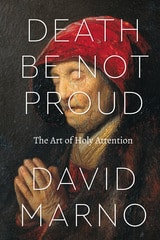
Death Be Not Proud
The Art of Holy AttentionDavid Marno
University of Chicago Press, 2016
The seventeenth-century French philosopher Nicolas Malebranche thought that philosophy could learn a valuable lesson from prayer, which teaches us how to attend, wait, and be open for what might happen next. Death Be Not Proud explores the precedents of Malebranche’s advice by reading John Donne’s poetic prayers in the context of what David Marno calls the “art of holy attention.”
If, in Malebranche’s view, attention is a hidden bond between religion and philosophy, devotional poetry is the area where this bond becomes visible. Marno shows that in works like “Death be not proud,” Donne’s most triumphant poem about the resurrection, the goal is to allow the poem’s speaker to experience a given doctrine as his own thought, as an idea occurring to him. But while the thought must feel like an unexpected event for the speaker, the poem itself is a careful preparation for it. And the key to this preparation is attention, the only state in which the speaker can perceive the doctrine as a cognitive gift. Along the way, Marno illuminates why attention is required in Christian devotion in the first place and uncovers a tradition of battling distraction that spans from ascetic thinkers and Church Fathers to Catholic spiritual exercises and Protestant prayer manuals.
If, in Malebranche’s view, attention is a hidden bond between religion and philosophy, devotional poetry is the area where this bond becomes visible. Marno shows that in works like “Death be not proud,” Donne’s most triumphant poem about the resurrection, the goal is to allow the poem’s speaker to experience a given doctrine as his own thought, as an idea occurring to him. But while the thought must feel like an unexpected event for the speaker, the poem itself is a careful preparation for it. And the key to this preparation is attention, the only state in which the speaker can perceive the doctrine as a cognitive gift. Along the way, Marno illuminates why attention is required in Christian devotion in the first place and uncovers a tradition of battling distraction that spans from ascetic thinkers and Church Fathers to Catholic spiritual exercises and Protestant prayer manuals.
[more]
The Apocalyptic Complex
Perspectives, Histories, PersistenceMatthias Riedl
Central European University Press, 2018
The attack on the World Trade Center in 2001, followed by similarly dreadful acts of terror, prompted a new interest in the field of the apocalyptic. There is a steady output of literature on the subject (also referred to as “the End Times.) This book analyzes this continuously published literature and opens up a new perspective on these views of the apocalypse. The thirteen essays in this volume focus on the dimensions, consequences and transformations of Apocalypticism. The authors explore the everyday relevance of the apocalyptic in contemporary society, culture, and politics, side by side with the various histories of apocalyptic ideas and movements. In particular, they seek to better understand the ways in which perceptions of the apocalypse diverge in the American, European, and Arab worlds. Leading experts in the field re-evaluate some of the traditional views on the apocalypse in light of recent political and cultural events, and, go beyond empirical facts to reconsider the potential of the apocalyptic. This last point is the focal point of the book.
[more]