Results by title
4 books match the query 'Marvelous'
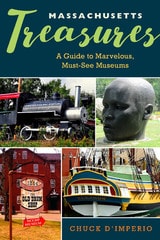
Massachusetts Treasures
A Guide to Marvelous, Must-See MuseumsChuck D'Imperio
University of Massachusetts Press, 2018
Well known for its world-renowned art museums—from the Clark Art Institute in Williamstown to the Museum of Fine Arts in Boston—Massachusetts is also home to numerous institutions with more eclectic collections and, oftentimes, lower profiles. These include Mansfield's National Black Doll Museum of History and Culture, Watertown's Plumbing Museum, and Granville's Noble and Cooley Center for Historic Preservation.
In Massachusetts Treasures, Chuck D'Imperio explores more than forty museums scattered throughout the Bay State, from Cape Cod to the Berkshires. Many—but not all—might be considered “offbeat,” and each and every one is enchanting. Through personal visits and interviews with founders and directors, D'Imperio offers an inside glimpse into some of the Commonwealth's most unique museums, providing a valuable guide for road warriors and history buffs discovering Massachusetts either for the first or the tenth time.
Mirabile Dictu
Representations of the Marvelous in Medieval and Renaissance EpicDouglas Biow
University of Michigan Press, 1996
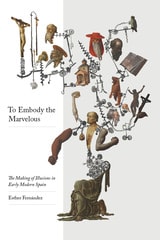
To Embody the Marvelous
The Making of Illusions in Early Modern SpainEsther Fernández
Vanderbilt University Press, 2021
Winner of the Nancy Staub Award, UNIMA-USA (Union Internationale de la Marionnette), 2023
In its exploration of puppetry and animation as the performative media of choice for mastering the art of illusion, To Embody the Marvelous engages with early modern notions of wonder in religious, artistic, and social contexts.
From jointed, wood-carved figures of Christ, saintly marionettes that performed hagiographical dramas, experimental puppets and automata in Cervantes' Don Quixote, and the mechanical sets around which playwright Calderón de la Barca devised secular magic shows to deconstruct superstitions, these historical and fictional artifacts reenvisioned religious, artistic, and social notions that led early modern society to critically wrestle with enchantment and disenchantment.
The use of animated performance objects in Spanish theatrical contexts during the sixteenth and seventeenth centuries became one of the most effective pedagogical means to engage with civil society. Regardless of social strata, readers and spectators alike were caught up in a paradigm shift wherein belief systems were increasingly governed by reason—even though the discursive primacy of supernatural doxa and Christian wonder remained firmly entrenched. Thanks to their potential for motion, religious and profane puppets, automata, and mechanical stage props deployed a rationalized sense of wonder that illustrates the relationship between faith and reason, reevaluates the boundaries of fiction in art and entertainment cultures, acknowledges the rise of science and technology, and questions normative authority.
To Embody the Marvelous
The Making of Illusions in Early Modern SpainEsther Fernández
Vanderbilt University Press, 2022
Winner of the Nancy Staub Award, UNIMA-USA (Union Internationale de la Marionnette), 2023
In its exploration of puppetry and animation as the performative media of choice for mastering the art of illusion, To Embody the Marvelous engages with early modern notions of wonder in religious, artistic, and social contexts.
From jointed, wood-carved figures of Christ, saintly marionettes that performed hagiographical dramas, experimental puppets and automata in Cervantes' Don Quixote, and the mechanical sets around which playwright Calderón de la Barca devised secular magic shows to deconstruct superstitions, these historical and fictional artifacts reenvisioned religious, artistic, and social notions that led early modern society to critically wrestle with enchantment and disenchantment.
The use of animated performance objects in Spanish theatrical contexts during the sixteenth and seventeenth centuries became one of the most effective pedagogical means to engage with civil society. Regardless of social strata, readers and spectators alike were caught up in a paradigm shift wherein belief systems were increasingly governed by reason—even though the discursive primacy of supernatural doxa and Christian wonder remained firmly entrenched. Thanks to their potential for motion, religious and profane puppets, automata, and mechanical stage props deployed a rationalized sense of wonder that illustrates the relationship between faith and reason, reevaluates the boundaries of fiction in art and entertainment cultures, acknowledges the rise of science and technology, and questions normative authority.