Results by title
9 books match the query 'Masks'
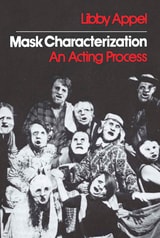
Mask Characterization
An Acting ProcessLibby Appel
Southern Illinois University Press, 1982
Behind the mask, Appel notes, the student is free to create a personality; paradoxically, because the mask hides the self, it enables the student to probe more deeply into himself.
“This book describes, defines, and discusses the mask characterization process, providing the theory behind the exercises and the step-by-step procedure in the organic development of the character from the masks,” Appel notes. The manual is divided into two parts: “The Instructor’s Guide” and “The Actor’s Guide.” There is also an introductory chapter, “The Class Structure,” which explains mask characterization procedures in the classroom, and a sample class schedule may be found in the back of the manual.
This book adds a new dimension to actor training and learning. It is essential to aspiring actors seeking new ways to create honest dramatic characterizations.
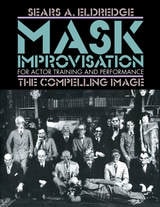
Mask Improvisation for Actor Training and Performance
The Compelling ImageSears Eldredge
Northwestern University Press, 1996
Featuring dozens of improvisational exercises in the innovative spirit of Viola Spolin, and supplemented with practical appendices on mask design and construction, forms and checklists, and other classroom materials, this book is an invaluable tool for teacher and student alike, as well as compelling reading for anyone interested in acquiring a deeper understanding of masks as agents of transformation, creativity, and performance.
Masks, Misinformation, and Making Do
Appalachian Health-Care Workers and the COVID-19 PandemicWendy Welch
Ohio University Press, 2023
Paris Concealed
Masks in the City of LightJames H. Johnson
University of Chicago Press, 2025
A comprehensive history of masks in France from the seventeenth to the nineteenth century.
Masks can conceal, disguise, or protect. They can guard status, inspire delight, or spread fear. They can also betray trust through insincerity, deceit, and hypocrisy. In Paris Concealed, historian James H. Johnson offers a sweeping history of masks both visible and unseen from the time of Louis XIV to the late nineteenth century, exploring the complex roles that masking and unmasking have played in the fashioning of our social selves.
Drawing from memoirs, novels, plays, and paintings, Paris Concealed explores the many domains in which masks have been decisive. Beginning in the court of Versailles, Johnson charts the genesis of courtly politesse and its widespread condemnation by Enlightenment philosophers and political thinkers. He describes strategies deployed in the era of the French Revolution for unmasking traitors and later efforts to penetrate criminal disguises through telltale marks on the body. He portrays the disruptive power of masks in public balls and carnivals and, with the coming of modernity, evokes their unsettling presence within the unconscious.
Compellingly written and beautifully illustrated, Paris Concealed lays bare the mask’s transformations, from marking one’s position in a static society to inspiring imagined identities in meritocracies to impeding the elusive search for one’s true self. To tell the history of masks, Johnson shows, is to tell the history of modern selfhood.

Tapping Out
PoemsNandi Comer
Northwestern University Press, 2020
The harsh realities of being migrant and immigrant, being birthright and oppressed, are as hard-pressed as the plancha move to the body. Each poem in Tapping Out is a “freestyle movement” of language and complexity put on full display, under the bright lights and roars of survival. Comer’s splendid and barbed, Detroit style of language melts the masks with searing words.
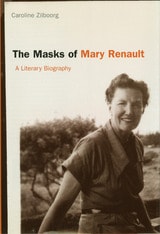
The Masks of Mary Renault
A Literary BiographyCaroline Zilboorg
University of Missouri Press, 2001
Born Eileen Mary Challans in London in 1905, Mary Renault wrote six successful contemporary novels before turning to the historical fiction about ancient Greece for which she is best known. While Renault's novels are still highly regarded, her life and work have never been completely examined. Caroline Zilboorg seeks to remedy this in The Masks of Mary Renault by exploring Renault's identity as a gifted writer and a sexual woman in a society in which neither of these identities was clear or easy.
Although Renault's life was anything but ordinary, this fact has often been obscured by her writing. The daughter of a doctor, she grew up comfortably and attended a boarding school in Bristol. She received a degree in English from St. Hugh's College in Oxford in 1928, but she chose not to pursue an academic career. Instead, she decided to attend the Radcliffe Infirmary in Oxford, where she trained to be a nurse. With the outbreak of the Second World War, she was assigned to the Winford Emergency Hospital in Bristol and briefly worked with Dunkirk evacuees. She went on to work in the Radcliffe Infirmary's brain surgery ward and was there until 1945.
It was during her nurse's training that Renault met Julie Mullard, who became her lifelong companion. This important lesbian relationship both resolved and posed many problems for Renault, not the least of which was how she was to write about issues at once intensely personal and socially challenging. In 1939, Renault published her first novel under a pseudonym in order to mask her identity. It was a time when she was struggling not only with her vocation (nursing and writing), but also with her sexual identity in the social and moral context of English life during the war.
In 1948, Renault left England with Mullard for South Africa and never returned. It was in South Africa that she made the shift from her early contemporary novels of manners to the mature historical novels of Hellenic life. The classical settings allowed Renault to mask material too explosive to deal with directly while simultaneously giving her an "academic" freedom to write about subjects vital to her—among them war, peace, career, women's roles, female and male homosexuality, and bisexuality.
Renault's reception complicates an understanding of her achievement, for she has a special status within the academic community, where she is both widely read and little written about. Her interest in sexuality and specifically in homosexuality and bisexuality, in fluid gender roles and identities, warrants a rereading and reevaluation of her work. Eloquently written and extensively researched, The Masks of Mary Renault will be of special value to anyone interested in women's studies or English literature.
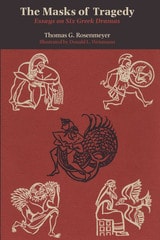
The Masks of Tragedy
Essays on Six Greek DramasBy Thomas G. Rosenmeyer
University of Texas Press, 1963
"What matters about a play is not the extent to which it is like any other play, but the way in which it is different," writes Thomas G. Rosenmeyer. "This is, I suggest, how the ancient audiences received the performances.... My purpose, then, in writing these essays is twofold: ... to devote enough space to the discussion of each play to allow its special tone and texture to emerge without hindrance and at leisure ... and to include in one collection analyses of plays so different from one another that the accent will come to rest on the variety of the tragic experience rather than on any one narrowly defined norm."
Greek tragedy is a vehicle for many different ideas and many different intentions. From the wealth of material that has come down to us the author has chosen six plays for analysis. He reminds us that the plays were written to be seen and heard, and only secondarily to be studied. The listeners expected each play to have a specific objective, and to exhibit its own mood. These the author attempts to recover for us, by listening to what each play, in its own right, has to say. His principal concern is with the tragic diction and the tragic ideas, designed to release certain massive responses in the large theater-going group of ancient Athens. In exploring the characters and the situations of the plays he has chosen, the author transports his reader to the world of fifth-century B.C. Greece, and establishes the relevance of that world to our own experience.
The essays are not introductory in nature. No space is given, for instance, to basic information about the playwrights, the history of Greek drama, or the special features of the Attic stage. Yet the book addresses itself to classicists and nonclassicists alike. The outgrowth of a series of lectures to nonspecialists, its particular appeal is to students of literature and the history of Western thought. Parallels are drawn between the writings of the philosophers and the tragedies, and attention is paid to certain popular Greek beliefs that colored the tragic formulations. Ultimately, however, the approach is not historical but critical; it is the author's intention to demonstrate the beauty and the craftsmanship of the plays under discussion.
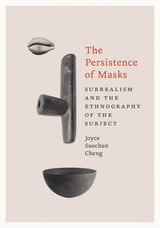
The Persistence of Masks
Surrealism and the Ethnography of the SubjectJoyce Suechun Cheng
University of Minnesota Press, 2025
An examination of surrealism’s unofficial ethnography of marginalized subjectivities
In interwar Paris, the encounter between surrealism and the nascent discipline of ethnology led to an intellectual project now known as “ethnographic surrealism.” In The Persistence of Masks, Joyce Suechun Cheng considers the ethnographic dimension of the surrealist movement in its formative years through a close look at the reviews Documents (1929–30) and Minotaure (1933–39) as well as the surrealist writer-turned-ethnographer Michel Leiris’s ethnography of possession. Analyzing surrealist aesthetic criticism, art, poetry, and field research in terms of a common interest in marginalized modes of subjectivity, Cheng argues that the surrealists used the figures of the mask, the veil, the hand, and the hat to radically reconceive the subject as nonhegemonic, nonanthropocentric, and feminine-identified.
Though ethnographic surrealism usually refers to the collaboration between professional ethnologists at the Institut de l’Ethnologie in Paris and Georges Bataille’s so-called dissident circle of surrealists, Cheng demonstrates that surrealism’s unofficial ethnography began long before the founding of the movement. Starting with André Breton’s wartime text “Subject” (1916), written when he was still a young psychiatric intern treating traumatized soldiers, she shows how the future surrealist poet shifted from a clinical to a para-ethnographic approach to subjectivity when adopting his patient’s first-person voice as a textual mask.
Revealing surrealism to be always implicitly ethnographic, Cheng uncovers deep affinities between archrivals Breton and Bataille, highlights psychiatry’s underacknowledged role in surrealism’s lay ethnography, and theorizes the surrealists’ feminine identification as a means of critiquing power. By broadening the scope of ethnographic surrealism, The Persistence of Masks offers new insights that challenge longstanding beliefs about this multifaceted movement in poetry, the arts, and culture.
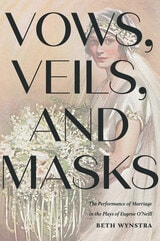
Vows, Veils, and Masks
The Performance of Marriage in the Plays of Eugene O'NeillBeth Wynstra
University of Iowa Press, 2023
Weaving in artifacts like advice columns, advertisements, theatrical reviews, and even the lived experiences of the actors who brought O’Neill’s wife characters to life, Beth Wynstra points to new ways of seeing and empathizing with those who are betrothed and new possibilities for reading marriage in literary and dramatic works. She suggests that the various ways women were, and still are, expected to divert from their true ambitions, desires, and selves in the service of appropriate wifely behavior is a detrimental performance and one at the crux of O’Neill’s marital tragedies. This book invites more inclusive and nuanced ways of thinking about the choices married characters must make and the roles they play, both on and off the stage.