Results by title
6 books match the query 'Mass media and minorities'
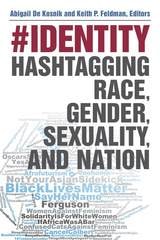
#identity
Hashtagging Race, Gender, Sexuality, and NationAbigail De Kosnik and Keith P. Feldman, editors
University of Michigan Press, 2019
#identity is among the first scholarly books to address the positive and negative effects of Twitter on our contemporary world. Hailing from diverse scholarly fields, all contributors are affiliated with The Color of New Media, a scholarly collective based at the University of California, Berkeley. The Color of New Media explores the intersections of new media studies, critical race theory, gender and women’s studies, and postcolonial studies. The essays in #identity consider topics such as the social justice movements organized through #BlackLivesMatter, #Ferguson, and #SayHerName; the controversies around #WhyIStayed and #CancelColbert; Twitter use in India and Africa; the integration of hashtags such as #nohomo and #onfleek that have become part of everyday online vernacular; and other ways in which Twitter has been used by, for, and against women, people of color, LGBTQ, and Global South communities. Collectively, the essays in this volume offer a critically interdisciplinary view of how and why social media has been at the heart of US and global political discourse for over a decade.
A Latina in the Land of Hollywood
and Other Essays on Media CultureAngharad N. Valdivia
University of Arizona Press, 2000
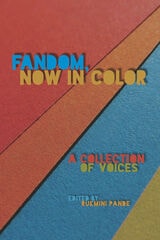
Fandom, Now in Color
A Collection of VoicesRukmini Pande
University of Iowa Press, 2020
Fandom, Now in Color gathers together seemingly contradictory narratives that intersect at the (in)visibility of race/ism in fandom and fan studies. This collection engages the problem by undertaking the different tactics of decolonization—diversifying methodologies, destabilizing canons of “must-read” scholarship by engaging with multiple disciplines, making whiteness visible but not the default against which all other kinds of racialization must compete, and decentering white fans even in those fandoms where they are the assumed majority. These new narratives concern themselves with a broad swath of media, from cosplay and comics to tabletop roleplay and video games, and fandoms from Jane the Virgin to Japan’s K-pop scene. Fandom, Now in Color asserts that no one answer or approach can sufficiently come to grips with the shifting categories of race, racism, and racial identity.
Contributors: McKenna Boeckner, Angie Fazekas, Monica Flegel, Elizabeth Hornsby, Katherine Anderson Howell, Carina Lapointe, Miranda Ruth Larsen, Judith Leggatt, Jenni Lehtinen, joan miller, Swati Moitra, Samira Nadkarni, Indira Neill Hoch, Sam Pack, Rukmini Pande, Deepa Sivarajan, Al Valentín
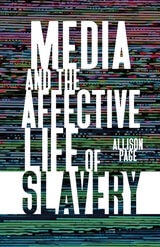
Media and the Affective Life of Slavery
Allison Page
University of Minnesota Press, 2022
How media shapes our actions and feelings about race
Amid fervent conversations about antiracism and police violence, Media and the Affective Life of Slavery delivers vital new ideas about how our feelings about race are governed and normalized by our media landscape. Allison Page examines U.S. media from the 1960s to today, analyzing how media culture instructs viewers to act and feel in accordance with new racial norms created for an era supposedly defined by an end to legal racism.
From the classic television miniseries Roots to the edutainment video game Mission 2: Flight to Freedom and the popular website slaveryfootprint.org, Media and the Affective Life of Slavery provides an in-depth look at the capitalist and cultural artifacts that teach the U.S. public about slavery. Page theorizes media not only as a system of representation but also as a technology of citizenship and subjectivity, wherein race is seen as a problem to be solved. Ultimately, she argues that visual culture works through emotion, a powerful lever for shaping and managing racialized subjectivity.
Media and the Affective Life of Slavery delivers compelling, provocative material and includes a wealth of archival research into such realms as news, entertainment, television, curricula, video games, and digital apps, providing new and innovative scholarship where none currently exists.

The Selena Reader
Remembering the Queen of TejanoEdited by Larissa M. Mercado-López and Yndalecio Isaac Hinojosa
University of Texas Press, 2026
A literary collection honoring and memorializing Selena, the Queen of Tejano.
Thirty years after her death, Selena Quintanilla-Pérez remains a cherished figure of Mexican American popular culture, her music and celebrity resounding across the decades. This unique collection of creative and scholarly works traces Selena’s lasting impact as an entertainer and focal point of community and identity.
Assembling essays, memoir, short stories, and poems, The Selena Reader memorializes a beloved singer while also exploring the politics and personal meaning of what we remember. Selena’s devoted admirers tell us what they took from her lyrics and stage presence, the official and fan tributes, and the media and products she inspired. In one essay, Tejana coming-of-age is sharply refracted through the prism of Selena’s art and social status. Another piece considers how Selena’s body and distinctive clothing have shaped the author’s sense of queer self. Honey Avila (aka Honey Andrews), the renowned Selena impersonator, shares vivid recollections of her hero. A father and daughter describe how their conversations about Selena changed their relationship and contributed to Chicana feminist consciousness in their lives. All told, this anthology amplifies the gratitude of generations who have loved, and learned from, Selena.
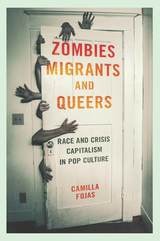
Zombies, Migrants, and Queers
Race and Crisis Capitalism in Pop CultureCamilla Fojas
University of Illinois Press, 2017