Results by title
204 books match the query 'Massachusetts' and 20 start with a
A Byzantine Monastic Office, A.D. 1105
Jeffrey C. Anderson
Catholic University of America Press, 2016
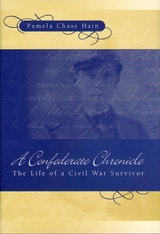
A Confederate Chronicle
The Life of a Civil War SurvivorPamela Chase Hain
University of Missouri Press, 2005

A Curious and Ingenious Art
Reflections on Daguerreotypes at HarvardMelissa Banta
University of Iowa Press, 2000
Around the time Louis Jacques Mandé Daguerre perfected his method for fixing images on polished metal plates in 1839, Harvard was emerging as a modern research institution. Accordingly, the college began amassing vast collections for teaching and research. Among these collections in the university's libraries, museums, archives, and academic departments are some of the earliest photographic documents of American life: daguerreotypes.
A Curious and Ingenious Art brings together a representative sampling of Harvard's internationally significant but relatively unknown collection of daguerreotypes. Many of these images were made for, by, and of members of the university's community and have been in its holdings for more than 150 years. The collection includes the work of some of America's pioneering daguerreotypists, such as Mathew Brady, Southworth and Hawes, and John Adams Whipple. Most notably, the Harvard collection preserved for posterity such faces of the era as Oliver Wendell Holmes, Ralph Waldo Emerson, Harriet Beecher Stowe, Henry James, James McNeill Whistler, Dorothea Dix, Jenny Lind, and even Tom Thumb.
The university also seized upon photography as a tool of scientific research, stunningly exemplified in one of the first detailed daguerreotypes of the moon taken in 1851 as well as in images capturing the emergence of modern anesthesia. An unfortunate misuse of photography is recalled in the now famous slave daguerreotypes commissioned by natural historian Louis Agassiz, who believed in the theory of separate human species.
The Harvard collection represents the early history of photography and its social meaning. The accompanying essays explore the personal, telling histories behind the images, stories that unveil the reflections of individuals who searched for purpose and promise in the new medium.
A History in Indigenous Voices
Menominee, Ho-Chunk, Oneida, Stockbridge, and Brothertown Interactions in the Removal EraCarol Cornelius
Wisconsin Historical Society Press, 2023
Treaties made in the 1800s between the United States and the Indigenous nations of what is now Wisconsin have had profound influence on the region’s cultural and political landscape. Yet few people realize that in the early part of that century, the Menominee and Ho-Chunk Nations of Wisconsin signed land treaties with several Indigenous nations from New York State. At the onset of the removal era, these eastern nations, including the Oneida Nation and the Six Nations Confederacy, were under constant pressure from the federal government and land speculators to move to lands around Green Bay and Lake Winnebago.
In this groundbreaking book, Carol A. Cornelius has compiled a careful account of these nation-to-nation treaties, in large part in the words of those Indigenous leaders who served as the voices and representatives of their nations. Drawing on a rich collection of primary sources, Cornelius walks readers through how, why, and for whom these treaties were made and how the federal government’s failure and unwillingness to acknowledge their legitimacy led to the further loss of Indigenous lands. The living documents transcribed here testify to the complexity and sovereignty of Indigenous governance then and now, making this volume a vital resource for historians and an accessible introduction to Indigenous treatymaking in Wisconsin.
Winner of the 2024 Wisconsin Historical Society’s Book of Merit Award
Finalist for the 2023 Foreword INDIES Book of the Year Award for Adult Nonfiction History
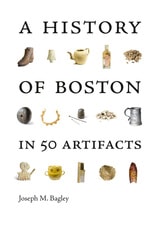
A History of Boston in 50 Artifacts
Joseph M. Bagley
University Press of New England, 2016
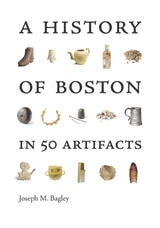
A History of Boston in 50 Artifacts
Joseph M. Bagley
Brandeis University Press, 2021
Joseph M. Bagley, the city archaeologist of Boston, uncovers a fascinating hodgepodge of history—from ancient fishing grounds to Jazz Age red-light districts—that will surprise and delight even longtime residents. Each artifact is shown in full color with a description of the item’s significance to its site location and Boston’s larger history. From cannonballs to drinking cups and from ancient spears to chinaware, A History of Boston in 50 Artifacts offers a unique and accessible introduction to Boston’s history and physical culture while revealing the ways objects can offer a tantalizing entrée into our past. Packed with vivid descriptions and art, this lively history of Boston will appeal to all manner of readers, locals, and visitors alike. This new edition showcases an important fact which has come to light since its first publication, that a chapter about a cat has now been shown to be a dog, thus demonstrating the perils of the archaeologist.
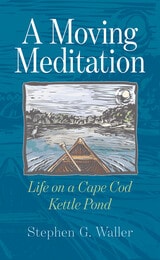
A Moving Meditation
Life on a Cape Cod Kettle PondStephen G. Waller
University of Massachusetts Press, 2023
Cape Cod is known for its beaches, throngs of summer visitors, and the activities that accompany seaside living, but it is also home to many kettle ponds, which offer a more tranquil setting. Formed from glaciers breaking apart and so named due to a rounded shape that appears like a kettle, these waterways are home to a diverse array of wildlife, while remaining peaceful and even a bit hidden.
Big enough for a canoeist to feel solitude and serenity, small enough to not appear on large-scale maps, Centerville’s Long Pond (one of seven on the Cape that share this name), consists of fifty-one acres of crystal clear waters, fresh air, and the fish, turtles, waterfowl, ospreys, and otters that call this special place home. In A Moving Meditation, Stephen G. Waller offers an intimate look at the pond’s intriguing natural and human history; its abundant animal life, across the seasons; and the encroaching effects of climate change.
A New England Prison Diary
Slander, Religion, and Markets in Early AmericaMartin J. Hershock
University of Michigan Press, 2012
In 1812, New Hampshire shopkeeper Timothy M. Joy abandoned his young family, fleeing the creditors who threatened to imprison him. Within days, he found himself in a Massachusetts jailhouse, charged with defamation of a prominent politician. During the months of his incarceration, Joy kept a remarkable journal that recounts his personal, anguished path toward spiritual redemption. Martin J. Hershock situates Joy's account in the context of the pugnacious politics of the early republic, giving context to a common citizen's perspective on partisanship and the fate of an unfortunate shopkeeper swept along in the transition to market capitalism.
In addition to this close-up view of an ordinary person's experience of a transformative period, Hershock reflects on his own work as a historian. In the final chapter, he discusses the value of diaries as historical sources, the choices he made in telling Joy's story, alternative interpretations of the diary, and other contexts in which he might have placed Joy's experiences. The appendix reproduces Joy's original journal so that readers can develop their own skills using a primary source.
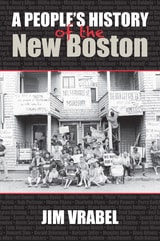
A People's History of the New Boston
Jim Vrabel
University of Massachusetts Press, 2014
Credit for the city's turnaround since that time is often given to a select group of people, all of them men, all of them white, and most of them well off. In fact, a large group of community activists, many of them women, people of color, and not very well off, were also responsible for creating the Boston so many enjoy today. This book provides a grassroots perspective on the tumultuous 1960s and 1970s, when residents of the city's neighborhoods engaged in an era of activism and protest unprecedented in Boston since the American Revolution.
Using interviews with many of those activists, contemporary news accounts, and historical sources, Jim Vrabel describes the demonstrations, sit-ins, picket lines, boycotts, and contentious negotiations through which residents exerted their influence on the city that was being rebuilt around them. He includes case histories of the fights against urban renewal, highway construction, and airport expansion; for civil rights, school desegregation, and welfare reform; and over Vietnam and busing. He also profiles a diverse group of activists from all over the city, including Ruth Batson, Anna DeFronzo, Moe Gillen, Mel King, Henry Lee, and Paula Oyola. Vrabel tallies the wins and losses of these neighborhood Davids as they took on the Goliaths of the time, including Boston's mayors. He shows how much of the legacy of that activism remains in Boston today.

A Voice of Thunder
A BLACK SOLDIER'S CIVIL WAREdited by Donald Yacovone
University of Illinois Press, 1997
important African-American war correspondent of his era, served in the
famed black Fifty-fourth Massachusetts Regiment, subject of the film Glory.
His letters from the front, published in the New York Weekly Anglo-African,
brilliantly detail two wars: one against the Confederacy and one against
the brutal, debilitating racism within his own Union Army. Together with
Donald Yacovone's biographical introduction detailing Stephens's life
and times, they provide a singular perspective on the greatest crisis
in the history of the United States.
Stephens chronicled the African-American
quest for freedom in reports from southern Maryland and eastern Virginia
in 1861 and 1862 that detailed, among other issues of the day, the Army
of the Potomac's initial encounter with slavery, the heroism of fugitive
slaves, and the brutality both Southerners and Union troops inflicted
on them.
From the inception of the
Fifty-fourth early in 1863 Stephens was the unit's voice, telling of its
struggle against slavery and its quest to win the pay it had been promised.
His description of the July 18, 1863, assault on Battery Wagner near Charleston,
South Carolina, and his writings on the unit's eighteen-month campaign
to be paid as much as white troops are gripping accounts of continued
heroism in the face of persistent insult.
The Weekly Anglo-African
was the preeminent African-American newspaper of its time. Stephens's
correspondence, intimate and authoritative, takes in an expansive array
of issues and anticipates nearly all modern assessments of the black role
in the Civil War. His commentary on the Lincoln administration's wartime
policy and his conviction that the issues of race and slavery were central
to nineteenth-century American life mark him as a major American social
critic.
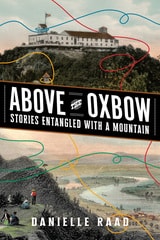
Above the Oxbow
Stories Entangled with a MountainDanielle R. Raad
West Virginia University Press, 2026
Above the Oxbow is a journey through the tangle of rich narratives surrounding Mount Holyoke, a locally cherished mountain in Western Massachusetts. It explores how visitors have forged connections with the mountain through various activities over the past two centuries. In an accessible blend of storytelling and scholarly analysis, Danielle Raad shows the significance of the landscape, historic sites, and material culture, revealing how cultural perspectives, community activism, collective memory, and personal experiences shape our understanding of a place. Situated at the intersection of public history and environmental history, this ethnography of place also discloses the curious stories of the Summit House, an erstwhile tramway, an airplane crash, and the local fight to conserve Mount Holyoke as a natural space and celebrates its myriad uses today.
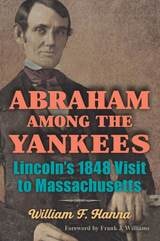
Abraham among the Yankees
Lincoln's 1848 Visit to MassachusettsWilliam F. Hanna
Southern Illinois University Press, 1983
Hanna provides excellent context on the politics of the era, particularly the question of slavery, both in Massachusetts and nationwide, and he features the people Lincoln met and the cities or towns in which he spoke. Lincoln stumped for Taylor in Worcester, New Bedford, Boston, Lowell, Dorchester, Chelsea, Dedham, Cambridge, and Taunton. He gave twelve speeches in eleven days to audiences who responded with everything from catcalls to laughter to applause. Whatever they thought of Lincoln’s arguments, those who saw him were impressed by his unusual western style and remembered his style more than the substance of his talks.
Meticulously researched, Abraham among the Yankees invites readers to take an East Coast journey with a thirty-nine-year-old Lincoln during election season in 1848 to see how Massachusetts audiences responded to the humorous, informal approach that served Lincoln well during the rest of his political career.
Achieving Against The Odds
edited by Esther Kingston-Mann and Tim Sieber
Temple University Press, 2001
Today's diverse and financially burdened students enter higher education eager to succeed at institutions originally designed for culturally homogenous and predominantly white middle-class populations. They are expected to learn from faculty trained primarily as researchers. Unsurprisingly, student dropout and faculty burnout rates are high, leading some conservatives to demand that higher education purge itself of "unqualified" students and teachers. But, as Achieving Against the Odds demonstrates, new and better solutions emerge once we assume that both faculty and students still possess a mutual potential for learning when they meet in the college classroom.
This collection -- drawing on the experiences of faculty at the University of Massachusetts-Boston -- documents a complex and challenging process of pedagogical transformation. The contributors come from a wide range of disciplines -- American studies, anthropology, Asian American studies, English, ESL, history, language, political science, psychology, sociology, and theology. Like their students, they bring a variety of backgrounds into the classroom -- as people of color, women, gays, working class people, and "foreigners" of one sort or another. Together they have engaged in an exciting struggle to devise pedagogies which respond to the needs and life experiences of their students and to draw each of them into a dialogue with the content and methodology of their disciplines. Courageously airing their own mistakes and weaknesses alongside their breakthroughs, they illuminate for the reader a process of teaching transformation by which discipline-trained scholars discover how to promote the learning of diverse students.
As one reads their essays, one is struck by how much these faculty have benefited from the insights they have gleaned from colleagues as well as students. Through argument and examples, personal revelation and references as well as students. Through argument and examples, personal revelation and references to authority, they draw the reader into their community. This is a book to inspire and enlighten everyone interested in making higher education more truly democratic, inclusive and intellectually challenging for today's students.
And Sadly Teach
Teacher Education and Professionalization in American CultureJurgen Herbst
University of Wisconsin Press, 1991
To lend weight to his charge that the public school teacher has been betrayed and gravity to his indictment of the educational establishment for that betrayal, Jurgen Herbst goes back to the beginnings of teacher education in America in the 1830s and traces its evolution up to the 1920s, by which time the essential damage had been done.
Initially, attempts were made to upgrade public school teaching to a genuine profession, but that ideal was gradually abandoned. In its stead, with the advent of newly emerging graduate schools of education in the early decades of the twentieth century, came the so-called professionalization of public education. At the expense of the training of elementary school teachers (mostly women), teacher educators shifted their attention to the turning out of educational "specialists" (mostly men)—administrators, faculty members at normal schools and teachers colleges, adult education teachers, and educational researchers.
Ultimately a history of the neglect of the American public school teacher, And Sadly Teach ends with a plea and a message that ring loud and clear. The plea: that the current reform proposals for American teacher education—the Carnegie and the Holmes reports—be heeded. The message: that the key to successful school reform lies in educating teacher’s true professionals and in acknowledging them as such in their classrooms.
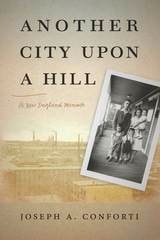
Another City upon a Hill
A New England MemoirJoseph A. Conforti
Tagus Press, 2013
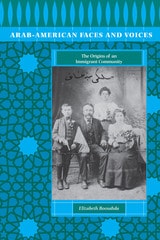
Arab-American Faces and Voices
The Origins of an Immigrant CommunityBy Elizabeth Boosahda
University of Texas Press, 2003
As Arab Americans seek to claim their communal identity and rightful place in American society at a time of heightened tension between the United States and the Middle East, an understanding look back at more than one hundred years of the Arab-American community is especially timely. In this book, Elizabeth Boosahda, a third-generation Arab American, draws on over two hundred personal interviews, as well as photographs and historical documents that are contemporaneous with the first generation of Arab Americans (Syrians, Lebanese, Palestinians), both Christians and Muslims, who immigrated to the Americas between 1880 and 1915, and their descendants.
Boosahda focuses on the Arab-American community in Worcester, Massachusetts, a major northeastern center for Arab immigration, and Worcester's links to and similarities with Arab-American communities throughout North and South America. Using the voices of Arab immigrants and their families, she explores their entire experience, from emigration at the turn of the twentieth century to the present-day lives of their descendants. This rich documentation sheds light on many aspects of Arab-American life, including the Arab entrepreneurial motivation and success, family life, education, religious and community organizations, and the role of women in initiating immigration and the economic success they achieved.
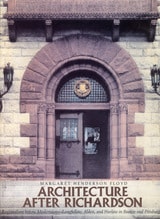
Architecture after Richardson
Regionalism before Modernism--Longfellow, Alden, and Harlow in Boston and PittsburghMargaret Henderson Floyd
University of Chicago Press, 1994
Floyd critically' assesses the careers, works, and patronage of Alexander Wadsworth Longfellow, Frank Ellis Alden, and Alfred Branch Harlow. Longfellow and Alden were senior draftsmen in H. H. Richardson's office, and Harlow worked with McKim, Mead & White in New York, Newport, and Boston. After Richardson's death, the three set up their own practice with offices in Boston and Pittsburgh, and these offices eventually became two separate practices. Over the years, their commissions included scores of city and country residences for the elite of both regions as well as major institutional and business buildings such as those at Harvard and Radcliffe, the Cambridge City Hall, and Pittsburgh's Duquesne Club and Carnegie Institute.
Placing these architects in a broader context of American architectural and landscape history, Floyd uncovers a strong cultural affinity between turn-of-the-century Boston and Pittsburgh. She also reveals an unsuspected link between the path of modernism from Richardson to Wright and the evolution of anti-modern imagery manifested in regionalism. Floyd thus combines her analysis of the work of Longfellow, Alden, and Harlow with a critique of mid-twentieth-century historiography to expose connections between New England regionalism, the arts and crafts movement, and such innovators as Frank Lloyd Wright and Buckminster Fuller.
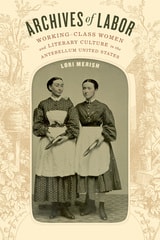
Archives of Labor
Working-Class Women and Literary Culture in the Antebellum United StatesLori Merish
Duke University Press, 2017
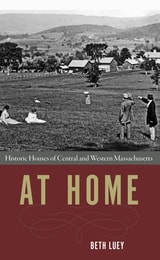
At Home
Historic Houses of Central and Western MassachusettsBeth Luey
University of Massachusetts Press, 2019
In At Home: Historic Houses of Central and Western Massachusetts, Beth Luey examines the lives and homes of acclaimed poets and writers, slaves who won their freedom, Civil War enlistees, socialites, and leading merchants. Drawing on architectural and genealogical texts, wills, correspondence, and diaries, Luey situates the stories of these notable homes and the people who inhabited them in the context of broader economic, social, and political transformations. Filled with vivid details and fresh perspectives, each chapter is sure to inspire first-time visitors and seasoned travelers alike. All the homes are open to the public.
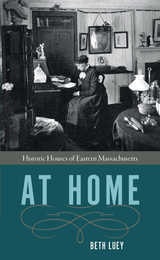
At Home
Historic Houses of Eastern MassachusettsBeth Luey
University of Massachusetts Press, 2019
In At Home: Historic Houses of Eastern Massachusetts, Beth Luey uses architectural and genealogical texts, wills, correspondences, and diaries to craft delightful narratives of these notable abodes and the people who variously built, acquired, or renovated them. Filled with vivid details and fresh perspectives that will surprise even the most knowledgeable aficionados, each chapter is short enough to serve as an introduction for a visit to its house. All the homes are open to the public.