Results by title
10 books match the query 'Mattawa, Khaled'
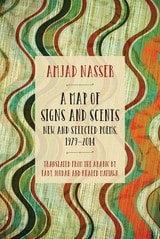
A Map of Signs and Scents
New and Selected Poems, 1979–2014Amjad Nasser / Translated from the Arabic by Fady Joudah and Khaled Mattawa
Northwestern University Press, 2016
Featuring poems from earlier collections of Amjad Nasser’s work and many newer uncollected poems never made available in English, A Map of Signs and Scents introduces the work of an important Arabic poet to a broader contemporary Anglophone readership. This special annotation edition helps readers view the multifaceted contexts within which Nasser has created his award-winning poems.
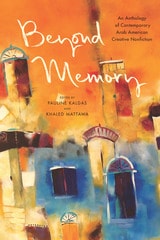
Beyond Memory
An Anthology of Contemporary Arab American Creative NonfictionPauline Kaldas
University of Arkansas Press, 2020
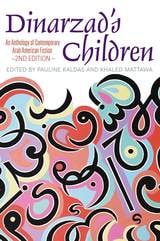
Dinarzad's Children
An Anthology of Contemporary Arab American FictionPauline Kaldas
University of Arkansas Press, 2009
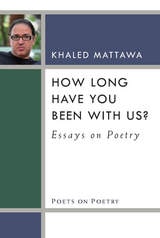
How Long Have You Been With Us?
Essays on PoetryKhaled Mattawa
University of Michigan Press, 2016
A volume in the Poets on Poetry series, which collects critical works by contemporary poets, gathering together the articles, interviews, and book reviews by which they have articulated the poetics of a new generation.
“Like the myriad companions and comrades that he summons from their exile, Khaled Mattawa is himself a ‘poet-stranger.’ In the essays, ‘written in a poet’s prose,’ collected in How Long Have You Been With Us, Mattawa evokes a powerful amalgam of the personal intimacy of the solitary and the political challenge of solidarity.”
—Barbara Harlow, University of Texas at Austin
“If you’ve read about exile, you’ve read about Brodsky and Milosz—just as, if you’ve read about translation, you’ve read about Walter Benjamin and George Steiner. While Khaled Mattawa has mastered these masters, his essays about world literature serve as a tour of the rest of the world. He introduces you to the writers you haven’t heard of but should from contemporary Libya and colonial South Asia to Latin America and China. When Mattawa invokes Saadi Youssef or Rabinidrath Tagore, Mohja Kahf or Toru Dutt, the effect is to deprovincialize American literature.”
—Ken Chen, The Asian American Writers’ Workshop
Khaled Mattawa, an American poet of Libyan origin, explores various dynamic developments shaping American poetry as it is being practiced today. Arising from an incredibly diverse range personal backgrounds, lyric traditions, and even languages, American poetry is transforming into a truly international form. Mattawa, who also translates Arabic poetry into American English and American poetry into Arabic, explores the poetics and politics of cross-cultural exchange and literary translation that fostered such transformation. The essays in this collection also shed light on Mattawa’s development as a poet and provide numerous portraits of the poets who helped shaped his poetry.
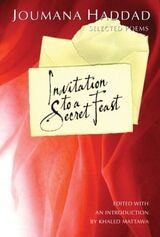
Invitation to a Secret Feast
Selected PoemsJoumana Haddad
Tupelo Press, 2007
In these gorgeous translations, her voice sings, celebrating sexuality, femininity and womanhood.
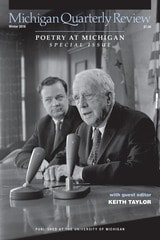
Michigan Quarterly Review
Vol. 57, No. 1Khaled Mattawa
Michigan Publishing Services, 2018

Michigan Quarterly Review
Vol. 57, No. 3Khaled Mattawa
Michigan Publishing Services, 2018
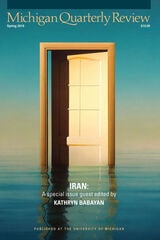
Michigan Quarterly Review
Vol. 58, No. 2Khaled Mattawa
Michigan Publishing Services, 2019
Michigan Quarterly Review
Volume 58, Issue 3: Summer 2019Khaled Mattawa
Michigan Publishing Services, 2019
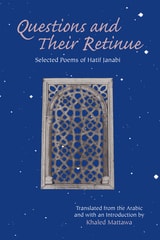
Questions and Their Retinue
Selected Poems of Hatif JanabiHatif Janabi
University of Arkansas Press, 1996
Hatif Janabi’s poems are passionate, jolting, apocalyptic, and painful. They deal with war and death, perception and truth, drawing from his family life, his exile in Poland, the Gulf War, violence in Iraq, and his experience in the United States.
The speaker in many of Janabi’s poems moves from a confrontational stance to one of resigned desperation, and from coyness to deep longing, where, occasionally, hope surfaces. The associative processes and the often bizarre surreal imagery he employs are very effective in expressing his profound sense of political and spiritual alienation. Janabi is among a generation of Arab poets who, because of censorship, can speak only obliquely about the harsh reality of their lives. In these poems he has created symbolic landscapes that attempt to reveal the political, social, and psychological stresses with which suffering people live.