Results by title
4 books match the query 'Maya Lowlands'
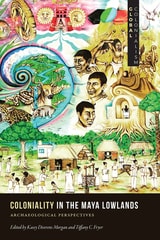
Coloniality in the Maya Lowlands
Archaeological Perspectivesedited by Kasey Diserens Morgan &Tiffany C. Fryer
University Press of Colorado, 2022
The work takes a hemispheric approach to the historical and material analysis of colonialism, bridging the often disparate literatures on coloniality and settler colonialism. Archaeologists and anthropologists working in what are today southeastern Mexico, Belize, Guatemala, and Honduras grapple with the material realities of coloniality at a regional level. They provide sustained discussions of Maya experiences with wide-ranging colonial endurances: violence, resource insecurity, land rights, refugees, the control of borders, the movement of contraband, surveillance, individual and collective agency, consumption, and use of historic resources.
Considering a future for historical archaeologies of the Maya region that bridges anthropology, ethnohistory, Indigenous studies, settler colonial studies, and Latin American studies, Coloniality in the Maya Lowlands presents a new understanding of how ways of being in the Maya world have formed and changed over time, as well as the shared investments of historical archaeologists and sociocultural anthropologists working in the Maya region.
Contributors: Fernando Armstrong-Fumero, Alejandra Badillo Sánchez, Adolfo Iván Batún Alpuche, A. Brooke Bonorden, Maia C. Dedrick, Scott L. Fedick, Fior García Lara, John Gust, Brett A. Houk, Rosemary A. Joyce, Gertrude B. Kilgore, Jennifer P. Mathews, Patricia A. McAnany, James W. Meierhoff, Fabián A. Olán de la Cruz, Julie K. Wesp
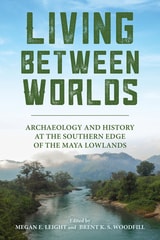
Living between Worlds
Archaeology and History at the Southern Edge of the Maya LowlandsEdited by Megan E. Leight and Brent K. S. Woodfill
University of Alabama Press, 2026
The first in-depth exploration of the narrow but vital region between the pre-Columbian Maya highlands and lowlands in Guatemala called the Northern Transversal Strip.
Living between Worlds: Archaeology and History at the Southern Edge of the Maya Lowlands is the first in-depth exploration of the narrow but vital region between the pre-Columbian Maya highlands and lowlands in Guatemala. This groundbreaking volume brings together the results of a twenty-five-year, multidisciplinary collaboration that reshapes our understanding of Maya civilization.
Long overlooked due to the absence of towering monuments and stone cities, the Northern Transversal Strip was nevertheless a hub of commerce, culture, and political interaction. Spanning multiple Classic Maya city-states, conquest-era ethnic groups, and modern geopolitical boundaries, the region played a crucial role as a transportation corridor and resource center. Archaeologists, art historians, ethnohistorians, biologists, and paleoecologists join forces in this volume to reconstruct its complex past, uncovering its deep connections to the broader Maya world.
From its role in the trade of cacao, salt, and quetzal feathers to its enduring significance through the Spanish conquest and modern conflicts, the Northern Transversal Strip emerges as a dynamic and pivotal region. Through detailed analyses of ceramics, figurines, obsidian exchange networks, and settlement patterns, this volume reveals the intricate web of interregional ties that defined the Maya civilization.
With cutting-edge research and fresh perspectives, Living Between Worlds offers a comprehensive synthesis of archaeological discoveries, historical insights, and environmental studies. By literally and metaphorically bridging the highland-lowland divide, this volume transforms how scholars and readers alike perceive this once-marginalized but essential part of the Maya world.
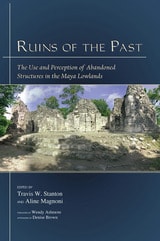
Ruins of the Past
The Use and Perception of Abandoned Structures in the Maya LowlandsTravis W. Stanton
University Press of Colorado, 2008
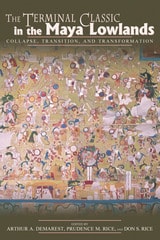
The Terminal Classic in the Maya Lowlands
Collapse, Transition, and TransformationArthur A. Demarest
University Press of Colorado, 2004
Featuring an impressive roster of scholars, The Terminal Classic presents the most recent data and interpretations pertaining to this perplexing period of cultural transformation in the Maya lowlands. Although the research reveals clear interregional patterns, the contributors resist a single overarching explanation. Rather, this volume's diverse and nuanced interpretations provide a new, more properly grounded beginning for continued debate on the nature of lowland Terminal Classic Maya civilization.