Results by title
4 books match the query 'McNeill, Lynne S.'
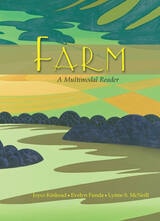
Farm
A Multimodal ReaderJoyce Kinkead
Utah State University Press, 2020
In Farm, Joyce Kinkead, Evelyn Funda, and Lynne S. McNeill explore the culture of agriculture through a diverse and multicultural collection of fiction, poetry, essays, art, recipes, and folklore. This reader views farming through a variety of lenses, leading students to consider what farms, farming, and farmers mean, and have meant, to culture in the United States.
The text guides the reader through the Jeffersonian idealism of the yeoman farmer (“cultivators of the earth are the chosen people of God”) to literature of the nineteenth and twentieth centuries (Thoreau’s “The Bean-Field,” Cather’s prairie trilogy, Steinbeck’s The Grapes of Wrath, and Carpenter’s Farm City). Contributors provide historical context for the literary texts, such as discussion of sharecropping vs. plantation systems, the rise of agribusiness and chemical farming, and Teddy Roosevelt’s Country Life Commission. Written, visual, and oral texts ask readers to consider the farm in art (Grant Wood), ecology (Rachel Carson’s Silent Spring), children’s and young adult literature (classic children’s books, YA novels, nonfiction, and poetry), advertising (from early boosterism to Chipotle videos), print culture (farmers’ market and victory garden posters from both world wars), folklore (food culture, vintners, and veterinarian practices), popular culture (Farm Aid concerts), and much more. Each reading is supported by activities, exercises, projects, and visual rhetorical elements that further connect students to agriculture and the essential work of farmers.
The text guides the reader through the Jeffersonian idealism of the yeoman farmer (“cultivators of the earth are the chosen people of God”) to literature of the nineteenth and twentieth centuries (Thoreau’s “The Bean-Field,” Cather’s prairie trilogy, Steinbeck’s The Grapes of Wrath, and Carpenter’s Farm City). Contributors provide historical context for the literary texts, such as discussion of sharecropping vs. plantation systems, the rise of agribusiness and chemical farming, and Teddy Roosevelt’s Country Life Commission. Written, visual, and oral texts ask readers to consider the farm in art (Grant Wood), ecology (Rachel Carson’s Silent Spring), children’s and young adult literature (classic children’s books, YA novels, nonfiction, and poetry), advertising (from early boosterism to Chipotle videos), print culture (farmers’ market and victory garden posters from both world wars), folklore (food culture, vintners, and veterinarian practices), popular culture (Farm Aid concerts), and much more. Each reading is supported by activities, exercises, projects, and visual rhetorical elements that further connect students to agriculture and the essential work of farmers.
[more]
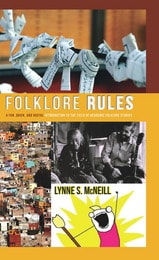
Folklore Rules
A Fun, Quick, and Useful Introduction to the Field of Academic Folklore StudiesS.
Utah State University Press, 2013
Folklore Rules is a brief introduction to the foundational concepts in folklore studies for beginning students. Designed to give essential background on the current study of folklore and some of the basic concepts and questions used when analyzing folklore, this short, coherent, and approachable handbook is divided into five chapters:
- What Is Folklore?
- What Do Folklorists Do
- Types of Folklore
- Types of Folk Groups;
- What Do I Do Now?
These chapters guide students toward a working understanding of the field, learn basic terms and techniques, and learn to perceive the knowledge base and discourse frame for materials used in folklore courses. Folklore Rules has become a classic text, serving instructors and students for a variety of courses, including introductory folklore and comparative studies as well as literature, anthropology, and composition classes that include a folklore component.
[more]
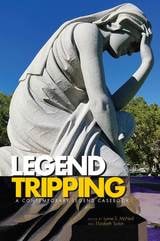
Legend Tripping
A Contemporary Legend CasebookLynne S. McNeill
Utah State University Press, 2018
Legend Tripping: A Contemporary Legend Casebook explores the practice of legend tripping, wherein individuals or groups travel to a site where a legend is thought to have taken place. Legend tripping is a common informal practice depicted in epics, stories, novels, and film throughout both contemporary and historical vernacular culture. In this collection, contributors show how legend trips can express humanity’s interest in the frontier between life and death and the fascination with the possibility of personal contact with the supernatural or spiritual.
The volume presents both insightful research and useful pedagogy, making this an invaluable resource in the classroom. Selected major articles on legend tripping, with introductory sections written by the editors, are followed by discussion questions and projects designed to inspire readers to engage critically with legend traditions and customs of legend tripping and to explore possible meanings and symbolics at work. Suggested projects incorporate digital technology as it appears both in legends and in modes of legend tripping.
Legend Tripping is appropriate for students, general readers, and folklorists alike. It is the first volume in the International Society for Contemporary Legend Research series, a set of casebooks providing thorough and up-to-date studies that showcase a variety of scholarly approaches to contemporary legends, along with variants of legend texts, discussion questions, and projects for students.
Contributors: S. Elizabeth Bird, Bill Ellis, Carl Lindahl, Patricia M. Meley, Tim Prizer
[more]
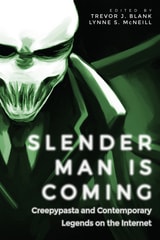
Slender Man Is Coming
Creepypasta and Contemporary Legends on the InternetTrevor J. Blank
Utah State University Press, 2018
The essays in this volume explore the menacing figure of Slender Man—the blank-faced, long-limbed bogeyman born of a 2009 Photoshop contest who has appeared in countless horror stories circulated on- and offline among children and young people. Slender Man is arguably the best-known example in circulation of “creepypasta,” a genre derived from “copypasta,” which in turn derived from the phrase “copy/paste.”
As narrative texts are copied across online forums, they undergo modification, annotation, and reinterpretation by new posters in a folkloric process of repetition and variation. Though by definition legends deal largely with belief and possibility, the crowdsourced mythos behind creepypasta and Slender Man suggests a distinct awareness of fabrication. Slender Man is therefore a new kind of creation: one intentionally created as a fiction but with the look and feel of legend.
Slender Man Is Coming offers an unprecedented folkloristic take on Slender Man, analyzing him within the framework of contemporary legend studies, “creepypastas,” folk belief, and children’s culture. This first folkloric examination of the phenomenon of Slender Man is a must-read for anyone interested in folklore, horror, urban legends, new media, or digital cultures.
Contributors: Timothy H. Evans, Andrea Kitta, Mikel J. Koven, Paul Manning, Andrew Peck, Jeffrey A. Tolbert, Elizabeth Tucker
[more]