Results by title
16 books match the query 'Meanings'

A Discontented Diaspora
Japanese Brazilians and the Meanings of Ethnic Militancy, 1960–1980Jeffrey Lesser
Duke University Press, 2007
Lesser draws on a wide range of sources, including films, oral histories, wanted posters, advertisements, newspapers, photographs, police reports, government records, and diplomatic correspondence. He focuses on two particular cultural arenas—erotic cinema and political militancy—which highlight the ways that Japanese Brazilians imagined themselves to be Brazilian. As he explains, young Nikkei were sure that their participation in these two realms would be recognized for its Brazilianness. They were mistaken. Whether joining banned political movements, training as guerrilla fighters, or acting in erotic films, the subjects of A Discontented Diaspora militantly asserted their Brazilianness only to find that doing so reinforced their minority status.
American Photojournalism
Motivations and MeaningsClaude Cookman
Northwestern University Press, 2009
Photojournalism has long been the medium of urgency and social change. It has profoundly affected American public opinion, going back at least to Mathew Brady's images from the Civil War. In American Photojournalism: Motivations and Meanings, Claude Cookman explores the history and future of the medium through the work of such exemplary photojournalists as Jacob Riis, Dorothea Lange, Weegee, Margaret Bourke-White, W. Eugene Smith, Gordon Parks, Rich Clarkson, and Carol Guzy, among others. The traditional approach to studying American photojournalism explains the what and who of photojournalism--what events and developments occurred, what notable images were taken, and who took them. Without neglecting these concerns, American Photojournalism emphasizes the why. Cookman argues convincingly that contemporary photojournalism is grounded in the desire to witness and record history, and the embrace of a universal humanism. Unafraid to engage questions of truth and intentionality, American Photojournalism will only become more relevant as the medium evolves.
Front Yard America
The Evolution and Meanings of a Vernacular Domestic LandscapeFred E.H. Schroeder
University of Wisconsin Press, 1993
Throughout Front Yard America, Schroeder inquires into the functions, values, and meanings that Americans have found in the domestic landscapes of back yards and front yards, walls and fences, porches and patios.
German Memorials, Motifs, and Meanings
A Cultural History in Bronze, Wood, and StoneJennifer Hansen-Glucklich
University of Massachusetts Press, 2025
German Memorials, Motifs, and Meanings offers a unique cultural history of German memorialization. The book focuses not on a single, isolated era, but rather on enduring memorial motifs—enchanted stones, magical trees, raised fists, stone circles, and similar evocative symbols derived from myth, folklore, Christianity, national iconography, and post-Holocaust imagery. It thus takes a long-duration perspective, sweeping across the centuries to explore abiding themes such as death, rebirth, and redemption; violence and reconciliation; and sacrifice, identity, and community. Along with a consideration of the historical and social circumstances of each memorial and its motifs, author Jennifer Hansen-Glucklich answers the questions of why and how these cultural markers survive the passage of time and how they endure amidst cultural, social, and political upheavals that include the rise and fall of empires, catastrophes of war and occupation, and genesis of new national identities. She uniquely focuses on lesser-known or unknown memorials found either in smaller German cities or tucked away in villages and hamlets.
These memorials tell colorful, often ambiguous and problematic stories in contrast to the vaunted monuments of Germany’s post-WWII era, such as Berlin’s Memorial to the Murdered Jews of Europe. Through vivid descriptions and deep analysis of the narratives and aesthetics of key monuments and motifs, Hansen-Glucklich details the remarkable story of German memorial culture from medieval times to the present day.
House Stories
The Meanings of Home in a New England TownBeth Luey
University of Massachusetts Press, 2017
Historic houses adorned with plaques populate New England like nowhere else in the country. These plaques note the construction year and original owner of the house, but they tell nothing about the rich lives of the people who lived there. In House Stories, Beth Luey takes readers on a virtual walking tour of several historic houses in Fairhaven, Massachusetts, a small New England coastal town, inviting us in to learn each house's secrets.
Through letters and diaries, church and business records, newspaper accounts, legal documents, and the recollections of neighbors who knew them, Luey introduces the diverse cast of historical characters who lived in these houses at various times from 1800 to the 2000s, including a Japanese castaway and his rescuer, a self-made millionaire, a seagoing adventurer, a religious pioneer, and an entrepreneurial immigrant. All of the houses are still standing and all but a lighthouse are still called home. In House Stories, Luey asks readers to join her as she considers the multiple meanings of “home” for these people and their families.
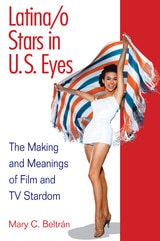
Latina/o Stars in U.S. Eyes
The Making and Meanings of Film and TV StardomMary C. Beltran
University of Illinois Press, 2008

Limits to Interpretation
The Meanings of Anna KareninaVladimir E. Alexandrov
University of Wisconsin Press, 2017
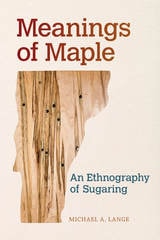
Meanings of Maple
An Ethnography of SugaringMichael Lange
University of Arkansas Press, 2017
Readers will go deep into a Vermont sugar bush and its web of plastic tubes, mainline valves, and collection tanks. They will visit sugarhouses crammed with gas evaporators and reverse-osmosis machines. And they will witness encounters between sugar makers and the tourists eager to invest Vermont with mythological fantasies of rural simplicity.
So much more than a commodity study, Meanings of Maple frames a new approach for evaluating the broader implications of iconic foodways, and it will animate conversations in food studies for years to come.
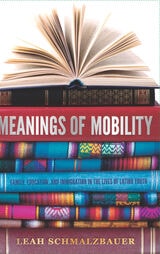
Meanings of Mobility
Family, Education, and Immigration in the Lives of Latino YouthLeah Schmalzbauer
Russell Sage Foundation, 2023
To better understand these experiences, Schmalzbauer draws on interviews with 60 low-income Latino youth who graduated or were set to graduate from Amherst College, one of the most selective private colleges in the United States. The vast majority of these students were the first in their immigrant families to go to college in the U.S. She finds that while most of the students believed attending Amherst provided them with previously unimaginable opportunities, adjusting to life on campus came with significant challenges. Many of the students Schmalzbauer spoke with had difficulties adapting to the cultural norms at Amherst as well as with relating to their non-Latino, non-low-income peers. The challenges these students faced were not limited to life on campus. As they attempted to adapt to Amherst, many felt distanced from the family and friends they left behind who could not understand the new challenges they faced.
The students credit their elite education for access to extraordinary educational and employment opportunities. However, their experiences while in college and afterward reveal that the relationship between educational and social mobility is much more complicated and less secure than popular conversations about the “American Dream” suggest. Many students found that their educational attainment was not enough to erase the core challenges of growing up in a marginalized immigrant family: many were still poor, faced racism, and those who were undocumented or had undocumented family members still feared deportation.
Schmalzbeauer suggests ways elite colleges can better support low-income Latino students and lower the emotional price of educational mobility, including the creation of immigration offices on campus to provide programming and support for undocumented students and their families. She recommends educating staff to better understand the centrality of family for these students and the challenges they face, as well as educating more privileged students about inequality and the life experiences of their marginalized peers.
Meanings of Mobility provides compelling insights into the difficulties faced by low-income Latinos pursuing educational and social mobility in America’s elite institutions.
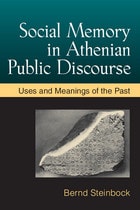
Social Memory in Athenian Public Discourse
Uses and Meanings of the PastBernd Steinbock
University of Michigan Press, 2013
Integrating literary, epigraphic, and archaeological evidence with recent scholarship on memory, identity, rhetoric, and international relations, Social Memory in Athenian Public Discourse: Uses and Meanings of the Past enhances our understanding of both the function of memory in Athenian public discourse and the history of Athenian-Theban relations. It should be of interest not only to students of Greek history and oratory but to everybody interested in memory studies, Athenian democracy, and political decision making.
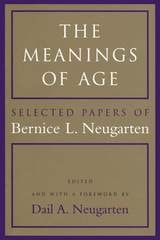
The Meanings of Age
Selected PapersBernice L. Neugarten
University of Chicago Press, 1996
Carefully edited by Dail Neugarten, each chapter presents the reader with Bernice Neugarten's original formulations on topics such as age norms and age constraints, the changing meanings of age, and age neutral social policy. Including four previously unpublished papers, The Meanings of Age will be of interest to scholars, students, and practitioners of psychology, education, law, medicine, social policy, and gerontology.
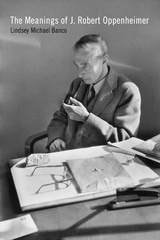
The Meanings of J. Robert Oppenheimer
Lindsey Michael Banco
University of Iowa Press, 2016
The Meanings of J. Robert Oppenheimer examines how he has been represented over the past seven decades in biographies, histories, fiction, comics, photographs, film, television, documentaries, theater, and museums. Lindsey Michael Banco gathers an unprecedented group of cultural texts and seeks to understand the multiple meanings Oppenheimer has held in American popular culture since 1945. He traces the ways these representations of Oppenheimer have influenced public understanding of the atomic bomb, technology, physics, the figure of the scientist, the role of science in war, and even what it means to pursue knowledge of the world around us. Questioning and unpacking both how and why Oppenheimer is depicted as he is across time and genre, this book is broad in scope, profound in detail, and offers unique insights into the rise of nuclear culture and how we think about the relationship between history, imagination, science, and nuclear weapons today.
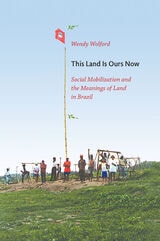
This Land Is Ours Now
Social Mobilization and the Meanings of Land in BrazilWendy Wolford
Duke University Press, 2010
Drawing on extensive ethnographic research, Wolford compares the development of the movement in Brazil’s southern state of Santa Catarina and its northeastern state of Pernambuco. As she explains, in the south, most of the movement’s members were sons and daughters of small peasant farmers; in the northeast, they were almost all former plantation workers, who related awkwardly to the movement’s agenda of accessing “land for those who work it.” The MST became an effective presence in Pernambuco only after the local sugarcane economy had collapsed. Worldwide sugarcane prices dropped throughout the 1990s, and by 1999 the MST was a prominent political organizer in the northeastern plantation region. Yet fewer than four years later, most of the region’s workers had dropped out of the movement. By delving into the northeastern workers’ motivations for joining and then leaving the MST, Wolford adds nuance and depth to accounts of a celebrated grassroots social movement, and she highlights the contingent nature of social movements and political identities more broadly.
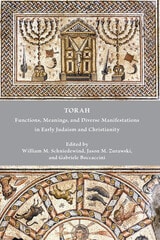
Torah
Functions, Meanings, and Diverse Manifestations in Early Judaism and ChristianityWilliam M. Schniedewind
SBL Press, 2022
The present volume explores the ever-evolving understandings and diverse manifestations of the Hebrew notion of torah in early Jewish and Christian literature and the different roles torah played within those communities, whether in Judea or in the Hellenistic and early Roman diaspora. This collection of essays is purposefully wide-ranging, with contributors exploring and rethinking some of the most basic scholarly assumptions and preconceptions about the nature of torah in light of new critical approaches and methodologies. Contributors include Gabriele Boccaccini, Francis Borchardt, Calum Carmichael, Federico Dal Bo, Lutz Doering, Oliver Dyma, Paula Fredriksen, Robert G. Hall, Magnar Kartveit, Anne Kreps, David Lambert, Michael Legaspi, Jason A. Myers, Juan Carlos Ossandón Widow, Anders Klostergaard Petersen, Patrick Pouchelle, Jeremy Punt, Michael L. Satlow, Joachim Schaper, William Schniedewind, Elisa Uusimäki, Jacqueline Vayntrub, Jonathan Vroom, James W. Watts, Benjamin G. Wright III, and Jason M. Zurawski.
Transitions
Legal Change, Legal MeaningsAustin Sarat
University of Alabama Press, 2012
Transitions: Legal Change, Legal Meanings illustrates the various intersections, crises, and shifts that continually occur within the law, and how these moments of change interact with and comment on contemporary society.
Akhil Reed Amar / William L. Andreen /
Jack M. Beermann / Heather Elliott / Joshua
Alexander Geltzer / David Gray / Paul
Horwitz / Daniel H. Joyner / Nina
Mendelson / Meredith Render / Austin
Sarat / Ruti Teitel / Lindsey Ohlsson Worth
Western Fictions, Black Realities
Meanings of Blackness and ModernitiesIsabel Soto
Michigan State University Press, 2012
This anthology interrogates two salient concepts in studying the black experience. Ushered in with the age of New World encounters, modernity emerged as brutal and complex, from its very definition to its manifestations. Equally challenging is blackness, which is forever dangling between the range of uplifting articulations and insidious degradation. The essays in Western Fictions address the conflicting confluences of these two terms. Questioning Eurocentric and mainstream American interpretations, they reveal the diverse meanings of modernities and blackness from a wide range of milieus of the black experience. Interdisciplinary and wide-ranging in thematic and epochal scope, they use theoretical and empirical studies of a range of subjects to demonstrate that, indeed, blackness is relevant for understanding modernities and vice versa.