Results by title
15 books match the query 'Measuring'
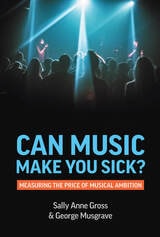
Can Music Make You Sick?
Measuring the Price of Musical AmbitionSally Anne Gross and George Musgrave
University of Westminster Press, 2020
Grant Hutchison (Frightened Rabbit):‘This book should be mandatory reading for every label, booking agent, manager and tour manager in the business of music and touring so we can all better understand what’s really involved in living the life of a professional musician and the role we all have in making that life as liveable as possible’
Tim Shiel (Double J/Triple J Radio, Australia):‘The most important book I’ve ever read about music’
‘An eye-opening must read’ ****
Shaun Ryder (Happy Mondays): ‘Holding on to your mental health in this pressured environment is so important and at times so very difficult, I know that all too well. This book lays bare what it is like to live for your music and how it can feel to be a musician today’
The Wire magazine:‘Poses uncomfortable questions…[and] sheds light on complex issues with compelling thoroughness’
‘Musicians often pay a high price for sharing their art with us. Underneath the glow of success can often lie loneliness and exhaustion, not to mention the basic struggles of paying the rent or buying food. Sally-Anne Gross and George Musgrave raise important questions – and we need to listen to what the musicians have to tell us about their working conditions and their mental health’
Crispin Hunt (Multi-Platinum Songwriter/Record Producer & Chair of the Ivor’s Academy):‘In this important book, Sally Anne Gross and George Musgrave investigate the relationship between the well-being music brings to society and the well-being of those who create. It's a much needed reality-check, deglamorising the romantic image of the tortured artist’
Adam Ficek (Psychotherapist [Music and Mind]/BabyShambles):‘A critical and timely book’
Joe Muggs (DJ, Promoter, Journalist [Guardian, Telegraph, FACT, Mixmag, The Wire]):‘The best guide to what being a musician, and what "the music industry" actually are that I can remember reading’
Andreea Magdalina (Founder of shesaid.so):‘This book is extremely important....The pandemic is forcing our industry to reinvent itself, once again, and this book is a call to ensure these new systems are fairer for everyone and that they foster a healthier lifestyle’
It is often assumed that creative people are prone to psychological instability, and that this explains apparent associations between cultural production and mental health problems. In their detailed study of recording and performing artists in the British music industry, Sally Anne Gross and George Musgrave turn this view on its head.
By listening to how musicians understand and experience their working lives, this book proposes that whilst making music is therapeutic, making a career from music can be traumatic. The authors show how careers based on an all-consuming passion have become more insecure and devalued. Artistic merit and intimate, often painful, self-disclosures are the subject of unremitting scrutiny and data metrics. Personal relationships and social support networks are increasingly bound up with calculative transactions.
Drawing on original empirical research and a wide-ranging survey of scholarship from across the social sciences, their findings will be provocative for future research on mental health, wellbeing and working conditions in the music industries and across the creative economy. Going beyond self-help strategies, they challenge the industry to make transformative structural change. Until then, the book provides an invaluable guide for anyone currently making their career in music, as well as those tasked with training and educating the next generation.
Measuring and Accounting for Environmental Public Goods
A National Accounts PerspectiveEdited by Nicholas Z. Muller, Eli P. Fenichel, and Mary Bohman
University of Chicago Press, 2025
Provides strategies and approaches for integrating natural capital into environmental statistics.
While the importance of natural resources and the contributions of the environment to welfare are apparent, traditional national income and wealth accounting practices do not measure or value environmental public goods. This volume examines the conceptual and empirical basis for integrating natural capital—forests, oceans, and air—into the economic and environmental statistics that inform public policy. It offers innovative approaches to valuing nonmarket environmental goods and services, including strategies for capturing heterogeneity in measurement across types of capital, geography, and individuals.
The chapters focus on measuring productivity with adjustments for pollution damage, developing a microdata infrastructure to advance our understanding of the distribution of environmental amenities and hazards, and estimating long-run sustainable development indicators. Case studies consider coastal assets, forests, and marine ecosystems, and develop strategies for implementing specific environmental-economic accounts such as environmental activity accounts and natural capital accounts for forests and the marine economy. As national income accounting standards are updated to incorporate expanded guidance on issues related to natural capital, this timely book will help inform decisions on the measurement and treatment of climate, air, water, and other public goods.
Measuring and Accounting for Innovation in the Twenty-First Century
Edited by Carol Corrado, Jonathan Haskel, Javier Miranda, and Daniel Sichel
University of Chicago Press, 2021
Measuring and Managing Federal Financial Risk
Edited by Deborah Lucas
University of Chicago Press, 2010
This book contains new research, both empirical and methodological, on the measurement and management of these costs and risks. The analyses encompass a broad spectrum of federal programs, including housing, catastrophe insurance, student loans, social security, and environmental liabilities. Collectively, the contributions gathered in Measuring and Managing Federal Financial Risk demonstrate that the logic of financial economics can be a useful tool for studying a range of federal activities.
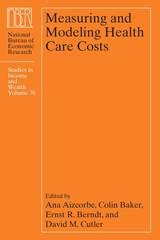
Measuring and Modeling Health Care Costs
Edited by Ana Aizcorbe, Colin Baker, Ernst R. Berndt, and David M. Cutler
University of Chicago Press, 2018
The research in Measuring and Modeling Health Care Costs seeks to connect our knowledge of expenditures with what we are able to measure of results, probing questions of methodology, changes in the pharmaceutical industry, and the shifting landscape of physician practice. The research in this volume investigates, for example, obesity’s effect on health care spending, the effect of generic pharmaceutical releases on the market, and the disparity between disease-based and population-based spending measures. This vast and varied volume applies a range of economic tools to the analysis of health care and health outcomes.
Practical and descriptive, this new volume in the Studies in Income and Wealth series is full of insights relevant to health policy students and specialists alike.
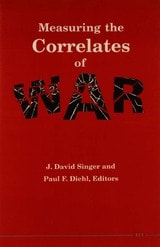
Measuring the Correlates of War
J. David Singer and Paul F. Diehl, Editors
University of Michigan Press, 1991

Measuring the Cosmos
How Scientists Discovered the Dimensions of the UniverseDavid H. Clark and Matthew D.H. Clark
Rutgers University Press, 2004
Humans have always viewed the heavens with wonder and awe. The skies have inspired reflection on the vastness of space, the wonder of creation, and humankind’s role in the universe. In just over one hundred years, science has moved from almost total ignorance about the actual distances to the stars and earth’s place in the galaxy to our present knowledge about the enormous size, mass, and age of the universe. We are reaching the limits of observation, and therefore the limits of human understanding. Beyond lies only our imagination, seeded by the theories of physics. In Measuring the Cosmos, science writers David and Matthew Clark tell the stories of both the well-known and the unsung heroes who played key roles in these discoveries. These true accounts reveal ambitions, conflicts, failures, as well as successes, as the astonishing scale and age of the universe were finally established. Few areas of scientific research have witnessed such drama in the form of ego clashes, priority claims, or failed (or even falsified) theories as that resulting from attempts to measure the universe. Besides giving credit where long overdue, Measuring the Cosmos explains the science behind these achievements in accessible language sure to appeal to astronomers, science buffs, and historians.
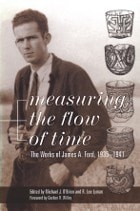
Measuring the Flow of Time
The Works of James A. Ford, 1935-1941James A. Ford, edited by R. Lee Lyman and Michael J. O'Brien
University of Alabama Press, 1999
This collection of Ford's works focuses on the development of ceramic chronology—a key tool in Americanist archaeology.
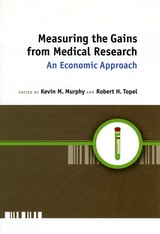
Measuring the Gains from Medical Research
An Economic ApproachEdited by Kevin M. Murphy and Robert H. Topel
University of Chicago Press, 2003
From an economic perspective, they find, the answer is a resounding "yes": in fact, considering the extraordinary value of improvements to health, we may even be spending too little on medical research. The evidence these papers present and the conclusions they reach are both surprising and convincing: that growth in longevity since 1950 has been as valuable as growth in all other forms of consumption combined; that medical advances producing 10% reductions in mortality from cancer and heart disease alone would add roughly $10 trillion-a year's GDP-to the national wealth; or that the average new drug approved by the FDA yields benefits worth many times its cost of development.
The papers in this book are packed with these and many other surprising revelations, their sophisticated analysis persuasively demonstrating the massive economic benefits we can gain from investments in medical research. For anyone concerned about the cost and the value of such research-from policy makers to health care professionals and economists-this will be a landmark book.
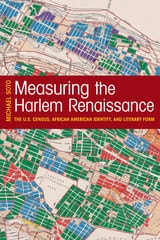
Measuring the Harlem Renaissance
The U.S. Census, African American Identity, and Literary FormMichael Soto
University of Massachusetts Press, 2016
In this provocative study, Michael Soto examines African American cultural forms through the lens of census history to tell the story of how U.S. officialdom—in particular the Census Bureau—placed persons of African descent within a shifting taxonomy of racial difference, and how African American writers and intellectuals described a far more complex situation of interracial social contact and intra-racial diversity. What we now call African American identity and the literature that gives it voice emerged out of social, cultural, and intellectual forces that fused in Harlem roughly one century ago.
Measuring the Harlem Renaissance sifts through a wide range of authors and ideas—from W. E. B. Du Bois, Rudolph Fisher, and Nella Larsen to Zora Neale Hurston, Langston Hughes, and Wallace Thurman, and from census history to the Great Migration—to provide a fresh take on late nineteenth—and twentieth—century literature and social thought. Soto reveals how Harlem came to be known as the “cultural capital of black America,” and how these ideas left us with unforgettable fiction and poetry.
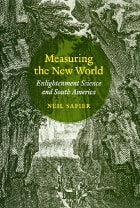
Measuring the New World
Enlightenment Science and South AmericaNeil Safier
University of Chicago Press, 2008
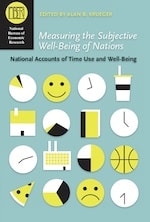
Measuring the Subjective Well-Being of Nations
National Accounts of Time Use and Well-BeingEdited by Alan B. Krueger
University of Chicago Press, 2009
Surely everyone wants to know the source of happiness, and indeed, economists and social scientists are increasingly interested in the study and effects of subjective well-being. Putting forward a rigorous method and new data for measuring, comparing, and analyzing the relationship between well-being and the way people spend their time—across countries, demographic groups, and history—this book will help set the agenda of research and policy for decades to come.
It does so by introducing a system of National Time Accounting (NTA), which relies on individuals’ own evaluations of their emotional experiences during various uses of time, a distinct departure from subjective measures such as life satisfaction and objective measures such as the Gross Domestic Product. A distinguished group of contributors here summarize the NTA method, provide illustrative findings about well-being based on NTA, and subject the approach to a rigorous conceptual and methodological critique that advances the field. As subjective well-being is topical in economics, psychology, and other social sciences, this book should have cross-disciplinary appeal.
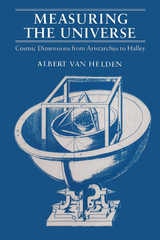
Measuring the Universe
Cosmic Dimensions from Aristarchus to HalleyAlbert Van Helden
University of Chicago Press, 1986
"Van Helden's authoritative treatment is concise and informative; he refers to numerous sources of information, draws on the discoveries of modern scholarship, and presents the first book-length treatment of this exceedingly important branch of science."—Edward Harrison, American Journal of Physics
"Van Helden writes well, with a flair for clear explanation. I warmly recommend this book."—Colin A. Ronan, Journal of the British Astronomical Association
The Liberal Arts Advantage
Measuring the Deeper Value of a College EducationEdited by Richard Arum, Paul Courant, and Allyson Flaster
University of Chicago Press, 2026
Showcases new measurement strategies for assessing the impact of a liberal arts education on students and society.
More than ever before, our society is questioning the meaning and value of higher education, and liberal arts education, in particular, has come under substantial scrutiny. Economic detractors characterize liberal arts education as impractical, claiming that college should prepare students for the workforce. Others object to the curriculum, portraying it as broken or misdirected. According to these critics, the liberal arts education being offered in the United States is marked by its rejection of core intellectual and ideological commitments.
In The Liberal Arts Advantage, a wide range of scholars argue for how and why a liberal arts education uniquely develops skill sets and expertise needed for individuals and society to thrive in the twenty-first century. The contributors address foundational questions about what liberal arts education is, how it has been conceptualized in the past, and what we can learn from its societal and professional impacts. They present compelling, unique research and new methodological tools for assessing the outcomes of liberal arts graduates. Offering grounded and well-founded arguments in favor of our education system, The Liberal Arts Advantage persuasively explains why educational leaders should reinvest in liberal arts education.

The Quality Infrastructure
Measuring, Analyzing, and Improving Library ServicesSarah Anne Murphy
American Library Association, 2013