Results by title
16 books match the query 'Mediation'
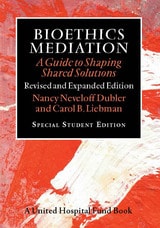
Bioethics Mediation
A Guide to Shaping Shared Solutions, Revised and Expanded EditionNancy Neveloff Dubler
Vanderbilt University Press, 2011
Conflicts come in different guises, and the key to successful resolution is early identification and intervention. Every bioethics mediator needs to be prepared with skills to listen, "level the playing field," identify individual interests, explore options, and help craft a "principled resolution" -- a consensus that identifies a plan aligned with accepted ethical principles, legal stipulations, and moral rules and that charts a clear course of future intervention.
The organization of the book makes it ideal for teaching or as a handbook for the practitioner. It includes actual cases, modified to protect the privacy of patients, providers, and institutions; detailed case analyses; tools for step-by-step mediation; techniques for the mediator; sample chart notes; and a set of actual role plays with expert mediator and bioethics commentaries. The role plays include:
- discharge planning for a dying patient
- an at-risk pregnancy
- HIV and postsurgical complications in the ICU
- treatment for a dying adolescent
- dialysis and multiple systems failure
Expanded by two-thirds from the 2004 edition, the new edition features two new role plays, a new chapter on how to write chart notes, and a discussion of new understandings of the role of the clinical ethics consultant.

Crash Cultures
Modernity, Mediation and the MaterialEdited by Jane Arthurs and Iain Grant
Intellect Books, 1995
In trying to give meaning to one celebrity crash, the more general significance of the car crash, its challenge to rational control or explanation, its disregard for the subject and its will, became the focus for attention. Coincidentally, the two most newsworthy films of 1997 were David Cronenberg's Crash and James Cameron's Titanic, both of which generated intense popular interest.
The principal purpose of this collection of essays is to subject texts, within which crashes figure, to well-defined cultural study. The themes that emerge from this collection, which is truly experimental in attempting to draw together the resources for a cultural study of events, are many and varied. Moreover, they vary in format, in order to bring as many modes of address as possible to bear on the crashes that catastrophically and fantastically punctuate the fabric of everyday life.
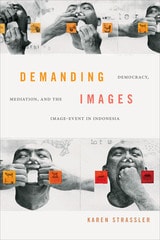
Demanding Images
Democracy, Mediation, and the Image-Event in IndonesiaKaren Strassler
Duke University Press, 2019
Domesticating Democracy
The Politics of Conflict Resolution in BoliviaSusan Helen Ellison
Duke University Press, 2018
English for Dispute Resolution
Mastering Negotiation, Mediation, and Alternative Dispute ResolutionBarrie J. Roberts
University of Michigan Press, 2025
Whether they are using English for Dispute Resolution as a self-study resource or a course textbook, readers can use the book to develop their own unique negotiation and mediation styles in English and improve their professional-level English skills and soft skills for any purpose. Chapters introduce Alternative Dispute Resolution, negotiation ethics, competitive and collaborative negotiation, negotiation game theory, apologies, drafting written agreements, and mediation. After an engaging hypothetical case that introduces the chapter’s key points, each chapter provides warm-up questions, readings about dispute resolution theory and strategies, language tips, and activities and sample phrases to practice applying chapter lessons to real-world disputes. Chapters also invite readers to explore topics of interest, such as dispute resolution in their home countries, personal and professional lives, and current events, and the growing use of Artificial Intelligence (AI) in ADR. Readers will simultaneously build confidence in their English and cross-cultural dispute resolution skills.
English for Dispute Resolution offers readers:
- Lessons that explain the theories behind Alternative Dispute Resolution, negotiation ethics, competitive and collaborative negotiation, and mediation
- Activities that help them develop their own unique negotiation strategies and styles along with critical thinking, problem-solving, reading, writing, listening, and speaking.
- Step-by-step guidance, sample sentences, and practice activities for applying chapter lessons to real-world disputes.
- Opportunities to explore topics of interest, such as dispute resolution in their home countries, personal and professional lives and current events, and the growing use of Artificial Intelligence (AI) in ADR.
- Key ADR terms and idioms in plain, accessible English.
- Specific tips to improve cross-cultural communication for negotiating and mediating in English.
- A companion website with downloadable checklists, forms, and sample language that can be used for classroom role-plays and real-world negotiations and mediations.
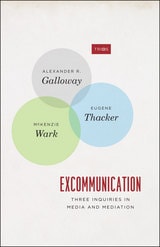
Excommunication
Three Inquiries in Media and MediationAlexander R. Galloway, Eugene Thacker, and McKenzie Wark
University of Chicago Press, 2013
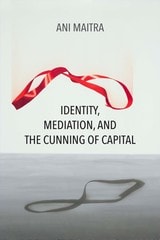
Identity, Mediation, and the Cunning of Capital
Ani Maitra
Northwestern University Press, 2020
Maitra’s archive is transnational and multimodal. Moving from anticolonial polemics to psychoanalysis to diasporic experimental literature to postcolonial feminist and queer media, he lays bare the cunning by which capitalism produces and fragments identity through an intermedial “aesthetic dissonance” with the commodity form. Maitra’s novel contribution to theories of identity and to the concept of mediation will interest a wide range of scholars in media studies, critical race and postcolonial studies, and critical aesthetics.

Jesus the Mediator
William Brownsberger
Catholic University of America Press, 2013
Mediation and Protest Movements
Edited by Bart Cammaerts, Alice Mattoni, and Patrick McCurdy
Intellect Books, 2013
Over the past year, international and national media have been full of stories about protest movements and tumultuous social upheaval from Tunisia to California. But scholars have not yet fully addressed the connection between these movements and the media and communication channels through which their messages spread. Correcting that imbalance, Mediation and Protest Movements explores the nature of the relationship between protest movements, media representation, and communication strategies and tactics.
In a series of fascinating essays, contributors to this timely volume focus on the processes and practices in which contemporary protesters engage when acting with and through media. Covering both online and offline contexts as well as mainstream and alternative media, they consider media environments around the world in all their complexity. They also provide a broad and comparative perspective on the ways that protest movements at local and transnational levels engage in mediation processes and develop media practices. Bridging the gap between social movement theory and media and communication studies, Mediation and Protest Movements will serve as an important reference for students and scholars of the media and social change.
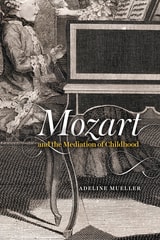
Mozart and the Mediation of Childhood
Adeline Mueller
University of Chicago Press, 2021
The story of Wolfgang Amadeus Mozart’s precocity is so familiar as to be taken for granted. In scholarship and popular culture, Mozart the Wunderkind is often seen as belonging to a category of childhood all by himself. But treating the young composer as an anomaly risks minimizing his impact. In this book, Adeline Mueller examines how Mozart shaped the social and cultural reevaluation of childhood during the Austrian Enlightenment. Whether in a juvenile sonata printed with his age on the title page, a concerto for a father and daughter, a lullaby, a musical dice game, or a mass for the consecration of an orphanage church, Mozart’s music and persona transformed attitudes toward children’s agency, intellectual capacity, relationships with family and friends, political and economic value, work, school, and leisure time.
Thousands of children across the Habsburg Monarchy were affected by the Salzburg prodigy and the idea he embodied: that childhood itself could be packaged, consumed, deployed, “performed”—in short, mediated—through music. This book builds upon a new understanding of the history of childhood as dynamic and reciprocal, rather than a mere projection or fantasy—as something mediated not just through texts, images, and objects but also through actions. Drawing on a range of evidence, from children’s periodicals to Habsburg court edicts and spurious Mozart prints, Mueller shows that while we need the history of childhood to help us understand Mozart, we also need Mozart to help us understand the history of childhood.

Out of Mind
Mode, Mediation, and Cognition in Twenty-First-Century NarrativeTorsa Ghosal
The Ohio State University Press, 2021
Out of Mind makes a compelling case for understanding narrative forms and cognitive-scientific frameworks as co-emergent and cross-pollinating. To this end, Ghosal harnesses narrative theory, multimodality studies, cognitive sciences, and disability studies to track competing perspectives on remembering, reading, and sense of place and self. Through new readings of the works of Kamila Shamsie, Aleksandar Hemon, Mark Haddon, Lance Olsen, Steve Tomasula, Jonathan Safran Foer, and others, Out of Mind generates unique insights into literary imagination’s influence on how we think and perceive amid twenty-first-century social, technological, and environmental changes.

Recognizing Reality
German Realism and the Mediation of PresenceJessica C. Resvick
Northwestern University Press, 2026
Reveals how literary scenes of recognition stage the process of coming to know reality
In this deeply researched and thought-provoking study, Jessica C. Resvick traces nineteenth-century German realist writing’s paradoxical investment in mediated accounts of the world and the direct, unfiltered experience of reality. Focusing on the motif and operation of recognition in its Aristotelean sense, Resvick examines self-reflexive narratives in which the authors struggle to resolve this tension between the media they choose and the immediacy they hope to create.
Through close readings of key works by canonical authors such as E. T. A. Hoffmann, Annette von Droste-Hülshoff, Adalbert Stifter, Gottfried Keller, and Wilhelm Raabe, Resvick demonstrates the medially influenced and historically contingent ways in which they represent reality. Each chapter focuses on a different form of recognition, reconstructing the techniques that allow these authors to generate an effect of presence. Exploring the history and poetics of knowledge exchange, Recognizing Reality: German Realism and the Mediation of Presence expands on recent media histories of realism, examining the material bases for realist aesthetics while also investigating media’s epistemological accomplishments, and astutely elaborates the role of recognition as a medium-specific tool.
Rituals Of Mediation
International Politics And Social MeaningFrancois Debrix
University of Minnesota Press, 2003
A timely consideration of the meaning of transnational cultural interactions today
In an era of increasing globalization, the cultural and the international have borders as permeable as most nations’s—and an understanding of one requires making sense of the other. Foregrounding the role of mediation—understood here as a site of representation, transformation, and pluralization—the authors engage two specific questions: How might we make theoretical and practical sense of transnational cultural interactions? And how are we to understand the ways in which the sites of mediation represent, transform, and remediate internationals? Accordingly, the authors consider international issues like security, development, political activism, and the war against terrorism through the lens of cultural practices such as traveling through airports, exhibiting art and photography, logging on to the Internet, and spinning news stories.
Contributors: Robin Brown, U of Leeds; David Campbell, U of Newcastle upon Tyne; Michael Dillon, U of Lancaster; Debbie Lisle, Queen’s U, Belfast; Moya Lloyd, Queen’s U, Belfast; Timothy W. Luke, Virginia Polytechnic Institute and State U; Patricia L. Price, Florida International U; Jayne Rodgers, U of Leeds; Marysia Zalewski, Queen’s U, Belfast.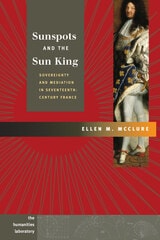
Sunspots and the Sun King
Sovereignty and Mediation in Seventeenth-Century FranceEllen M. McClure
University of Illinois Press, 2006
Mediation, monarchy, and Louis XIV's attempts to legitimize his reign
In order to assert his divine right, Louis XIV missed no opportunity to identify himself as God’s representative on earth. However, in Sunspots and the Sun King Ellen McClure explores the contradictions inherent in attempting to reconcile the logical and mystical aspects of divine right monarchy. McClure analyzes texts devoted to definitions of sovereignty, presents a meticulous reading of Louis XIV’s memoirs to the crown prince, and offers a novel analysis of diplomats and ambassadors as the mediators who preserved and transmitted the king’s authority. McClure asserts that these discussions, ranging from treatises to theater, expose incommensurable models of authority and representation permeating almost every aspect of seventeenth-century French culture.

The Cosmic Zoom
Scale, Knowledge, and MediationZachary Horton
University of Chicago Press, 2021
Horton uses the cosmic zoom as a starting point to develop a cross-disciplinary theory of scale as mediated difference. He considers the origins of our notions of scale, how scalar mediation functions differently in analog and digital modes, and how cosmic zoom media has influenced scientific and popular views of the world. Analyzing literature, film, digital media, and database history, Horton establishes a much-needed framework for thinking about scale across multiple domains and disciplines.
The Teaching Guide for English for Dispute Resolution
Mastering Negotiation, Mediation, and Alternative Dispute ResolutionBarrie J. Roberts
University of Michigan Press, 2025
Each chapter of the textbook provides a ready-made lesson plan with a sample dispute, warm-up questions, background readings, follow-up questions, activities, and reflections, and The Teaching Guide supplements each chapter with:
- Support in the form of teaching tips, lesson plans, additional activities or role-plays, assessment suggestions, and resources for further exploration.
- Separate guidance for ESL and Legal English/Business English instructors that helps them select the material and activities best suited to their students’ interests and needs.
- Resources such as sample syllabi and activities with step-by-step instructions that make it easy to start teaching the textbook.
- An online companion site where instructors can download and send activities and role-plays directly to their students.