80 books match the query 'Medical (incl. Patients)' and 7 start with a
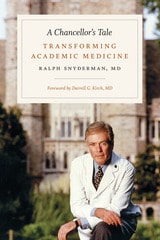
cover of A Chancellor's Tale: Transforming Academic Medicine

A Chancellor's Tale

Transforming Academic Medicine

Ralph Snyderman, MD

Duke University Press, 2016
During his fifteen years as chancellor, Dr. Ralph Snyderman helped create new paradigms for academic medicine while guiding the Duke University Medical Center through periods of great challenge and transformation. Under his leadership, the medical center became internationally known for its innovations in medicine, including the creation of the Duke University Health System—which became a model for integrated health care delivery—and the development of personalized health care based on a rational and compassionate model of care. In A Chancellor's Tale Snyderman reflects on his role in developing and instituting these changes.
 
Beginning his faculty career at Duke in 1972, Snyderman made major contributions to inflammation research while leading the Division of Rheumatology and Immunology. When he became chancellor in 1989, he learned that Duke’s medical center required bold new capabilities to survive the advent of managed care and HMOs. The need to change spurred creativity, but it also generated strong resistance. 
 
Among his many achievements, Snyderman led ambitious institutional growth in research and clinical care, broadened clinical research and collaborations between academics and industry, and spurred the fields of integrative and personalized medicine. Snyderman describes how he immersed himself in all aspects of Duke’s medical enterprise as evidenced by his exercise in "following the sheet" from the patient's room to the laundry facilities and back, which allowed him to meet staff throughout the hospital. Upon discovering that temperatures in the laundry facilities were over 110 degrees he had air conditioning installed. He also implemented programs to help employees gain needed skills to advance. Snyderman discusses the necessity for strategic planning, fund-raising, and media relations and the relationship between the medical center and Duke University. He concludes with advice for current and future academic medical center administrators.
 
The fascinating story of Snyderman's career shines a bright light on the importance of leadership, organization, planning, and innovation in a medical and academic environment while highlighting the systemic changes in academic medicine and American health care over the last half century. A Chancellor's Tale will be required reading for those interested in academic medicine, health care, administrative and leadership positions, and the history of Duke University.
[more]
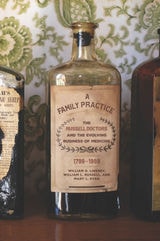
cover of A Family Practice: The Russell Doctors and the Evolving Business of Medicine, 1799-1989

A Family Practice

The Russell Doctors and the Evolving Business of Medicine, 1799-1989

William D. Lindsey

University of Arkansas Press, 2020

A Family Practice is the sweeping saga of four generations of doctors, Russell men seeking innovative ways to sustain themselves as medical practitioners in the American South from the early nineteenth to the latter half of the twentieth century. The thread that binds the stories in this saga is one of blood, of medical vocations passed from fathers to sons and nephews. This study of four generations of Russell doctors is an historical study with a biographical thread running through it.
 
The authors take a wide-ranging look at the meaning of intergenerational vocations and the role of family, the economy, and social issues on the evolution of medical education and practice in the United States.
 
[more]
cover of A Plague on All Our Houses: Medical Intrigue, Hollywood, and the Discovery of AIDS

A Plague on All Our Houses

Medical Intrigue, Hollywood, and the Discovery of AIDS

Bruce J. Hillman

University Press of New England, 2016
A frightening new plague. A medical mystery. A pioneering immunologist. In A Plague on All Our Houses, Dr. Bruce J. Hillman dissects the war of egos, money, academic power, and Hollywood clout that advanced AIDS research even as it compromised the career of the scientist who discovered the disease. At the beginning of the worldwide epidemic soon to be known as AIDS, Dr. Michael Gottlieb was a young immunologist new to the faculty of UCLA Medical Center. In 1981 he was brought in to consult on a battery of unusual cases: four formerly healthy gay men presenting with persistent fever, weight loss, and highly unusual infections. Other physicians around the country had noted similar clusters of symptoms, but it was Gottlieb who first realized that these patients had a new and deadly disease. He also identified the defect in their immune system that allowed the disease to flourish. He published his findings in a now-iconic lead article in the New England Journal of Medicine—an impressive achievement for such a young scientist—and quickly became the focal point of a whirlwind of panic, envy, desperation, and distrust that played out against a glittering Hollywood backdrop. Courted by the media, the gay community, and the entertainment industry, Gottlieb emerged as the medical face of the terrifying new epidemic when he became personal physician to Rock Hudson, the first celebrity AIDS patient. With Elizabeth Taylor he cofounded the charitable foundation amfAR, which advanced public awareness of AIDS and raised vast sums for research, even as it struggled against political resistance that began with the Reagan administration and trickled down through sedimentary layers of bureaucracy. Far from supporting him, the UCLA medical establishment reacted with dismay to Gottlieb’s early work on AIDS, believing it would tarnish the reputation of the Medical Center. Denied promotion and tenure in 1987, Gottlieb left UCLA for private practice just as the National Institutes of Health awarded the institution a $10 million grant for work he had pioneered there. In the thirty-five years since the discovery of AIDS, research, prevention, and clinical care have advanced to the point that the disease is no longer the death sentence it once was. Gottlieb’s seminal article is now regarded by the New England Journal of Medicine as one of the most significant publications of its two-hundred-year history. A Plague on All Our Houses offers a ringside seat to one of the most important medical discoveries and controversies of our time.
[more]
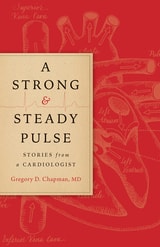
cover of A Strong and Steady Pulse: Stories from a Cardiologist

A Strong and Steady Pulse

Stories from a Cardiologist

Gregory D. Chapman, MD

University of Alabama Press, 2021

A seasoned cardiologist shares his experiences, opinions, and recommendations about heart disease and other cardiac problems.

A Strong and Steady Pulse: Stories from a Cardiologist provides an insider’s perspective on the field of cardiovascular medicine told through vignettes and insights drawn from Gregory D. Chapman’s three decades as a cardiologist and professor of medicine. In twenty-six bite-sized chapters based on real-life patients and experiences, Chapman provides an overview of contemporary cardiovascular diseases and treatments, illuminating the art and science of medical practice for lay audiences and professionals alike.

With A Strong and Steady Pulse, Chapman provides medical students and general readers with a better understanding of cardiac disease and its contributing factors in modern life, and he also provides insights on the diagnostic process, medical decision making, and patient care. Each chapter presents a patient and their initial appearance, described in clear detail as Chapman gently walks us through his evaluation and the steps he and his associates take to determine the underlying problem. Chapman’s stories are about real people dealing with life and death situations—including the physicians, nurses, medical students, and other team members who try to save lives in emergent, confusing conditions.

The sometimes hard-won solutions to these medical challenges combine new technology and cutting-edge research together with insights drawn from Chapman’s past experiences as an intern and resident in Manhattan during the AIDS epidemic, as a postdoctoral fellow at Duke University in the 1990s, and in practice in Nashville, Tennessee, and Birmingham, Alabama. Conditions addressed include the recognition and management of heart attack, heart failure, arrhythmia, valvular heart disease, cardiac transplantation, broken heart syndrome, hypertension, and the depression some people experience after a heart attack, as well as related topics like statin drugs, the Apple Watch ECG feature, and oral anticoagulants. Finally, the emergence of the COVID-19 virus and its disruption of normal hospital routines as the pandemic unfolded is addressed in an epilogue.
 

[more]
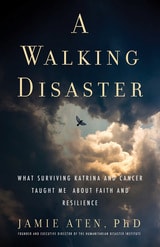
cover of A Walking Disaster: What Surviving Katrina and Cancer Taught Me about Faith and Resilience

A Walking Disaster

What Surviving Katrina and Cancer Taught Me about Faith and Resilience

Jamie Aten

Templeton Press, 2020

Is there a meaning to our suffering? Is hope realistic when tragedy befalls us? Is a return to normalcy possible after our life is uprooted by catastrophe? These are the questions that disaster psychologist Dr. Jamie Aten wrestled with when he was diagnosed with Stage IV colon cancer. In this gripping memoir, Aten shares the life-affirming and faith-renewing insights that he discovered during his tumultuous struggle against the disease.

Aten’s journey began in 2005 when Hur­ricane Katrina struck his community. After witnessing the devastation wrought by the storm, he dedicated his career to investigat­ing how people respond to and recover from all manner of disasters. He studied disaster zones around the globe and founded the Humanitarian Disaster Institute at Wheaton College. His expertise, however, was little comfort when a fateful visit with his oncolo­gist revealed advanced and aggressive cancer. “You’re in for your own personal disaster” was his doctor’s prognosis.

Thrust into a battle for his life, with cancer cells and chemotherapy ravaging his body, Aten found his professional interest taking on new meaning. His ordeal taught him firsthand how we can sustain ourselves when burdened with seemingly unbear­able suffering. Some of his counterintuitive insights include: to find hope, be cautious of optimism; when you want help the least is when you need it most; and spiritual surren­der, rather than a passive act, is instead an act of profound courage.
This last point speaks to the element of grace in Dr. Aten’s story. As he struggled to understand the significance of his suffering, he found himself examining his Christian faith down to its bedrock and learned to experience the redeeming presence of God in his life. Dr. Aten has a natural exuberance that shines through his writing. Infused with his compassionate voice and humanitarian concern,

A Walking Disaster is ultimately an inspirational story about the power of the human spirit to endure trauma with cour­age.

[more]
cover of Alice Hamilton: A LIFE IN LETTERS

Alice Hamilton

A LIFE IN LETTERS

Barbara Sicherman

University of Illinois Press, 2003

Alice Hamilton (1869-1970), a pioneer in the study of diseases of the workplace, a founder of industrial toxicology in the United States, and Harvard's first woman professor, led a long and interesting life. Always a consummate professional, she was also a prominent social reformer whose interest in the environmental causes of disease and in promoting equitable living conditions developed during her years as a resident at Jane Addams's Hull-House.
 
This legendary figure now comes to life in an integrated work of biography and letters that reveals the personal as well as the professional woman. In documenting Hamilton's evolution from a childhood of privilege to a life of social advocacy, the volume opens a window on women reformers and their role in Progressive Era politics and reform. Because Hamilton was a keen observer and vivid writer, her letters--more than 100 are included here--bring an unmatched freshness and immediacy to a range of subjects, such as medical education; personal relationships and daily life at Hull House; the women's peace movement; struggles for the protection of workers' health; academic life at Harvard; politics and civil liberties during the cold war; and the process of growing old. Her story takes the reader from the Gilded Age to the Vietnam War.
 
[more]
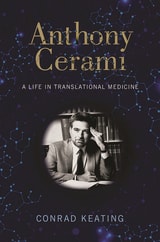
cover of Anthony Cerami: A Life in Translational Medicine

Anthony Cerami

A Life in Translational Medicine

Conrad Keating

Rutgers University Press, 2021

Since the turn of the new millennium, ‘translational research’, the scientific process of bringing disease-targeted knowledge from the laboratory to treat patients in the clinic, has gone mainstream and is now practiced by large universities and institutes across the globe.  Into this dynamic of the rapidly changing world of translational medical research this book sets the life of one of the discipline’s most influential practitioners, Anthony Cerami. His work spans more than five decades and culminated in the discovery, invention and development of diagnostics and therapeutics used daily by millions of people. Students in molecular medicine and investigators pursuing basic science in the hope of improving human health will find inspiration in examining the sacrifices and achievements of Cerami’s career in translational medicine. During his three decades at Rockefeller University his cross-disciplinary and laboratory-without-wall approach established ‘rational drug design’ as the most effective means of advancing the fields of parasitology, hematology, immunology, metabolism, therapeutics and molecular medicine. Cerami’s story and that of the evolution of translation are intimately entwined: the contours of Cerami’s career shaped by developments in translation, and in exchange, the field itself molded by Cerami’s work.  To understand one is to understand the other. By examining the life of this often overlooked biochemist it is possible to intimately focus on the ideas and thought processes of a scientist who has helped to define the great acceleration in translational research over the past half century – research that, knowingly or otherwise, has most likely affected the life of almost everyone on the planet.  We also gain a better understanding of the febrile creative atmosphere that percolated through the laboratories leading the way in translational medicine, and gain insight into the art, science, successes, failures and providence that underlie major scientific breakthroughs.  Anybody interested in the questions of where modern medicines come from, how health outcomes around the globe are affected by research and imagination, and where the future of drug discovery is leading, will be rewarded by exploring Cerami’s life in translation.  This book is not restricted to those with a professional interest in science, because anyone dedicated to living a life of creativity and discovery will be rewarded by reading this book.  In many respects, Cerami’s life reflects the modern metaphor of the ‘American dream’ with his journey from humble beginnings on a chicken farm in rural New Jersey, to occupying a place in  the highest echelons of the US scientific establishment.  His journey in translational medicine was propelled forward by two obsessions; the idea that he could help people who were sick, and the excitement of discovery. In following his two great passions, he trained a generation of specialists in translational medicine that continue to transform our understanding of, and treatments for, human disease.  Anthony Cerami’s work has shown how science has become an important force for social change by laying the foundations of modern translational medicine.
 
[more]