Results by title
3 books match the query 'Medical Jurisprudence'
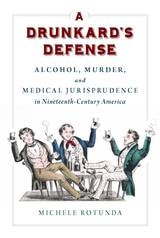
A Drunkard's Defense
Alcohol, Murder, and Medical Jurisprudence in Nineteenth-Century AmericaMichele Rotunda
University of Massachusetts Press, 2021
Is drunkenness a defense for murder? In the early nineteenth century, the answer was a resounding no. Intoxication was considered voluntary, and thus provided no defense. Yet as the century progressed, American courts began to extend exculpatory value to heavy drinking. The medicalization of alcohol use created new categories of mental illness which, alongside changes in the law, formed the basis for defense arguments that claimed unintended consequences and lack of criminal intent. Concurrently, advocates of prohibition cast “demon rum” and the “rum-seller” as the drunkard's accomplices in crime, mitigating offenders' actions. By the postbellum period, a backlash, led by medical professionals and an influential temperance movement, left the legacy of an unsettled legal standard.
In A Drunkard's Defense, Michele Rotunda examines a variety of court cases to explore the attitudes of nineteenth-century physicians, legal professionals, temperance advocates, and ordinary Americans toward the relationship between drunkenness, violence, and responsibility, providing broader insights into the country's complicated relationship with alcohol.
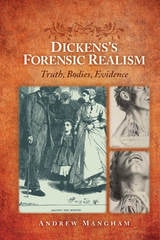
Dickens's Forensic Realism
Truth, Bodies, EvidenceAndrew Mangham
The Ohio State University Press, 2017
As Mangham shows, forensic medicine grew out of a perceived need to understand things with accuracy, leaning in part on the range of objectivities that inspired the inorganic sciences. At the same time, it had the burden of assisting the law in convicting the guilty and in exonerating the innocent. Practitioners of forensic medicine were uniquely mindful of unwanted variables such as human error and the vagaries of interpretation. In readings of Oliver Twist, Our Mutual Friend, Bleak House, The Pickwick Papers, Great Expectations, and Dickens’s early journalism, Mangham demonstrates that these questions about signification, perception, and reality are central to the stylistic complexities and playful tone often associated with Dickens. Moreover, the medico-legal context of Dickens’s fiction illuminates the richness and profundity, style and impact of Dicken’s narratives.
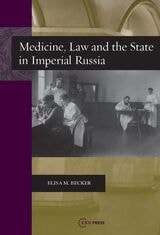
Medicine, Law, and the State in Imperial Russia
Elisa M. Becker
Central European University Press, 2011