Results by title
14 books match the query 'Medical education'
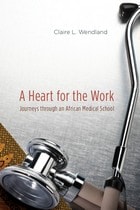
A Heart for the Work
Journeys through an African Medical SchoolClaire L. Wendland
University of Chicago Press, 2010
Burnout is common among doctors in the West, so one might assume that a medical career in Malawi, one of the poorest countries in the world, would place far greater strain on the idealism that drives many doctors. But, as A Heart for the Work makes clear, Malawian medical students learn to confront poverty creatively, experiencing fatigue and frustration but also joy and commitment on their way to becoming physicians. The first ethnography of medical training in the global South, Claire L. Wendland’s book is a moving and perceptive look at medicine in a world where the transnational movement of people and ideas creates both devastation and possibility.
Wendland, a physician anthropologist, conducted extensive interviews and worked in wards, clinics, and operating theaters alongside the student doctors whose stories she relates. From the relative calm of Malawi’s College of Medicine to the turbulence of training at hospitals with gravely ill patients and dramatically inadequate supplies, staff, and technology, Wendland’s work reveals the way these young doctors engage the contradictions of their circumstances, shedding new light on debates about the effects of medical training, the impact of traditional healing, and the purposes of medicine.
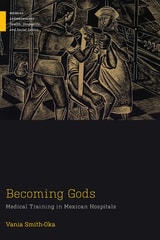
Becoming Gods
Medical Training in Mexican HospitalsVania Smith-Oka
Rutgers University Press, 2021
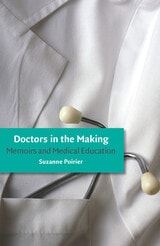
Doctors in the Making
Memoirs and Medical EducationSuzanne Poirier
University of Iowa Press, 2009
Through close readings of these accounts, Poirier draws attention to the complex nature of power in medicine, the rewards and hazards of professional and interpersonal relationships in all aspects of physicians’ lives, and the benefits to and threats from the vulnerability that medical students and residents experience.
Although most students emerge from medical education as well-trained, well-prepared professionals, few of them will claim that they survived the process unscathed. The authors of these accounts document—for better or for worse—the ways in which they have been changed. Based on their stories, Poirier recommends that medical education should make room for the central importance of personal relationships, the profound sense of isolation and powerlessness that can threaten the wellbeing of patients and physicians alike, and the physical and moral vulnerability that are part of every physician’s life.
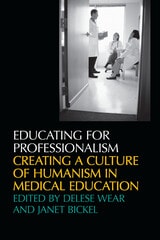
Educating For Professionalism
Creating A Culture Of Humanism In Medical EducationDelese Wear
University of Iowa Press, 2000
The thirteen essays in Educating for Professionalism examine the often conflicting ethical, social, emotional, and intellectual messages that medical institutions send to students about what it means to be a doctor. Because this disconnection between what medical educators profess and what students experience is partly to blame for the current crisis in medical professionalism, the authors offer timely, reflective analyses of the work and opportunities facing medical education if doctors are to win public trust.
In their drive to improve medical professionalism within the world of academic medicine, editors Delese Wear and Janet Bickel have assembled thought-provoking essays that elucidate the many facets of teaching, valuing, and maintaining medical professionalism in the middle of the myriad challenges facing medicine at the dawn of the twenty-first century.
The collection traces how the values of altruism and service can influence not only mission statements and admission policies but also the content of medical school ethics courses, student-led task forces, and mentoring programs, along with larger environmental issues in medical schools and the communities they serve.
Stanley Joel Reiser
Jack Coulehan
Peter C. Williams
Frederic W. Hafferty
Richard Martinez
Judith Andre
Jake Foglio
Howard Brody
Sheila Woods
Sue Fosson
Lois Margaret Nora
Mary Anne C. Johnston
Tana A. Grady-Weliky
Cynthia N. Kettyle
Edward M. Hundert
Norma E. Wagoner
Frederick A. Miller
William D. Mellon
Howard Waitzkin
Donald Wasylenki
Niall Byrne
Barbara McRobb
Edward J. Eckenfels
Lucy Wolf Tuton
Claudia H. Siegel
Timothy B. Campbell
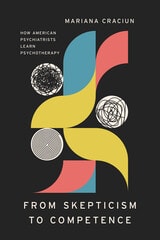
From Skepticism to Competence
How American Psychiatrists Learn PsychotherapyMariana Craciun
University of Chicago Press, 2024
While many medical professionals can physically examine the body to identify and understand its troubles—a cardiologist can take a scan of the heart, an endocrinologist can measure hormone levels, an oncologist can locate a tumor—psychiatrists have a much harder time unlocking the inner workings of the brain or its metaphysical counterpart, the mind.
In From Skepticism to Competence, sociologist Mariana Craciun delves into the radical uncertainty of psychiatric work by following medical residents in the field as they learn about psychotherapeutic methods. Most are skeptical at the start. While they are well equipped to treat brain diseases through prescription drugs, they must set their expectations aside and learn how to navigate their patients’ minds. Their instructors, experienced psychotherapists, help the budding psychiatrists navigate this new professional terrain by revealing the inner workings of talk and behavioral interventions and stressing their utility in a world dominated by pharmaceutical treatments. In the process, the residents examine their own doctoring assumptions and develop new competencies in psychotherapy. Exploring the world of contemporary psychiatric training, Craciun illuminates novice physicians’ struggles to understand the nature and meaning of mental illness and, with it, their own growing medical expertise.
How Many Doctors Do We Need?
Duncan Yaggy and Patricia Hodgson, eds.
Duke University Press, 1986
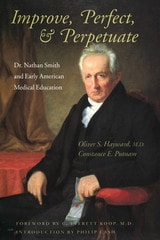
Improve, Perfect, & Perpetuate
Oliver S. Hayward
Dartmouth College Press, 1998

Integrating Family Planning Training into Medical Education
A Case Study of St. Paul's Hospital Millennium Medical CollegeLia T. Gebremedhin
Michigan Publishing Services, 2017
The innovative approach, founded on the values of sustainable capacity building through academic partnership and centered on improving access to dignified women’s reproductive health care through effective pre-service training, has the potential for expansion to other countries with high rates of maternal mortality and morbidity. In this case study, we spell out the best practices, which we hope will inspire academic medical centers in the Global South, global health departments/centers internationally, and the reproductive health community at large.
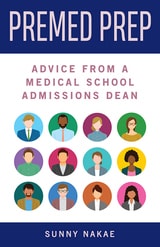
Premed Prep
Advice from a Medical School Admissions DeanSunny Nakae
Rutgers University Press, 2021
Premed Prep answers all these questions and more, with detailed case studies and insider tips that can help premed students authentically prepare and enjoy the journey from the very beginning. Sunny Nakae draws from her many years of experience as a medical school admissions dean to offer wise and compassionate advice that can help premed students of all backgrounds. She also has specific tips for students who are first-generation, minority, non-traditional, and undocumented.
Both forthright and supportive, Nakae’s advice is offered in a keep-it-real style that gives premed students a unique window into how admissions committees view and assess them. Premed Prep covers how to approach preparation with a focus on exploration and growth, and how to stop obsessing over med school application checklists. This book will do more than help you get a seat in medical school; it will start you on the process of becoming a successful future physician.
The Future of Medical Education
William G. Anlyan, M.D.
Duke University Press, 1973
The Making of Modern Medicine
Turning Points in the Treatment of DiseaseMichael Bliss
University of Chicago Press, 2011
At the dawn of the twenty-first century, we have become accustomed to medical breakthroughs and conditioned to assume that, regardless of illnesses, doctors almost certainly will be able to help—not just by diagnosing us and alleviating our pain, but by actually treating or even curing diseases, and significantly improving our lives.
For most of human history, however, that was far from the case, as veteran medical historian Michael Bliss explains in The Making of Modern Medicine. Focusing on a few key moments in the transformation of medical care, Bliss reveals the way that new discoveries and new approaches led doctors and patients alike to discard fatalism and their traditional religious acceptance of suffering in favor of a new faith in health care and in the capacity of doctors to treat disease. He takes readers in his account to three turning points—a devastating smallpox outbreak in Montreal in 1885, the founding of the Johns Hopkins Hospital and Medical School, and the discovery of insulin—and recounts the lives of three crucial figures—researcher Frederick Banting, surgeon Harvey Cushing, and physician William Osler—turning medical history into a fascinating story of dedication and discovery.
Compact and compelling, this searching history vividly depicts and explains the emergence of modern medicine—and, in a provocative epilogue, outlines the paradoxes and confusions underlying our contemporary understanding of disease, death, and life itself.
The Mindful Medical Student
A Psychiatrist’s Guide to Staying Who You Are While Becoming Who You Want to BeJeremy Spiegel
Dartmouth College Press, 2009
Translating the Body
Medical Education in Southeast AsiaEdited by Hans Pols, C. Michele Thompson, and John Harley Warner
National University of Singapore Press, 2017
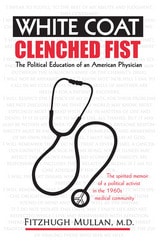
White Coat, Clenched Fist
The Political Education of an American PhysicianFitzhugh Mullan, M.D.
University of Michigan Press, 2006
In the sixties, Fitzhugh Mullan was an activist in the civil rights struggle. While in medical school, Mullan was shocked by gaps in what the students learned, and the lack of humanity in the classroom. Later, Dr. Mullan was outraged at the conditions he discovered when he began to practice. He helped found the Student Health Organization, organized the Controversial Medical Collective at Lincoln Hospital in the Bronx, and struggled to offer improved medical care to those who needed it most and could afford it least.
This landmark book charts the state of medical school and practices in the 1960s and 70s. This new edition is updated with a preface in which Dr. Mullan reflects on the changes in the medical field over the last thirty-plus years.
Fitzhugh Mullan is Murdock Head Professor of Medicine and Health Policy at George Washington University. He worked at the U.S. Public Health Service where he attained the rank of Assistant Surgeon General (1991-1996). Dr. Mullan is the co-founder of the National Coalition for Cancer Survivorship and the author of numerous books, including Plagues and Politics: The Story of the United States Public Health Service, and his most recent book, Narrative Matters: The Power of the Personal Essay in Health Policy.