Results by title

6 books match the query 'Medicine, Chinese'
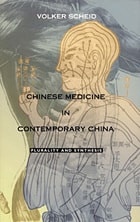
cover of Chinese Medicine in Contemporary China: Plurality and Synthesis

Chinese Medicine in Contemporary China

Plurality and Synthesis

Volker Scheid

Duke University Press, 2002

As a traditional healing art that has established a contemporary global presence, Chinese medicine defies categories and raises many interesting questions. If Chinese medicine is "traditional," why has it not disappeared with the rest of traditional Chinese society? If, as some claim, it is a science, what does that imply about what we call science? What is the secret of Chinese medicine's remarkable adaptability that has allowed it to prosper for more than 2,000 years? In Chinese Medicine in Contemporary China Volker Scheid presents an ethnography of Chinese medicine that seeks to answer these questions, but his ethnography is informed by some atypical approaches.

Scheid, a medical anthropologist and practitioner of Chinese medicine in practice since 1983, has produced an ethnography that accepts plurality as an intrinsic and nonreducible aspect of medical practice. It has been widely noted that a patient visiting ten different practitioners of Chinese medicine may receive ten different prescriptions for the same complaint, yet many of these various treatments may be effective. In attempting to illuminate the plurality in Chinese medical practice, Scheid redefines-and in some cases abandons-traditional anthropological concepts such as tradition, culture, and practice in favor of approaches from disciplines such as science and technology studies, social psychology, and Chinese philosophy. As a result, his book sheds light not only on Chinese medicine but also on the Western academic traditions used to examine it and presents us with new perspectives from which to deliberate the future of Chinese medicine in a global context.
Chinese Medicine in Contemporary China is the product of two decades of research including numerous interviews and case studies. It will appeal to a western academic audience as well as practitioners of Chinese medicine and other interested medical professionals, including those from western biomedicine.
[more]
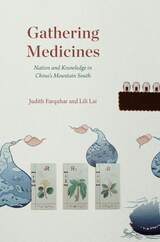
cover of Gathering Medicines: Nation and Knowledge in China’s Mountain South

Gathering Medicines

Nation and Knowledge in China’s Mountain South

Judith Farquhar and Lili Lai

University of Chicago Press, 2021

In the early 2000s, the central government of China encouraged all of the nation’s registered minorities to “salvage, sort, synthesize, and elevate” folk medical knowledges in an effort to create local health care systems comparable to the nationally supported institutions of traditional Chinese medicine. Gathering Medicines bears witness to this remarkable moment of knowledge development while sympathetically introducing the myriad therapeutic traditions of southern China.
 
Over a period of six years, Judith Farquhar and Lili Lai worked with seven minority nationality groups in China’s southern mountains, observing how medicines were gathered and local healing systems codified. Gathering Medicines shares their intimate view of how people understand ethnicity, locality, the body, and nature. This ethnography of knowledge diversities in multiethnic China is a testament to the rural wisdom of mountain healers, one that theorizes, from the ground up, the dynamic encounters between formal statist knowledge and the popular authority of the wild.
[more]
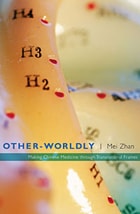
cover of Other-Worldly: Making Chinese Medicine through Transnational Frames

Other-Worldly

Making Chinese Medicine through Transnational Frames

Mei Zhan

Duke University Press, 2009

Traditional Chinese medicine is often portrayed as an enduring system of therapeutic knowledge that has become globalized in recent decades. In Other-Worldly, Mei Zhan argues that the discourses and practices called “traditional Chinese medicine” are made through, rather than prior to, translocal encounters and entanglements. Zhan spent a decade following practitioners, teachers, and advocates of Chinese medicine through clinics, hospitals, schools, and grassroots organizations in Shanghai and the San Francisco Bay Area. Drawing on that ethnographic research, she demonstrates that the everyday practice of Chinese medicine is about much more than writing herbal prescriptions and inserting acupuncture needles. “Traditional Chinese medicine” is also made and remade through efforts to create a preventive medicine for the “proletariat world,” reinvent it for cosmopolitan middle-class aspirations, produce clinical “miracles,” translate knowledge and authority, and negotiate marketing strategies and medical ethics.

Whether discussing the presentation of Chinese medicine at a health fair sponsored by a Silicon Valley corporation, or how the inclusion of a traditional Chinese medicine clinic authenticates the “California” appeal of an upscale residential neighborhood in Shanghai, Zhan emphasizes that unexpected encounters and interactions are not anomalies in the structure of Chinese medicine. Instead, they are constitutive of its irreducibly complex and open-ended worlds. Zhan proposes an ethnography of “worlding” as an analytic for engaging and illuminating emergent cultural processes such as those she describes. Rather than taking “cultural difference” as the starting point for anthropological inquiries, this analytic reveals how various terms of difference—for example, “traditional,” “Chinese,” and “medicine”—are invented, negotiated, and deployed translocally. Other-Worldly is a theoretically innovative and ethnographically rich account of the worlding of Chinese medicine.
[more]
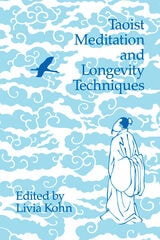
cover of Taoist Meditation and Longevity Techniques

Taoist Meditation and Longevity Techniques

Edited by Livia Kohn, in cooperation with Yoshinobu Sakade

University of Michigan Press, 1989
Taoist Meditation and Longevity Techniques covers the major areas of Taoist meditation and longevity techniques in roughly chronological order. The book addresses itself to the China area specialist or the scholar of religion and the history of science who wishes to know more about (and perhaps even must teach) aspects of Chinese culture that involve Taoism and traditional medicine. [viii, ix]
Other topics include Japanese interpretations of longevity techniques, drugs and immortality, visualization and ecstatic experience, and qigong and gymnastics.
[more]
cover of The Impotence Epidemic: Men's Medicine and Sexual Desire in Contemporary China

The Impotence Epidemic

Men's Medicine and Sexual Desire in Contemporary China

Everett Yuehong Zhang

Duke University Press, 2015
Since the 1990s China has seen a dramatic increase in the number of men seeking treatment for impotence. Everett Yuehong Zhang argues in The Impotence Epidemic that this trend represents changing public attitudes about sexuality in an increasingly globalized China. In this ethnography he shifts discussions of impotence as a purely neurovascular phenomenon to a social one. Zhang contextualizes impotence within the social changes brought by recent economic reform and through the production of various desires in post-Maoist China. Based on interviews with 350 men and their partners from Beijing and Chengdu, and concerned with de-mystifying and de-stigmatizing impotence, Zhang suggests that the impotence epidemic represents not just trauma and suffering, but also a contagion of individualized desire and an affirmation for living a full life. For Zhang, studying male impotence in China is one way to comprehend the unique experience of Chinese modernity.
[more]
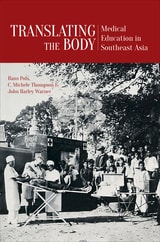
cover of Translating the Body: Medical Education in Southeast Asia

Translating the Body

Medical Education in Southeast Asia

Edited by Hans Pols, C. Michele Thompson, and John Harley Warner

National University of Singapore Press, 2017

Until recently, receiving a European or North American-style medical education in Southeast Asia was a profoundly transformative experience, as western conceptions of the body differed significantly from indigenous knowledge and explanations. Further, conceptions of the human body had to be translated into local languages and related to vernacular views of health, disease, and healing. Translating the Body is the first book to present the history of biomedical education across Southeast Asia. The contributors chart and analyze the organization of western medical education in Southeast Asia, public health education campaigns in the region, and the ways in which practitioners of what came to be conceived of as “traditional medicine” in many Southeast Asian countries organized themselves in response.
[more]