Results by title
2 books match the query 'Mediterranean Sea'
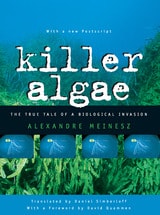
Killer Algae
Alexandre Meinesz
University of Chicago Press, 1999
Two decades ago, a Stuttgart zoo imported a lush, bright green seaweed for its aquarium. Caulerpa taxifolia was captively bred by the zoo and exposed, for years, to chemicals and ultraviolet light. Eventually a sample of it found its way to the Oceanographic Museum in Monaco, then headed by Jacques Cousteau. Fifteen years ago, while cleaning its tanks, that museum dumped the pretty green plant into the Mediterranean.
This supposedly benign little plant—that no one thought could survive the waters of the Mediterranean—has now become a pernicious force. Caulerpa taxifolia now covers 10,000 acres of the coasts of France, Spain, Italy, and Croatia, and has devastated the Mediterranean ecosystem. And it continues to grow, unstoppable and toxic. When Alexandre Meinesz, a professor of biology at the University of Nice, discovered a square-yard patch of it in 1984, he warned biologists and oceanographers of the potential species invasion. His calls went unheeded. At that point, one person could have pulled the small patch out and ended the problem. Now, however, the plant has defeated the French Navy, thwarted scientific efforts to halt its rampage, and continues its destructive journey into the Adriatic Sea.
Killer Algae is the biological and political horror story of this invasion. For despite Meinesz's pleas to scientists and the French government, no agency was willing to take responsibility for the seaweed, and while the buck was passed, the killer algae grew. And through it all, the Oceanographic Museum in Monaco sought to exculpate itself. In short, Killer Algae—part detective story and part bureaucratic object lesson—is a classic case of a devastating ecological invasion and how not to deal with it.
"[U]tterly fascinating, not only because of the ecological battles [Meinesz] describes but also because of the wondrous natural phenomena involved."—Richard Bernstein, New York Times
"Akin to Rachel Carson's Silent Spring, Killer Algae shows the courage of a voice in the wilderness."—Choice
"A textbook case of how not to manage an environmental disaster."—Kirkus Reviews
"Meinesz's story is a frightening one, reading more like a science fiction thriller than a scientific account."—Publishers Weekly
[more]
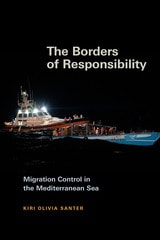
The Borders of Responsibility
Migration Control in the Mediterranean SeaKiri Olivia Santer
Duke University Press, 2026
While migrants face many dangers in attempting to reach Europe by crossing the Mediterranean Sea—from drowning to dying of dehydration—they also confront an elaborate legal system that is designed to return them to their countries of origin. In The Borders of Responsibility, Kiri Olivia Santer outlines the architecture of these legal systems and how they help Europe evade legal responsibility for rescuing migrants. Focusing on legal agreements between Italy and Libya that have resulted in the systematic interception of migrants, Santer shows how Europe’s liberal identity is belied by legal agreements that let migrants die at sea or that send them back to dangerous, exploitative situations in post-Gaddafi Libya or their home countries. Law, she argues, is the tool that enables states to affect control beyond territory, whilst disappearing their responsibility for violence across border assemblages. Through ethnographic fieldwork with migrants, lawyers, policy makers, and humanitarian workers, Santer shows how the law is too often used as an instrument of violence against migrants, who fall outside of conventional structures of legal rights.
[more]