Results by title
10 books match the query 'Melancholy'
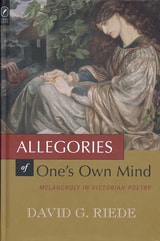
Allegories of One’s Own Mind
MELANCHOLY IN VICTORIAN POETRYDavid G. Riede
The Ohio State University Press, 2005

Allegories of One’s Own Mind
Melancholy in Victorian PoetryDavid G. Riede
The Ohio State University Press, 1900

Hope Draped in Black
Race, Melancholy, and the Agony of ProgressJoseph R. Winters
Duke University Press, 2016
Melancholy, Love, and Time
Boundaries of the Self in Ancient LiteraturePeter Toohey
University of Michigan Press, 2004

Orozco's American Epic
Myth, History, and the Melancholy of RaceMary K. Coffey
Duke University Press, 2020

Resilience & Melancholy
Pop Music, Feminism, NeoliberalismRobin James
University of Michigan Press, 2027
Following the first edition’s breakthrough study of popular feminism in 2010s popular music, this new edition of Resilience & Melancholy expands its original analysis into the 2020s. Robin James reads pop music from artists like Taylor Swift, Charli XCX, Rihanna, Beyonce, and Lady Gaga against the work of philosophers, feminists, and media theorists like Michel Foucault, Patricia Hill Collins, and Steven Shaviro. The result is an accessible dive into the last two decades of pop music and its politics.
Throughout the book, James shows how pop music and the politics of gender and race intersect in their discourse of resilience. While the book argues that resilience is a postfeminist strategy that invites female artists to lean into patriarchal, racial, capitalist privilege, it also finds that artists such as Beyonce, Rihanna, and Atari Teenage Riot offer a melancholic alternative to resilience in their work. As music has continued to evolve, this melancholic opposition has evolved and responded to the co-optation of melancholy into chill, the asset-ification of music, the de-monetization of musical labor, and the rise of a reactionary masculine resilience.
The Orphaned Imagination
Melancholy and Commodity Culture in English RomanticismGuinn Batten
Duke University Press, 1998
Building on the theoretical insights of Slavoj Zizek, Judith Butler, Julia Kristeva, and Eve Kosofsky Sedgwick, Batten interweaves the discourses of psychoanalysis, economics, biography, sexuality, melancholy, value, and exchange to question accepted ideas of how Romantic poetry works. She asserts that poetic labor is in fact paradigmatic of the kinds of production—and the kinds of desire—that capitalist culture renders invisible. If symbolic exchange, in cash or in words, requires the surrender of a beloved object, if healthy mourning requires an orphan to “work through” emotional loss through the consolation of art or a love for the living, then the rebellious Romantic poet, Batten contends, possessed unique insight into the alternative authority of a poetic language that renounced a culture of denial. Batten urges that scholars move beyond critical approaches condemning allegedly regressive forms of pleasure, recognizing that they, too, are haunted by melancholic attachments to dead poets as they conduct their work.
The Orphaned Imagination will interest anyone concerned with the claims of the English Romantic poets to a distinctive, valuable form of knowledge and those who may wonder about the power of contemporary theory to illuminate a traditional field.

The Tears of Things
Melancholy and Physical ObjectsPeter Schwenger
University of Minnesota Press, 2005
Peter Schwenger deftly weaves together philosophical and psychoanalytical theory with artistic practice. Concerned in part with the act of collecting, The Tears of Things is itself a collection of exemplary art objects—literary and cultural attempts to control and possess things—including paintings by Georgia O’Keeffe and René Magritte; sculpture by Louise Bourgeois and Marcel Duchamp; Joseph Cornell’s boxes; Edward Gorey’s graphic art; fiction by Virginia Woolf, Georges Perec, and Louise Erdrich; the hallucinatory encyclopedias of Jorge Luis Borges and Luigi Serafini; and the corpse photographs of Joel Peter Witkin.
However, these representations of objects perpetually fall short of our aspirations. Schwenger examines what is left over—debris and waste—and asks what art can make of these. What emerges is not an art that reassembles but one that questions what it means to assemble in the first place. Contained in this catalog of waste is that ultimate still life, the cadaver, where the subject-object dichotomy receives its final ironic reconciliation.
Peter Schwenger is professor of English at Mount St. Vincent University in Halifax, Nova Scotia. He is the author of Fantasm and Fiction: On Textual Envisioning, Letter Bomb: Nuclear Holocaust and the Exploding Word, and Phallic Critiques: Masculinity and Twentieth-Century Literature.

The Writing of Melancholy
Modes of Opposition in Early French ModernismRoss Chambers
University of Chicago Press, 1993
After the failed revolution of 1848, the sense of disillusion that swept through France deeply affected the literature of the time. Chambers argues that literary melancholy and disorientation constituted a symptom of historical conditions rather than, as many other critics contend, a willful resistance to them.
Enriched by careful readings of works by Flaubert, Nerval, Baudelaire, Gautier, and Hugo, this book is a subtle meditation on the powers of writing and reading and a suggestive contribution to current debates over the historical status of literary texts. Originally published in French, the book has been revised and expanded to include a new chapter on Gérard de Nerval's "Sylvie."
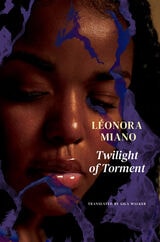
Twilight of Torment
MelancholyLéonora Miano
Seagull Books, 2022
Four women speak. They speak to the same man, who is not there. He is the son of the first, the great-yet-impossible love of the second, the platonic companion of the third, the older brother of the last. Speaking to him in his absence, it is to themselves that these women turn, examining their own stories to make sense of their journey, from twilight to twilight, through a mysterious stormy night in the middle of the dry season.
Together, the voices in Twilight of Torment: Melancholy, the first volume of a two-volume novel, perform a powerful and sometimes discordant jazz-inspired chorus about issues such as femininity, sexuality, self-love, and the intrusion of history into the intimate lives of people of African descent. Blackness confronts African-ness, love is sometimes discovered in the arms of another woman, the African renaissance tries to establish itself on the rubble of self-esteem damaged by history. Each of these women, with her own language and rhythm, ultimately represents a specific aspect of the tormented history of Africans in today’s world, and at the end of the night, they will each arrive at a dawn of hope.