Results by title

5 books match the query 'Melodrama in motion pictures'
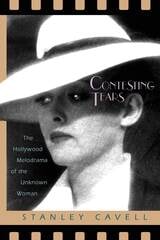
cover of Contesting Tears: The Hollywood Melodrama of the Unknown Woman

Contesting Tears

The Hollywood Melodrama of the Unknown Woman

Stanley Cavell

University of Chicago Press, 1996

What is marriage? Can a relationship dedicated to equality, friendship, and mutual education flower in an atmosphere of romance? What are the paths between loving another and knowing another? Stanley Cavell identified a genre of classic American films that engaged these questions in his study of comedies of remarriage, Pursuits of Happiness. With Contesting Tears, Cavell demonstrates that a contrasting genre, which he calls "the melodrama of the unknown woman," shares a surprising number and weave of concerns with those comedies.

Cavell provides close readings of four melodramas he finds definitive of the genre: Letter from an Unknown Woman, Gaslight, Now Voyager, and Stella Dallas. The women in these melodramas, like the women in the comedies, demand equality, shared education, and transfiguration, exemplifying for Cavell a moral perfectionism he identifies as Emersonian. But unlike the comedies, which portray a quest for a shared existence of expressiveness and joy, the melodramas trace instead the woman's recognition that in this quest she is isolated. Part of the melodrama concerns the various ways the men in the films (and the audiences of the films) interpret and desire to force the woman's consequent inaccessibility.

"Film is an interest of mine," Stanley Cavell has written, "or say a love, not separate from my interest in, or love of, philosophy." In Contesting Tears Cavell once again brilliantly unites his two loves, using detailed and perceptive musings on melodrama to reflect on philosophical problems of skepticism, psychoanalysis, and perfectionism. As he shows, the fascination and intelligence of such great stars as
Ingrid Bergman, Bette Davis, and Barbara Stanwyck illuminate, as they are illuminated by, the topics and events of these beloved and enduring films.
[more]
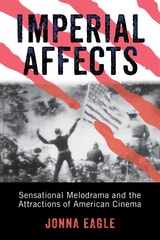
cover of Imperial Affects: Sensational Melodrama and the Attractions of American Cinema

Imperial Affects

Sensational Melodrama and the Attractions of American Cinema

Eagle, Jonna

Rutgers University Press, 2017
Imperial Affects is the first sustained account of American action-based cinema as melodrama. From the earliest war films through the Hollywood Western and the late-century action cinema, imperialist violence and mobility have been produced as sites of both visceral pleasure and moral virtue. Suffering and omnipotence operate as twinned affects in this context, inviting identification with an American national subject constituted as both victimized and invincible—a powerful and persistent conjunction traced here across a century of cinema.
[more]
cover of Melodrama as Provocateur

Melodrama as Provocateur

Linda Williams. Edited by Christine Gledhill, Laura Horak, and Elisabeth R. Anker

Duke University Press, 2026
As one of the most influential contemporary film scholars, Linda Williams brought her critical feminist lens to some of society’s most maligned and underappreciated film genres. Melodrama as Provocateur showcases what was to be Williams's last project in which, insisting on melodrama as a cross-generic, cross-media mode, she investigates the divergence between French and American attitudes to film melodrama. A diverse group of scholars respond to her provocations, rethinking melodrama’s transnational, transmedia histories and potential futures. Their contributions examine how melodrama became, as Williams argues, the default mode of contemporary media, and demonstrate how it plays an increasingly powerful role in public discourse and political rhetoric today.
[more]
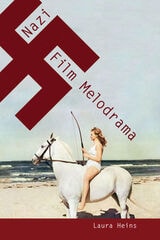
cover of Nazi Film Melodrama

Nazi Film Melodrama

Laura Heins

University of Illinois Press, 2013
Cultural productions in the Third Reich often served explicit propaganda functions of legitimating racism and glorifying war and militarism. Likewise, the proliferation of domestic and romance films in Nazi Germany also represented an ideological stance. Rather than reinforcing traditional gender role divisions and the status quo of the nuclear family, these films were much more permissive about desire and sexuality than previously assumed. Focusing on German romance films, domestic melodramas, and home front films from 1933 to 1945, Nazi Film Melodrama shows how melodramatic elements in Nazi cinema functioned as part of a project to move affect, body, and desire beyond the confines of bourgeois culture and participate in a curious modernization of sexuality engineered to advance the imperialist goals of the Third Reich.
 
Offering a comparative analysis of Nazi productions with classical Hollywood films of the same era, Laura Heins argues that German fascist melodramas differed from their American counterparts in their negative views of domesticity and in their use of a more explicit antibourgeois rhetoric. Nazi melodramas, film writing, and popular media appealed to viewers by promoting liberation from conventional sexual morality and familial structures, presenting the Nazi state and the individual as dynamic and revolutionary. Some spectators objected to the eroticization and modernization of the public sphere under Nazism, however, pitting Joseph Goebbels' Ministry of Propaganda against more conservative film audiences in a war over the very status of domesticity and the shape of the family. Drawing on extensive archival research, this perceptive study highlights the seemingly contradictory aspects of gender representation and sexual morality in Nazi-era cinema.

[more]
cover of The Home in Hollywood Melodrama

The Home in Hollywood Melodrama

Conn Holohan

Rutgers University Press, 2027

The Home in Hollywood Melodrama considers the home’s narrative, thematic, and visual construction within domestic melodramas of the 1930s and 1940s, exploring the assumptions of gender, class, and race through which the home is visualized on screen. Informed by approaches from genre studies, architectural and urban studies, feminist film theory, critical race theory, and phenomenology, amongst others, the book traces how routine domestic activities and unremarkable stylistic gestures become charged with meaning via melodrama’s emphasis on recurrence and return and its moral elevation of victimhood. Drawing on original archival research and detailed textual analysis, The Home in Hollywood Melodrama offers a series of detailed case studies that explore the onscreen home as a product of both Hollywood production norms and wider cultural conceptions of belonging. Addressing questions of female movement and labor, property relations and class, race, and national identity, the book argues that the generic structures of domestic melodrama are fundamental to understanding how the home within these films takes shape onscreen.

[more]