Results by title
2 books match the query 'Memory in motion pictures'
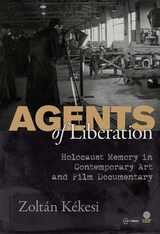
Agents of Liberations
Holocaust Memory in Contemporary Art and Documentary FilmZoltán Kékesi
Central European University Press, 2015
The book explores representations of the Holocaust in contemporary art practices. Through carefully selected art projects, the author illuminates the specific historical, cultural, and political circumstances that influence the way we speak—or do not speak—about the Holocaust. The book's international focus brings into view film projects made by key artists reflecting critically upon forms of Holocaust memory in a variety of geographical contexts. Kékesi connects the ethical implications of the memory of the Holocaust with a critical analysis of contemporary societies, focusing upon artists who are deeply engaged in doing both of the above within three regions: Eastern Europe (especially Poland), Germany, and Israel. The case studies apply current methods of contemporary art theory, unfolding their implications in terms of memory politics and social critique.
[more]
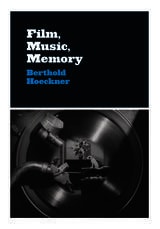
Film, Music, Memory
Berthold Hoeckner
University of Chicago Press, 2019
Film has shaped modern society in part by changing its cultures of memory. Film, Music, Memory reveals that this change has rested in no small measure on the mnemonic powers of music. As films were consumed by growing American and European audiences, their soundtracks became an integral part of individual and collective memory. Berthold Hoeckner analyzes three critical processes through which music influenced this new culture of memory: storage, retrieval, and affect. Films store memory through an archive of cinematic scores. In turn, a few bars from a soundtrack instantly recall the image that accompanied them, and along with it, the affective experience of the movie.
Hoeckner examines films that reflect directly on memory, whether by featuring an amnesic character, a traumatic event, or a surge of nostalgia. As the history of cinema unfolded, movies even began to recall their own history through quotations, remakes, and stories about how cinema contributed to the soundtrack of people’s lives. Ultimately, Film, Music, Memory demonstrates that music has transformed not only what we remember about the cinematic experience, but also how we relate to memory itself.
Hoeckner examines films that reflect directly on memory, whether by featuring an amnesic character, a traumatic event, or a surge of nostalgia. As the history of cinema unfolded, movies even began to recall their own history through quotations, remakes, and stories about how cinema contributed to the soundtrack of people’s lives. Ultimately, Film, Music, Memory demonstrates that music has transformed not only what we remember about the cinematic experience, but also how we relate to memory itself.
[more]