Results by title
42 books match the query 'Mental illness'

African Pharmakon
The Asylum as Shrine from Slavery to the ReturnNana Osei Quarshie
University of Chicago Press, 2025
For centuries, mental distress in West Africa has been subject to a mix of healing, harming, ritual, and regulation. In African Pharmakon, Nana Osei Quarshie questions conventional narratives about colonial psychiatry. Instead of displacing African therapeutic traditions, he argues, European psychiatric institutions in fact built upon them, adapting long-standing techniques of social control and healing.
With a focus on Ghana, Quarshie explores the shifting landscape of West African mental health practices, tracking their transformation from shrine-based rituals to colonial asylums and modern psychiatric institutions. Combining extensive archival research and ethnographic fieldwork, including the first scholarly examination of patient records from the Accra Psychiatric Hospital, Quarshie identifies five enduring techniques that have shaped the treatment of mental distress: spiritual pawning, logging, manhunting, mass expulsion, and pharmacotherapy.
Rejecting the simplistic opposition of Indigenous healing versus colonial oppression, African Pharmakon provides a nuanced account of how psychiatric care in Ghana became a tool of empowerment as well as exclusion. This pioneering study reframes our understanding of psychiatry and mental health governance in West Africa, past and present.

Arctic Madness
The Anthropology of a DelusionPierre Déléage
HAU, 2020
Articulations
The Body and Illness in PoetryJon Mukand
University of Iowa Press, 1994
In 1987 poet and physician Jon Mukand published Sutured Words, a volume of contemporary poems to help patients, their families and friends, and all health care professionals embrace the complexity of healing, illness, and death. Robert Coles called the collection “a wonderful source of inspiration and instruction for any of us who are trying to figure out what our work means”; Norman Cousins was impressed by the “discernment and high quality of the selections.” Now, in Articulations, Mukand adds more than a hundred new poems to the strongest poems from Sutured Words to give us a lyrical, enlightened understanding of the human dimensions of suffering and illness
Black Skin, White Coats
Nigerian Psychiatrists, Decolonization, and the Globalization of PsychiatryMatthew M. Heaton
Ohio University Press, 2013
Black Skin, White Coats is a history of psychiatry in Nigeria from the 1950s to the 1980s. Working in the contexts of decolonization and anticolonial nationalism, Nigerian psychiatrists sought to replace racist colonial psychiatric theories about the psychological inferiority of Africans with a universal and egalitarian model focusing on broad psychological similarities across cultural and racial boundaries. Particular emphasis is placed on Dr. T. Adeoye Lambo, the first indigenous Nigerian to earn a specialty degree in psychiatry in the United Kingdom in 1954. Lambo returned to Nigeria to become the medical superintendent of the newly founded Aro Mental Hospital in Abeokuta, Nigeria’s first “modern” mental hospital. At Aro, Lambo began to revolutionize psychiatric research and clinical practice in Nigeria, working to integrate “modern” western medical theory and technologies with “traditional” cultural understandings of mental illness. Lambo’s research focused on deracializing psychiatric thinking and redefining mental illness in terms of a model of universal human similarities that crossed racial and cultural divides.
Black Skin, White Coats is the first work to focus primarily on black Africans as producers of psychiatric knowledge and as definers of mental illness in their own right. By examining the ways that Nigerian psychiatrists worked to integrate their psychiatric training with their indigenous backgrounds and cultural and civic nationalisms, Black Skin, White Coats provides a foil to Frantz Fanon’s widely publicized reactionary articulations of the relationship between colonialism and psychiatry. Black Skin, White Coats is also on the cutting edge of histories of psychiatry that are increasingly drawing connections between local and national developments in late-colonial and postcolonial settings and international scientific networks. Heaton argues that Nigerian psychiatrists were intimately aware of the need to engage in international discourses as part and parcel of the transformation of psychiatry at home.

Country Songs for Alice
Emma Binder
Tupelo Press, 2024
In Country Songs for Alice, a nonbinary, queer narrator passes through the crucible of love, romance, and heartbreak against the backdrop of rural America—a landscape which offers luminous belonging, even as the hazards of homophobia, loneliness, and isolation loom large. Part roadtrip, part mixtape, these poems are explorations of love, music, romance, pageantry, loneliness, and belonging in the rural places and small towns that seem to preclude queer culture. Country Songs for Alice not only tells the story of a relationship and its dissolution but reclaims country western imagery and aesthetics for a queer audience, dousing the narrator’s experience in the language of cowboys, horses, rodeos, trucks, and desert skies.

Court of Last Resort
Mental Illness and the LawCarol A. B. Warren
University of Chicago Press, 1982
Crime, Punishment, and Mental Illness
Law and the Behavioral Sciences in ConflictErickson, Patricia
Rutgers University Press, 2008
In Crime, Punishment, and Mental Illness, Patricia E. Erickson and Steven K. Erickson explore how societal beliefs about free will and moral responsibility have shaped current policies and they identify the differences among the goals, ethos, and actions of the legal and health care systems. Drawing on high-profile cases, the authors provide a critical analysis of topics, including legal standards for competency, insanity versus mental illness, sex offenders, psychologically disturbed juveniles, the injury and death rates of mentally ill prisoners due to the inappropriate use of force, the high level of suicide, and the release of mentally ill individuals from jails and prisons who have received little or no treatment.

Crip Screens
Countering Psychiatric Media TechnologiesOlivia Banner
Duke University Press, 2025

Deprived of Sense and Intellect
Insanity, Possession, and Diagnosis in Medieval EuropeLeigh Ann Craig
University of Michigan Press, 2026
While medieval communities assigned these tensions to a malfunction of consciousness in a single person, medieval miracle texts also reveal how the function and malfunction of consciousness was named and classified. In studying these texts, Leigh Ann Craig explores the terminology and rhetoric used to diagnose a loss of mind as either from natural causes or as an effect of demonic predation, tracing the use of Latin vocabulary in medical compendia, law, and theology. Deprived of Sense and Intellect finds that since diagnoses were difficult and frequently subject to doubt, they varied based on regional cultures of disability in northern and southern Europe, the influences on the development of community consensus in Latin Europe in the Middle Ages, and assumptions based on gender, material evidence, and self-diagnosis.
Deviance and Medicalization
From Badness to SicknessPeter Conrad and Joseph W. Schneider
Temple University Press, 1992

Doing Nothing
James Currie
Duke University Press, 2026

Faith and Mental Health
Religious Resources for HealingHarold G. Koenig
Templeton Press, 2005
Dr. Harold Koenig opens a window on mental health, providing an unprecedented source of practical information about the relationship between religion and mental health. He examines how Christianity and other world religions deliver mental health services today, and he makes recommendations, based on research, expertise, and experience, for new programs to meet local needs.
Meticulously researched and documented, Faith and Mental Health includes
- Research on the relationship between religion and positive emotions, psychiatric illnesses, and severe and persistent mental disorders
- Ways in which religion has influenced mental health historically, and how now and in the future it can be involved with mental health
- A comprehensive description and categorization of Christian and non-Christian faith-based organizations that provide mental health resources
- Resources for religious professionals and faith communities on how to design effective programs
Presenting a combination of the history and current research of mental health and religion along with a thorough examination of faith-based organizations operating in the field, this book is a one-of-a-kind resource for the healthcare community; its valuable research and insights will benefit medical and religious professionals, and anyone concerned with the future of mental health care.
In the Shadow of Diagnosis
Psychiatric Power and Queer LifeRegina Kunzel
University of Chicago Press, 2024
In the mid-twentieth century, American psychiatrists proclaimed homosexuality a mental disorder, one that was treatable and amenable to cure. Drawing on a collection of previously unexamined case files from St. Elizabeths Hospital, In the Shadow of Diagnosis explores the encounter between psychiatry and queer and gender-variant people in the mid- to late-twentieth-century United States. It examines psychiatrists’ investments in understanding homosexuality as a dire psychiatric condition, a judgment that garnered them tremendous power and authority at a time that historians have characterized as psychiatry’s “golden age.” That stigmatizing diagnosis made a deep and lasting impact, too, on queer people, shaping gay life and politics in indelible ways. In the Shadow of Diagnosis helps us understand the adhesive and ongoing connection between queerness and sickness.
Knot of the Soul
Madness, Psychoanalysis, IslamStefania Pandolfo
University of Chicago Press, 2018
Knot of the Soul moves from the experience of psychosis in psychiatric hospitals, to the visionary torments of the soul in poor urban neighborhoods, to the melancholy and religious imaginary of undocumented migration, culminating in the liturgical stage of the Qur’anic cure. Demonstrating how contemporary Islamic cures for madness address some of the core preoccupations of the psychoanalytic approach, she reveals how a religious and ethical relation to the “ordeal” of madness might actually allow for spiritual transformation.
This sophisticated and evocative work illuminates new dimensions of psychoanalysis and the ethical imagination while also sensitively examining the collective psychic strife that so many communities endure today.
Madness Is Civilization
When the Diagnosis Was Social, 1948-1980Michael E. Staub
University of Chicago Press, 2011
In the 1960s and 1970s, a popular diagnosis for America’s problems was that society was becoming a madhouse. In this intellectual and cultural history, Michael E. Staub examines a time when many believed insanity was a sane reaction to obscene social conditions, psychiatrists were agents of repression, asylums were gulags for society’s undesirables, and mental illness was a concept with no medical basis.
The first study to describe how social diagnostic thinking emerged, Madness Is Civilization casts new light on the politics of the postwar era.
Madness and Enterprise
Psychiatry, Economic Reason, and the Emergence of Pathological ValueNima Bassiri
University of Chicago Press, 2024
Madness and Enterprise reveals the economic norms embedded within psychiatric thinking about mental illness in the North Atlantic world. Over the course of the nineteenth century, various forms of madness were subjected to a style of psychiatric reasoning that was preoccupied with money. Psychiatrists across Western Europe and the United States attributed financial and even moral value to an array of pathological conditions, such that some mental disorders were seen as financial assets and others as economic liabilities. By turning to economic conduct and asking whether potential patients appeared capable of managing their financial affairs or even generating wealth, psychiatrists could often bypass diagnostic uncertainties about a person’s mental state.
Through an exploration of the intertwined histories of psychiatry and economic thought, Nima Bassiri shows how this relationship transformed the very idea of value in the modern North Atlantic, as the most common forms of social valuation—moral value, medical value, and economic value—were rendered equivalent and interchangeable. If what was good and what was healthy were increasingly conflated with what was remunerative (and vice versa), then a conceptual space opened through which madness itself could be converted into an economic form and subsequently redeemed—and even revered.

Madness and Grace
A Practical Guide for Pastoral Care and Serious Mental IllnessMatthew Stanford
Templeton Press, 2021
Research tells us that when most people suffer from a mental health crisis, the first person they turn to for help is not a physician, a psychiatrist, or a social worker, but a pastor, a priest, or a minister. In other words, a leader in their church. Unfortunately, many church leaders are not trained to recognize mental illness and don’t know when to refer someone to a mental health professional. The consequence—unintended yet tragic—is continued and unnecessary suffering.
Madness and Grace is a comprehensive guide for church ministry to alleviate this situation. Written by Dr. Matthew Stanford, the book is carefully constructed to help build competency in detecting a wide spectrum of mental disorders, such as knowing when a person is contemplating suicide based on telltale patterns of speech. It also explodes common discriminatory myths that stigmatize people with mental illness, such as the myth that they are more prone to violence than others.
Dr. Stanford has treated clients throughout his career who were afflicted with all manner of mental disorders. In Madness and Grace, he takes the full extent of his experience and makes it accessible and actionable for the lay reader. He begins by explaining what constitutes a mental illness and how these disorders are classified according to science. He next teaches how to notice the presence of a mental illness by listening carefully to phraseology, observing behavior, and asking discerning questions. He goes on to discuss methods of treatment, common religious concerns about mental health, and ways church communities can support people on the road to recovery.
As a Christian, Dr. Stanford wants his fellow believers to know that acknowledging and seeking help for a mental illness is not a sign of weak faith. That’s why, in addition to sharing his medical expertise with church leaders, he commends pertinent biblical passages that underscore God’s concern for our mental wellbeing. These passages provide strength and comfort as complements to clinically-derived treatment and are essential to Dr. Stanford’s approach. “When working with those in severe psychological distress,” he writes, “compassion and grace are always the first line of pastoral care.”

Madness, Language, Literature
Michel Foucault
University of Chicago Press, 2023
Perceiving an enigmatic relationship between madness, language, and literature, French philosopher Michel Foucault developed ideas during the 1960s that are less explicit in his later, more well-known writings. Collected here, these previously unpublished texts reveal a Foucault who undertakes an analysis of language and experience detached from their historical constraints. Three issues predominate: the experience of madness across societies; madness and language in Artaud, Roussel, and Baroque theater; and structuralist literary criticism. Not only do these texts pursue concepts unique to this period such as the “extra-linguistic,” but they also reveal a far more complex relationship between structuralism and Foucault than has typically been acknowledged.

Mary Lincoln's Insanity Case
A Documentary HistoryJason Emerson
University of Illinois Press, 2012
In 1875 Mary Lincoln, the widow of a revered president, was committed to an insane asylum by her son, Robert. The trial that preceded her internment was a subject of keen national interest. The focus of public attention since Abraham Lincoln's election in 1860, Mary Lincoln had attracted plentiful criticism and visible scorn from much of the public, who perceived her as spoiled, a spendthrift, and even too much of a Southern sympathizer. Widespread scrutiny only increased following her husband's assassination in 1865 and her son Tad's death six years later, after which her overwhelming grief led to the increasingly erratic behavior that led to her being committed to a sanitarium. A second trial a year later resulted in her release, but the stigma of insanity stuck. In the years since, questions emerged with new force, as the populace and historians debated whether she had been truly insane and subsequently cured, or if she was the victim of family maneuvering.
In this volume, noted Lincoln scholar Jason Emerson provides a documentary history of Mary Lincoln's mental illness and insanity case, evenhandedly presenting every possible primary source on the subject to enable a clearer view of the facts. Beginning with documents from the immediate aftermath of her husband's assassination and ending with reminiscences by friends and family in the mid-twentieth century, Mary Lincoln's Insanity Case: A Documentary History compiles more than one hundred letters, dozens of newspaper articles, editorials, and legal documents, and the daily patient progress reports from Bellevue Place Sanitarium during Mary Lincoln's incarceration. Including many materials that have never been previously published, Emerson also collects multiple reminiscences, interviews, and diaries of people who knew Mary Lincoln or were involved in the case, including the first-hand recollection of one of the jurors in the 1875 insanity trial.
Suggesting neither accusation nor exoneration of the embattled First Lady, Mary Lincoln's Insanity Case: A Documentary History gives scholars and history enthusiasts incomparable access to the documents and information crucial to understanding this vexing chapter in American history.
Media Madness
Public Images of Mental IllnessOtto F. Wahl
Rutgers University Press, 1997
"Media Madness is a most timely, readable, and useful book, exposing, as it does, the myths about mental illness that most of us live by--myths that are as destructive as they are pervasive. Wahl is especially good at showing, in detail, the many ways in which false views of mental illness, purveyed in the media, shape the ways even the most enlightened of us view the world around us. A most thoughtful, stimulating book, from which I learned a great deal." --Jay Neugeboren, author of Imagining Robert: My Brother, Madness, and Survival--A Memoir
"An outstanding book . . . well-researched . . . it is 'must reading.'" --Laurie Flynn, former executive director, National Alliance for the Mentally Ill "The rampant inaccuracies about mental illnesses in newspapers, magazines, movies, and books make it clear that this is not merely stereotyping, but rather a pervasive ignorance. Dr. Wahl's book goes far to explain where the errors are and to educate and sensitize the reader to frequent inaccuracies. In addition, the book is very readable." --NAMI Advocate
"What do the media have to do with one's perception of mental illness? Wahl takes an in-depth look a how unfavorable public images of mental illness are often inaccurate. Statistics show that one out of every five people in the U.S. will experience a psychiatric illness. With boldness and sensitivity, Wahl takes a powerful look at the inaccurate stereotypes created by the media."
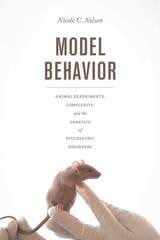
Model Behavior
Animal Experiments, Complexity, and the Genetics of Psychiatric DisordersNicole C. Nelson
University of Chicago Press, 2018
Behavior genetics is a particularly challenging field for making a clear-cut case that mouse experiments work, because researchers believe that both the phenomena they are studying and the animal models they are using are complex. These assumptions of complexity change the nature of what laboratory work produces. Whereas historical and ethnographic studies traditionally portray the laboratory as a place where scientists control, simplify, and stabilize nature in the service of producing durable facts, the laboratory that emerges from Nelson’s extensive interviews and fieldwork is a place where stable findings are always just out of reach. The ongoing work of managing precarious experimental systems means that researchers learn as much—if not more—about the impact of the environment on behavior as they do about genetics. Model Behavior offers a compelling portrait of life in a twenty-first-century laboratory, where partial, provisional answers to complex scientific questions are increasingly the norm.

My Father, the Messiah
A MemoirGil Z. Hochberg
Duke University Press, 2026
On Our Own, Together
Peer Programs for People with Mental IllnessSally Clay
Vanderbilt University Press, 2005
The book clusters the COSPs into three key types: drop-in centers, which provide varied services for their members, including meals, housing assistance, and stigma-free environments; educational programs, which train mental health consumers in recovery skills for themselves and for other consumers; and services based on peer support and mentoring.
Despite their differences, the book shows, the programs share many essential characteristics. Most significantly, they demonstrate the benefits of allowing mental health consumers to operate and govern their own organizations. Also important is their emphasis on equality, mutuality, empowerment, recovery, belonging, and hope in administering services. Such core values, the book suggests, distinguish peer-run programs from the professional services that have long dominated the mental health system.
In contrast to the dry, clinical reports that make up much of the current literature, this book is written "from the inside out" and, for the most part, by the people who developed the programs and who live them every day. It reveals peer-run programs as valuable resources within the mental health system and, indeed, a precious necessity for many consumers.
Origins of Psychopathology
The Phylogenetic and Cultural Basis of Mental IllnessFábrega Jr., Horacio
Rutgers University Press, 2002
In Origins of Psychopathology, Horacio Fárega Jr. employs principles of evolutionary biology to better understand the significance of mental illness. He explores whether what psychiatry has categorized as mental disorders could have existed during earlier phases of human evolution. Fábrega approaches the prominent features of mental disorders as adaptive responses to the environment and life’s circumstances, which in turn can only be understood in the context of our evolutionary past. Taking his cue from theoretical issues raised by research into primate behavior and early hominid evolution, he poses the question: What, if any, aspects of mental illness are rooted in our evolution? Does mental illness occur in primates and other animals, and if so, what does this tell us about mental illness in human evolution? How has mental illness played an adaptive role? How has the development of language and higher cognitive functions affected characteristics of psychopathology? Fábrega synthesizes insights from both the clinical and the evolutionary points of view. This facet of psychopathology, which involves its origins and manifestations viewed across the expanse of human evolution, has, until now, been largely neglected in psychiatric education, theory, and practice.

Quite Mad
An American Pharma MemoirSarah Fawn Montgomery
The Ohio State University Press, 2018
Blending memoir with literary journalism, Montgomery’s Quite Mad: An American Pharma Memoir examines America’s history of mental illness treatment—lobotomies to sterilization, the rest cure to Prozac—to challenge contemporary narratives about mental health. Questioning what it means to be a woman with highly stigmatized disorders, Montgomery also asks why mental illness continues to escalate in the United States despite so many “cures.” Investigating the construction of mental illness as a “female” malady, Montgomery exposes the ways current attitudes towards women and their bodies influence madness as well as the ways madness has transformed to a chronic Illness in our cultural imagination. Montgomery’s Quite Mad is one woman’s story, but it offers a beacon of hope and truth for the millions of individuals living with mental illness and issues a warning about the danger of diagnosis and the complex definition of sanity.

Refusing Care
Forced Treatment and the Rights of the Mentally IllElyn R. Saks
University of Chicago Press, 2002
Focusing on overinterventionist approaches, Refusing Care explores when, if ever, the mentally ill should be treated against their will. Basing her analysis on case and empirical studies, Elyn R. Saks explores dilemmas raised by forced treatment in three contexts—civil commitment (forced hospitalization for noncriminals), medication, and seclusion and restraints. Saks argues that the best way to solve each of these dilemmas is, paradoxically, to be both more protective of individual autonomy and more paternalistic than current law calls for. For instance, while Saks advocates relaxing the standards for first commitment after a psychotic episode, she also would prohibit extreme mechanical restraints (such as tying someone spread-eagled to a bed). Finally, because of the often extreme prejudice against the mentally ill in American society, Saks proposes standards that, as much as possible, should apply equally to non-mentally ill and mentally ill people alike.
Mental health professionals, lawyers, disability rights activists, and anyone who wants to learn more about the way the mentally ill are treated—and ought to be treated—in the United States should read Refusing Care.

Revels in Madness
Insanity in Medicine and LiteratureAllen Thiher
University of Michigan Press, 2004
---Louis Sass, author of Madness and Modernism
"The scope of this book is daunting, ranging from madness in the ancient Greco-Roman world, to Christianized concepts of medieval folly, through the writings of early modern authors such as Shakespeare, Cervantes, and Descartes, and on to German Romantic philosophy, fin de siècle French poetry, and Freud . . . Artaud, Duras, and Plath."
---Isis
"This provocative and closely argued work will reward many readers."
---Choice
In Revels in Madness, Allen Thiher surveys a remarkable range of writers as he shows how conceptions of madness in literature have reflected the cultural assumptions of their era. Thiher underscores the transition from classical to modern theories of madness-a transition that began at the end of the Enlightenment and culminates in recent women's writing that challenges the postmodern understanding of madness as a fall from language or as a dysfunction of culture.
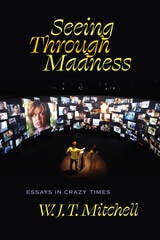
Seeing Through Madness
Essays in Crazy TimesW. J. T. Mitchell
University of Chicago Press, 2027
An insightful reconsideration of our historical moment seen through the lens of madness.
In Seeing Through Madness, W. J. T. Mitchell pursues the idea of “putting madness to work” by transforming it from an individual affliction—an illness to be treated—into a critical framework for understanding the human condition. The human species is now a danger to itself and others—the very definition of mental disorder in most societies. Therefore, it is time, Mitchell argues, for a fundamental reconsideration of madness, not only as a subject in media and the arts but more fundamentally as a “critical optic” on our historical moment. It is time to see through madness in all its variations, to see by means of it as a template for understanding, and to see it through to some form of wisdom.
While drawing a sense of urgency from Mitchell’s conviction that the whole world is experiencing a widespread political madness, the book specifically focuses on American psychoses and collective disorders, not least the country’s delusional exceptionalism.
Incisive, eclectic, and occasionally enraged, Mitchell’s essays are the guide we need to see us through crazy times.

Seriously Mad
Mental Distress and the Broadway MusicalAleksei Grinenko
University of Michigan Press, 2023
Theatermakers in the United States have long been drawn to madness as a source of dramatic spectacle. During the Broadway musical’s golden age in the mid-twentieth century, creative teams used the currently in-vogue psychoanalytic ideas about mental life to construct troubled characters at odds with themselves and their worlds. As the clinical and cultural profile of madness transformed over the twentieth century, musicals continued to delve into the experience of those living with mental pain, trauma, and unhappiness.
Seriously Mad offers a dynamic account of stage musicals’ engagement with historically significant theories about mental distress, illness, disability, and human variance in the United States. By exploring who is considered mad and what constitutes madness at different moments in U.S. history, Aleksei Grinenko shows how, in attempts to bring the musicals closer to highbrow sophistication, theater dramatized serious medical conditions and social problems. Among the many Broadway productions discussed are Next to Normal, A Strange Loop, Sweeney Todd, Man of La Mancha, Gypsy, Oklahoma!, and Lady in the Dark.

Shamans, Mystics and Doctors
A Psychological Inquiry into India and its Healing TraditionsSudhir Kakar
University of Chicago Press, 1990
"With extraordinary sympathy, open-mindedness, and insight Sudhir Kakar has drawn from both his Eastern and Western backgrounds to show how the gulf that divides native healer from Western psychiatrist can be spanned."—Rosemary Dinnage, New York Review of Books
"Each chapter describes the geographical and cultural context within which the healers work, their unique approach to healing mental illness, and . . . the philosophical and religious underpinnings of their theories compared with psychoanalytical theory."—Choice
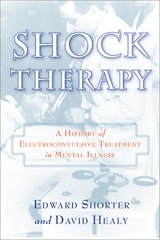
Shock Therapy
A History of Electroconvulsive Treatment in Mental IllnessShorter, Edward
Rutgers University Press, 2007
In this book, Edward Shorter and David Healy trace the controversial history of ECT and other "shock" therapies. Drawing on case studies, public debates, extensive interviews, and archival research, the authors expose the myths about ECT that have proliferated over the years. By showing ECT's often life-saving results, Shorter and Healy endorse a point of view that is hotly contested in professional circles and in public debates, but for the nearly half of all clinically depressed patients who do not respond to drugs, this book brings much needed hope.

Silent Cells
The Secret Drugging of Captive AmericaAnthony Ryan Hatch
University of Minnesota Press, 2019
A critical investigation into the use of psychotropic drugs to pacify and control inmates and other captives in the vast U.S. prison, military, and welfare systems
For at least four decades, U.S. prisons and jails have aggressively turned to psychotropic drugs—antidepressants, antipsychotics, sedatives, and tranquilizers—to silence inmates, whether or not they have been diagnosed with mental illnesses. In Silent Cells, Anthony Ryan Hatch demonstrates that the pervasive use of psychotropic drugs has not only defined and enabled mass incarceration but has also become central to other forms of captivity, including foster homes, military and immigrant detention centers, and nursing homes.
Silent Cells shows how, in shockingly large numbers, federal, state, and local governments and government-authorized private agencies pacify people with drugs, uncovering patterns of institutional violence that threaten basic human and civil rights. Drawing on publicly available records, Hatch unearths the coercive ways that psychotropics serve to manufacture compliance and docility, practices hidden behind layers of state secrecy, medical complicity, and corporate profiteering.
Psychotropics, Hatch shows, are integral to “technocorrectional” policies devised to minimize public costs and increase the private profitability of mass captivity while guaranteeing public safety and national security. This broad indictment of psychotropics is therefore animated by a radical counterfactual question: would incarceration on the scale practiced in the United States even be possible without psychotropics?

Small Altars
Justin Gardiner
Tupelo Press, 2024
In Small Altars, Justin Gardiner delves into the world of comic books and superheroes as a means for coming to terms with the many struggles of his brother’s life, as well as his untimely death, offering a lyric and honest portrayal of the tolls of mental illness, the redemptive powers of art and familial love, and the complex workings of grief.
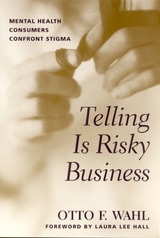
Telling is Risky Business
Mental Health Consumers Confront StigmaWahl, Otto F
Rutgers University Press, 1999
Individuals with a mental illnesses—such as schizophrenia, bipolar disorder, and depression—have a double burden, Otto Wahl writes. Not only must they cope with disabling disorders, but they also must contend with the negative attitudes of the public toward those disorders. To truly understand the full extent of this stigma, we need to hear from the consumers (the term used in this book for people with mental illness) themselves. Telling is Risky Business is the first book to examine what these people have to say about their own experiences of stigma.
The center of Wahl’s research was a nationwide survey in which mental health consumers across the United States were asked, both through questionnaires and interviews, to tell about their experiences of stigma and discrimination. The research comes to life as many of the over 1,300 respondents’ acute observations are reported directly, in their own words.
Telling is Risky Business vividly covers topics such as isolation, rejection, discouragement, and discrimination. Consumers also offer perceptive observations of how our society depicts people with mental illness. The book ends with suggestions for strategies and coping; an invaluable section on resources available for fighting stigma guarantees its place on many bookshelves. As Laura Lee Hall writes, “This book will likely open your eyes to a topic that you probably did not understand.”

The Dark Days of Abraham Lincoln's Widow, as Revealed by Her Own Letters
Myra Helmer Pritchard, edited and annotated by Jason Emerson
Southern Illinois University Press, 2011
Written in 1927 but barred from timely publication by the Lincoln family, The Dark Days of Abraham Lincoln's Widow, as Revealed by Her Own Letters is based on nearly two dozen intimate letters written between Mary Lincoln and her close friend Myra Bradwell mainly during the former's 1875 incarceration in an insane asylum. By the 1920s most accounts of Mrs. Lincoln focused on her negative qualities and dismissed her as "crazy." Bradwell's granddaughter Myra Helmer Pritchard wrote this distinctly sympathetic manuscript at the behest of her mother, who wished to vindicate Mary Lincoln in the public eye by printing the private correspondence. Pritchard fervently defends Mrs. Lincoln's conduct and sanity, arguing that she was not insane but rather the victim of an overzealous son who had his mother committed.
The manuscript and letters were thought to have been destroyed, but fortunately the Lincolns' family lawyer stored copies in a trunk, where historian Jason Emerson discovered them in 2005. While leaving the manuscript intact, Emerson has enhanced it with an introduction and detailed annotations. He fills in factual gaps; provides background on names, places, and dates; and analyzes Pritchard's interpretations, making clear where she was right and where her passion to protect Mrs. Lincoln led to less than meticulous research and incorrect conclusions. This volume features an easy-to-follow format that showcases Pritchard's text on the left-hand pages and Emerson's insightful annotations on the right-hand pages.
Following one of the most revered and reviled, famous and infamous of the First Ladies, this book provides a unique perspective of Mrs. Lincoln's post-White House years, with an emphasis on her commitment to a sanitarium. Emerson's contributions make this volume a valuable addition to the study of the Lincoln family. This fascinating work gives today's Lincoln enthusiasts the chance to read this intriguing interpretation of the former First Lady that predates nearly every other book written about her.
The Illustrated Version of Things
Affinity Konar
University of Alabama Press, 2009

The Invention of Madness
State, Society, and the Insane in Modern ChinaEmily Baum
University of Chicago Press, 2018
Focusing on typically marginalized historical actors, including municipal functionaries and the urban poor, The Invention of Madness shifts our attention from the elite desire for modern medical care to the ways in which psychiatric discourses were implemented and redeployed in the midst of everyday life. New meanings and practices of madness, Baum argues, were not just imposed on the Beijing public but continuously invented by a range of people in ways that reflected their own needs and interests. Exhaustively researched and theoretically informed, The Invention of Madness is an innovative contribution to medical history, urban studies, and the social history of twentieth-century China.
The Last Asylum
A Memoir of Madness in Our TimesBarbara Taylor
University of Chicago Press, 2015
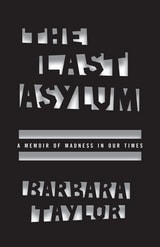
The Last Asylum is Taylor’s breathtakingly blunt and brave account of those years. In it, Taylor draws not only on her experience as a historian, but also, more importantly, on her own lived history at Friern— once known as the Colney Hatch Lunatic Asylum and today the site of a luxury apartment complex. Taylor was admitted to Friern in July 1988, not long before England’s asylum system began to undergo dramatic change: in a development that was mirrored in America, the 1990s saw the old asylums shuttered, their patients left to plot courses through a perpetually overcrowded and underfunded system of community care. But Taylor contends that the emptying of the asylums also marked a bigger loss, a loss of community. She credits her own recovery to the help of a steadfast psychoanalyst and a loyal circle of friends— from Magda, Taylor’s manic-depressive roommate, to Fiona, who shares tips for navigating the system and stories of her boyfriend, the “Spaceman,” and his regular journeys to Saturn. The forging of that network of support and trust was crucial to Taylor’s recovery, offering a respite from the “stranded, homeless feelings” she and others found in the outside world.
A vivid picture of mental health treatment at a moment of epochal change, The Last Asylum is also a moving meditation on Taylor’s own experience, as well as that of millions of others who struggle with mental illness.

The Madness of Mary Lincoln
Jason Emerson
Southern Illinois University Press, 2007
WINNER, Russell P. Strange Memorial Book of the Year Award from the Illinois State Historical Society, 2007!
University Press Books for Public and Secondary Schools 2013 edition
In 2005, historian Jason Emerson discovered a steamer trunk formerly owned by Robert Todd Lincoln's lawyer and stowed in an attic for forty years. The trunk contained a rare find: twenty-five letters pertaining to Mary Todd Lincoln's life and insanity case, letters assumed long destroyed by the Lincoln family. Mary wrote twenty of the letters herself, more than half from the insane asylum to which her son Robert had her committed, and many in the months and years after.
The Madness of Mary Lincoln is the first examination of Mary Lincoln’s mental illness based on the lost letters, and the first new interpretation of the insanity case in twenty years. This compelling story of the purported insanity of one of America’s most tragic first ladies provides new and previously unpublished materials, including the psychiatric diagnosis of Mary’s mental illness and her lost will.
Emerson charts Mary Lincoln’s mental illness throughout her life and describes how a predisposition to psychiatric illness and a life of mental and emotional trauma led to her commitment to the asylum. The first to state unequivocally that Mary Lincoln suffered from bipolar disorder, Emerson offers a psychiatric perspective on the insanity case based on consultations with psychiatrist experts.
This book reveals Abraham Lincoln’s understanding of his wife’s mental illness and the degree to which he helped keep her stable. It also traces Mary’s life after her husband’s assassination, including her severe depression and physical ailments, the harsh public criticism she endured, the Old Clothes Scandal, and the death of her son Tad.
The Madness of Mary Lincoln is the story not only of Mary, but also of Robert. It details how he dealt with his mother’s increasing irrationality and why it embarrassed his Victorian sensibilities; it explains the reasons he had his mother committed, his response to her suicide attempt, and her plot to murder him. It also shows why and how he ultimately agreed to her release from the asylum eight months early, and what their relationship was like until Mary’s death.
This historical page-turner provides readers for the first time with the lost letters that historians had been in search of for eighty years.

The Man Who Thought He Was Napoleon
Toward a Political History of MadnessLaure Murat
University of Chicago Press, 2014
From those two components, Laure Murat embarks on an exploration of the surprising relationship between history and madness. She uncovers countless stories of patients whose delusions seem to be rooted in the historical or political traumas of their time, like the watchmaker who believed he lived with a new head, his original having been removed at the guillotine. In the troubled wake of the Revolution, meanwhile, French physicians diagnosed a number of mental illnesses tied to current events, from “revolutionary neuroses” and “democratic disease” to the “ambitious monomania” of the Restoration. How, Murat asks, do history and psychiatry, the nation and the individual psyche, interface?
A fascinating history of psychiatry—but of a wholly new sort—The Man Who Thought He Was Napoleon offers the first sustained analysis of the intertwined discourses of madness, psychiatry, history, and political theory.
Therapeutic Revolutions
Medicine, Psychiatry, and American Culture, 1945-1970Halliwell, Martin
Rutgers University Press, 2014
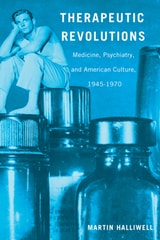
Beginning with a discussion of the profound impact of World War II and the Cold War on mental health, Halliwell moves from the influence of work, family, and growing up in the Eisenhower years to the critique of institutional practice and the search for alternative therapeutic communities during the 1960s. Blending a discussion of such influential postwar thinkers as Erich Fromm, William Menninger, Erving Goffman, Erik Erikson, and Herbert Marcuse with perceptive readings of a range of cultural text that illuminate mental health issues--among them Spellbound, Shock Corridor, Revolutionary Road, and I Never Promised You a Rose Garden--this compelling study argues that the postwar therapeutic revolutions closely interlink contrasting discourses of authority and liberation.
Ties That Enable
Community Solidarity for People Living with Serious Mental Health ProblemsTeresa L. Scheid
Rutgers University Press, 2021