Results by title

2 books match the query 'Mess'
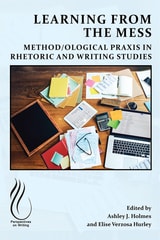
cover of Learning from the Mess: Method/ological Praxis in Rhetoric and Writing Studies

Learning from the Mess

Method/ological Praxis in Rhetoric and Writing Studies

Ashley J. Holmes

University Press of Colorado, 2024
The contributors to Learning from the Mess: Method/ological Praxis in Rhetoric and Writing Studies argue that there’s much to be learned from the messiness of research contexts. In so doing, they highlight the value of revisiting and reflecting on research methods and methodologies with two primary goals in mind: to shed light on the processes commonly elided between research design and publication and to make explicit that the method/ologies we use in our research require praxis. Learning from the Mess features ten chapters that challenge readers to rethink and reflect on their own method/ological choices in the past and to envision new possibilities for future research designs. Each contributor connects their reflections to one or more paired reading(s) they had previously published.
[more]
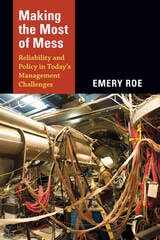
cover of Making the Most of Mess: Reliability and Policy in Today's Management Challenges

Making the Most of Mess

Reliability and Policy in Today's Management Challenges

Emery Roe

Duke University Press, 2013

In Making the Most of Mess, Emery Roe emphasizes that policy messes cannot be avoided or cleaned up; they need to be managed. He shows how policymakers and other professionals can learn these necessary skills from control operators who manage large critical infrastructures such as water supplies, telecommunications systems, and electricity grids. The ways in which they prevent major accidents and failures offer models for policymakers and other professionals to manage the messes they face.

Throughout, Roe focuses on the global financial mess of 2008 and its ongoing aftermath, showing how mismanagement has allowed it to morph into other national and international messes. More effective management is still possible for this and many other policy messes but that requires better recognition of patterns and formulation of scenarios, as well as the ability to translate pattern and scenario into reliability. Developing networks of professionals who respond to messes is particularly important. Roe describes how these networks enable the avoidance of bad or worse messes, take advantage of opportunities resulting from messes, and address societal and professional challenges. In addition to finance, he draws from a wide range of case material in other policy arenas. Roe demonstrates that knowing how to manage policy messes is the best approach to preventing crises.

[more]