Results by title
4 books match the query 'Messianism'

Dynamic Repetition
History and Messianism in Modern Jewish ThoughtGilad Sharvit
Brandeis University Press, 2022
Dynamic Repetition proposes a new understanding of modern Jewish theories of messianism across the disciplines of history, theology, and philosophy. The book explores how ideals of repetition, return, and the cyclical occasioned a new messianic impulse across an important swath of late nineteenth- and early twentieth-century German Jewish thought. To grasp the complexities of Jewish messianism in modernity, the book focuses on diverse notions of “dynamic repetition” in the works of Franz Rosenzweig, Walter Benjamin, Franz Kafka, and Sigmund Freud, and their interrelations with basic trajectories of twentieth-century philosophy and critical thought.

Hasidism on the Margin
Reconciliation, Antinomianism, and MessianismShaul Magid
University of Wisconsin Press, 2003
Hasidism on the Margin explores one of the most provocative and radical traditions of Hasidic thought, the school of Izbica and Radzin that Rabbi Gershon Henokh originated in nineteenth-century Poland. Shaul Magid traces the intellectual history of this strand of Judaism from medieval Jewish philosophy through centuries of Kabbalistic texts to the nineteenth century and into the present. He contextualizes the Hasidism of Izbica-Radzin in the larger philosophy and history of religions and provides a model for inquiry into other forms of Hasidism.
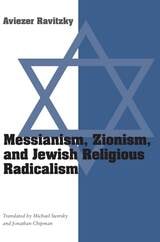
Messianism, Zionism, and Jewish Religious Radicalism
Aviezer Ravitzky
University of Chicago Press, 1996
Ravitzky traces the roots of Haredi ideology, which opposes the Zionist enterprise, and shows how Haredim living in Israel have come to terms with a state to them unholy and therefore doomed. Ravitzky also examines radical religious movements, including the Gush Emunim, to whom the State of Israel is a divine agent. He concludes with a discussion of the recent transformation of Habad Hassidism from conservatism to radical messianism.
This book is indispensable to anyone concerned with the complex confrontation between Jewish fundamentalism and Israeli political sovereignty, especially in light of the tragic death of Israeli Prime Minister Yitzhak Rabin.
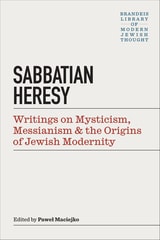
Sabbatian Heresy
Writings on Mysticism, Messianism, and the Origins of Jewish ModernityEdited by Pawel Maciejko
Brandeis University Press, 2017